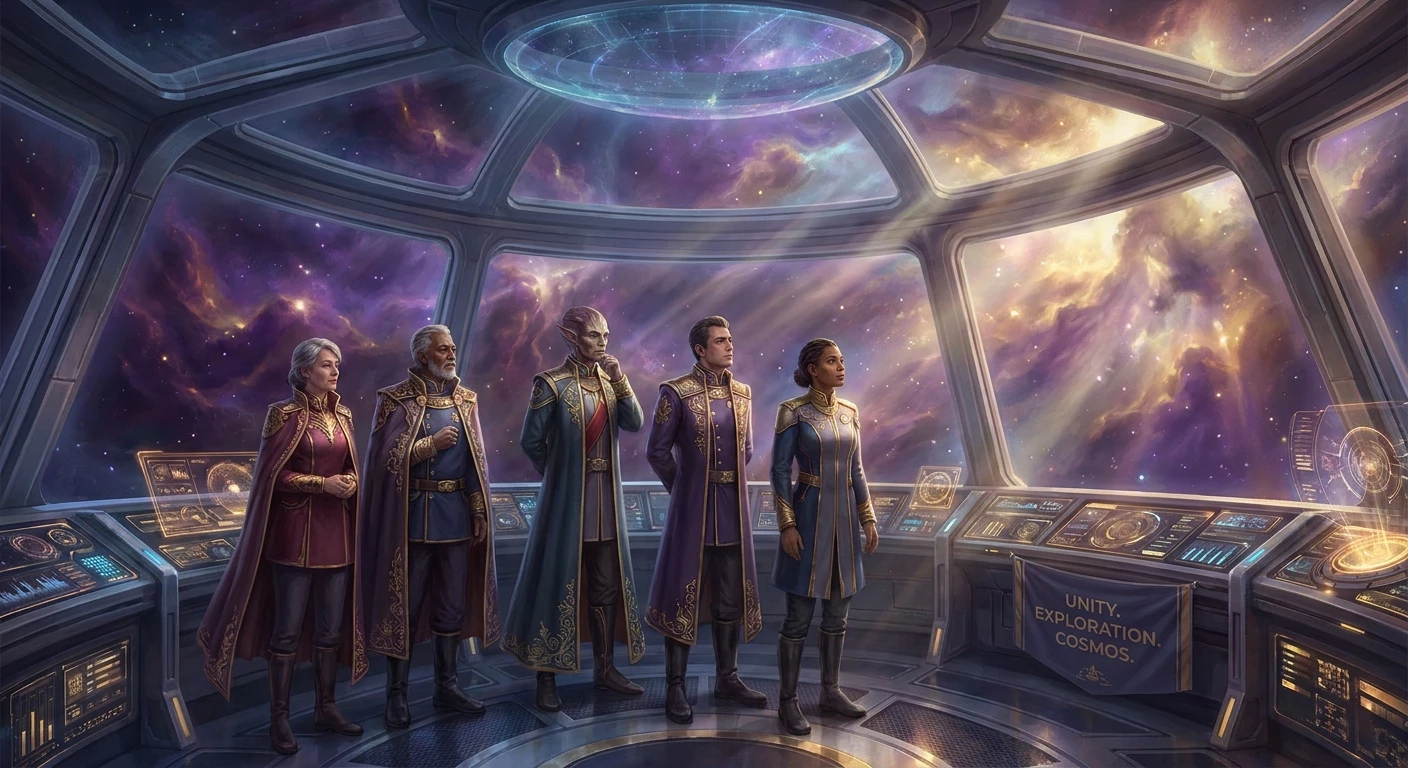
Why your rogue trader companions matter more than your ship
Listen, building the absolute best squad of rogue trader companions is the difference between conquering the Koronus Expanse and ending up as forgotten space dust in a random asteroid field. I remember playing a ridiculously tough late-game boss fight back in Kyiv during one of those blackout nights; just me, a chunky power bank, and a glowing monitor where my frontline tank was literally keeping my entire party from being wiped out. It hit me right then—this game isn’t just about throwing random high-level stats at a wall to see what sticks. It’s about deep synergy, flawless positioning, and picking a loyal crew that perfectly matches your specific tactical playstyle. You need a highly curated mix of damage sponges, massive burst-damage dealers, and support units who compliment each other without stepping on each other’s toes.
You are stepping into a massive galaxy where every single dialogue choice and combat maneuver hinges on the people standing right behind you. I’m going to break down exactly how you maximize your crew’s immense potential, who you desperately need on your frontline, and why neglecting character relationships is a massive, campaign-ending mistake. Let’s get straight into the optimal strategies so you can dominate every single turn-based encounter and write your own legacy among the stars.
The Core Mechanics: Synergizing Your Starship Crew
Getting the absolute best out of your retinue involves understanding the exact value proposition each character brings to the tactical grid. You cannot just pick your favorites based on their voice lines; you have to look at their foundational archetypes and how those archetypes stack with one another. When you layer abilities correctly, the action economy completely breaks in your favor. Here is a breakdown of the top-tier synergy pairings you need to memorize.
| Character Name | Primary Archetype Role | Key Tactical Synergy |
|---|---|---|
| Abelard Werserian | Vanguard Tank | Taunts & Parry stacking buffs |
| Idira Tlass | Operative Psyker | AoE debuffs & Willpower manipulation |
| Sister Argenta | Soldier DPS | Burst fire & Momentum generation |
| Pasqal Haneumann | Grand Strategist | Plasma damage & Tech support buffs |
You get immense, undeniable value when you combine specific class features. For example, using an Officer’s turn-granting ability on Argenta lets her unleash a heavy bolter spray twice before the enemy even moves. Or, having Pasqal apply Machine Spirit communion across the battlefield before Idira unleashes chain lightning ensures maximum critical damage. This is how you manipulate the board state to ensure flawless victories.
- Officer stacking is ridiculously broken: Having multiple officers in your party giving out extra turns completely changes the basic rules of the action economy. You dictate the pace of the battle.
- Agility dictates your ultimate survival: If your crew acts first in the initiative order, you can mitigate half the incoming damage immediately by eliminating major threats before they shoot.
- Conviction alignment heavily matters: Your Dogmatic, Heretical, and Iconoclast choices directly impact which late-game gear your crew can equip safely, changing their ultimate builds.
If you ignore these fundamental mechanics, you will find yourself constantly reloading saves. Building a cohesive team means looking at the big picture and understanding that a weak link will cost you entire hours of progress.
Origins of the Koronus Retinues
Back when this universe was primarily a tabletop role-playing game rulebook, managing a crew felt completely different. The origins of these specific companions trace back to developers adapting decades-old, extremely dense lore into a structured, turn-based video game format. They had to translate narrative-heavy archetypes—like a dogmatic battle sister or an unsanctioned psyker—into playable classes that felt authentic but still fit within a balanced tactical grid. The translation process was monumental, shifting from pen-and-paper imagination to hard-coded numerical values.
Evolution Through System Patches
The evolution of these characters over the game’s lifespan has been wild. Remember the early beta builds? Some psykers would accidentally wipe your entire squad due to unmitigated warp phenomena mechanics that were completely unbalanced. Over time, the developers tweaked the action point economy, making ranged snipers less universally overpowered and giving melee fighters actual tools for survivability, like charge mobility and parry scaling. Now, as we play through the definitive versions in 2026, the meta has finally stabilized into a beautifully complex dance of buffs, debuffs, and area control.
Modern State of Party Building
The modern state of assembling your team demands strict attention to advanced archetypes. You can’t just run five base-level soldiers and expect to win on the higher difficulties. You need a dedicated Grand Strategist for dropping combat zones before the first turn begins, a Master Tactician for scaling damage based on tactical advantage, and an Assassin for prioritizing high-value boss targets. The flexibility offered by the talent tree is immense, but the punishment for a badly constructed build remains absolutely brutal.
The Mathematics of Action Points
Let’s talk about the hard numbers and the underlying math that governs this game. Action Points (AP) and Movement Points (MP) are the lifeblood of your strategy. The underlying math operates on a cascading multiplier system. When you apply a flat damage buff to a rapid-fire weapon, that flat number is added to every single shot, multiplied by the rate of fire, and then modified by the target’s armor deflection. This means small, incremental buffs scale exponentially when applied to burst weapons compared to single-shot sniper rifles.
Damage Calculation and Deflection
Armor penetration isn’t just a suggestion; it is a mathematical necessity for late-game survival. If your heavy hitter has low armor penetration, high-deflection enemies will reduce their attacks to absolute zero, rendering your best DPS completely useless. Understanding the formula behind dodge reduction and cover mitigation will save your run.
- Base hit chance is strictly calculated as the Attacker’s Ballistic Skill plus Weapon Accuracy, minus the Target’s total Dodge value.
- Cover provides a flat percentile reduction to incoming hits: partial cover grants a 35% damage mitigation, while full cover gives a massive 60% reduction.
- Psyker peril triggers operate on a progressive probability curve; casting safely at 0% veil degradation still carries a micro-chance of psychic phenomena triggering.
- Momentum generation scales exponentially based on the exact number of enemies killed per turn, allowing you to unlock powerful heroic acts much faster when fighting large horde groups.
Step 1: Recruiting the Core Melee Frontline
Your absolute first priority is locking down the frontline. Keep Abelard in your party immediately from the prologue. Build him straight into the Vanguard archetype. Give him heavy armor, a thunder hammer, and talent points focused purely on parry and temporary wounds. He is your unmovable object who absorbs aggro while the rest of the team sets up.
Step 2: Securing Ranged Burst DPS
Next, you need guaranteed damage output. Sister Argenta is your boltgun queen. Focus all of her leveling talents on burst fire recoil reduction, ballistic skill increases, and critical damage multipliers. Equip her with the highest rate-of-fire heavy bolter you can find, and position her with clean lines of sight.
Step 3: Integrating Vital Tech Support
Pasqal requires a slight narrative detour early on, but you must grab him. He handles nearly all the tech-use skill checks you will encounter while exploring maps. In combat, build him around plasma weapon dominance and his unique ability to strip enemy armor, making bosses vulnerable to the rest of your squad.
Step 4: Adding the Psyker Element
You have to balance the warp. Will you use Idira or Heinrix? Honestly, use both if you can. Use Heinrix for frontline biomancy heals and melee buffs, and keep Idira safely in the backline for divination buffs and massive chain-lightning area-of-effect damage. Just manage the veil degradation carefully.
Step 5: Perfecting Officer Tactics
Cassia is arguably the most powerful single unit in the entire game. Her unique navigator powers scale insanely well with her willpower stat. Build her strictly as an Officer and Grand Strategist. Maximize her warp damage attacks and her crowd control abilities that group enemies together for your burst shooters.
Step 6: Managing the Benchwarmers
Do not leave your alternative characters idle on the ship. Swap them into the active party for their specific loyalty missions. Completing these personal quests unlocks their unique narrative ending slides and grants you access to top-tier, character-exclusive gear that you cannot buy from merchants.
Step 7: Finalizing the Endgame Squad
By the time you hit Act 4, your primary six crew members should have nearly maxed out their Exemplar talents. Take a hard look at your battle logs. Respec anyone who isn’t pulling their weight using the High Factotum NPC on your bridge. Optimization is key for the final narrative push.
Debunking Common Crew Myths
Myth: You need a dedicated, traditional healer character to survive the brutal late-game encounters.
Reality: Temporary wounds and stacking high dodge or parry stats completely negate the need for a traditional medic. Damage mitigation and killing the enemy first beats reactive healing every single time.
Myth: Bringing Xenos crewmates completely ruins your dogmatic playthrough.
Reality: While having them around definitely creates intense narrative friction, you can absolutely keep Yrliet or Marazhai on a strict dogmatic run if you manage your conviction dialogue checks carefully. They offer unique tactical advantages that are hard to pass up.
Myth: Sniper rifles are the only viable weapon for single-target boss DPS.
Reality: A properly built dual-wielding melee assassin can easily output triple the damage of a backline sniper if they are positioned correctly behind enemy lines and exploit the opening mechanics.
Myth: Psyker peril is way too risky to use heavily on higher difficulties.
Reality: With the right late-game accessories and specialized talents, you can completely stabilize the warp veil, making your psykers the most consistent and devastating damage dealers in your entire roster.
Can I romance multiple companions?
No, the game generally forces you to lock in one primary romance path before the finale. Attempting to string along multiple characters will eventually force a confrontation where you must choose.
How do I recruit the secret companion?
You need to follow very specific, highly Heretical dialogue choices starting midway through Act 3. It locks you out of certain dogmatic paths but rewards you with a devastating melee fighter.
Is character respec totally free?
The first few respecs for your crew are completely free, but they begin to cost valuable profit factor later on. Plan your builds carefully to avoid bankrupting your trading empire.
Who is the absolute best officer?
Cassia vastly outperforms standard human officers due to her completely unique navigator skill tree. She can manipulate enemy positioning while simultaneously granting extra turns to your heavy hitters.
What happens if a companion falls in combat?
They suffer severe trauma injuries which negatively impact their stats. These injuries require specific medical consumables to cure, but the character does not permanently die during standard grid battles.
Can I play the campaign completely solo?
Theoretically, it is possible on the lowest story difficulty, but it is absolutely brutal, mathematically punishing, and heavily discouraged. The entire game is built around party synergy.
Do companions leave if I make them mad?
Yes. Severe ideological differences, usually tied to pushing extreme Heretical or Dogmatic choices that conflict with their personal morals, can cause them to permanently abandon your ship.
Building the ultimate tactical team takes patience, a solid grasp of the underlying math, and a little bit of trial and error as you learn the ropes. Grab your finest bolter, assemble your loyal crew, and go conquer the expanse! Make sure you subscribe to our newsletter for more hardcore tactical guides as the meta evolves in 2026.





Leave a Reply