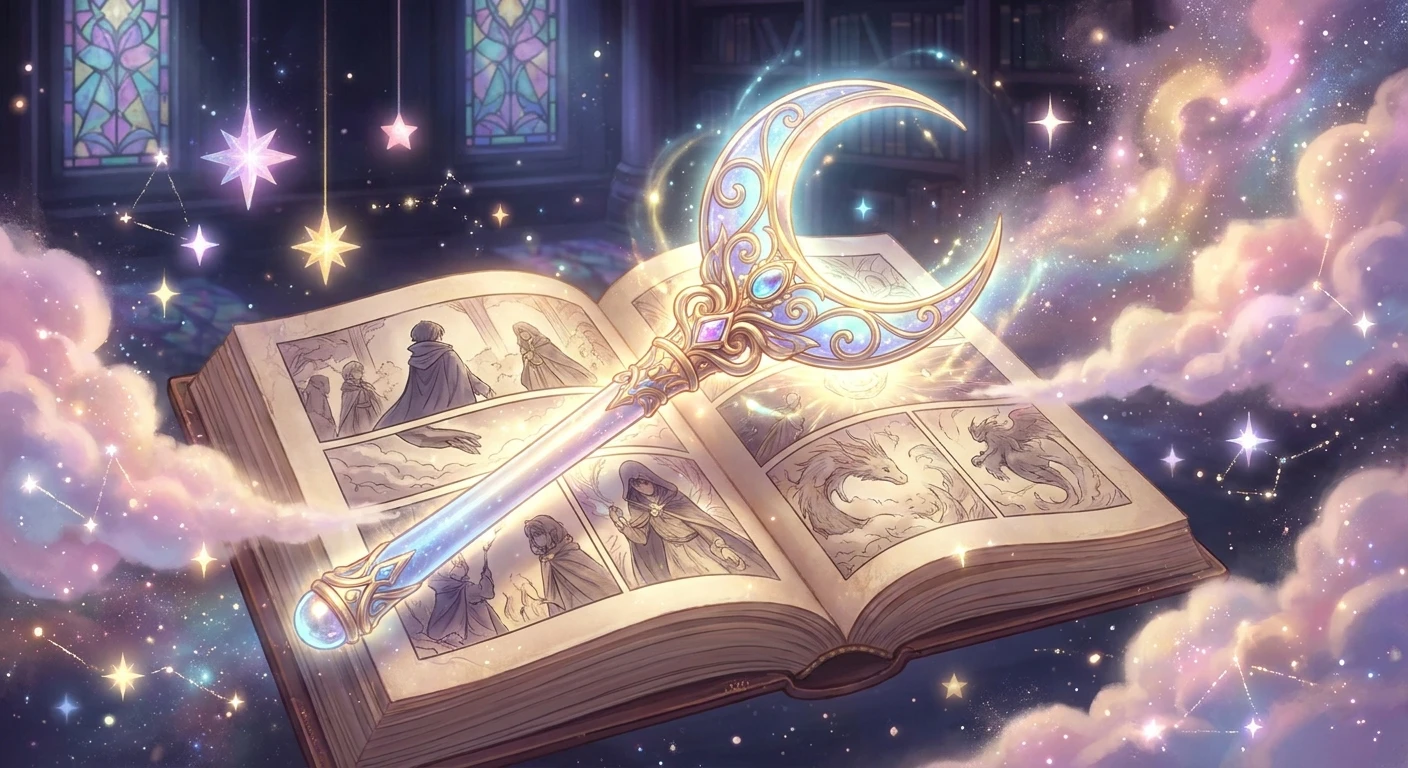
The Legacy and Magic of the Sailor Moon Manga
Picking up the Sailor Moon manga is like stepping into a masterclass of visual storytelling and cosmic mythology. Whether you grew up catching early morning television broadcasts or you are just now discovering the story of 14-year-old Usagi Tsukino as she transforms into a guardian of justice, the original comic offers an entirely different experience. Created by the legendary Naoko Takeuchi, this iconic series set the gold standard for the magical girl genre, blending fierce female friendships, epic romances spanning millennia, and jaw-dropping character designs into a compelling narrative.
The original comic reads with incredible speed, delivering high-stakes drama and beautiful, sweeping artwork that television adaptations sometimes struggled to capture perfectly. If you think you know the story from the animated shows, you only have half the picture. The printed page offers a significantly darker, more focused, and emotionally dense journey where the stakes feel universally massive. You get to see the author’s original vision exactly as intended, complete with gorgeous watercolor splash pages and intricate fashion designs inspired by high-end 90s couture.
Read also: Vagabond Deluxe Edition: Ultimate Collector Guide; The Art and History of Iconic Video Game Covers.
Reading the comic gives you the raw, unfiltered mythology of the Silver Millennium, the true motivations behind the villains, and a much more mature arc for our central heroine. Let’s break down exactly how this series functions, why its physical editions matter so much to collectors, and how you can map out your own journey through the stars.
Core Benefits: Why Read the Source Material?
There is a unique value proposition when deciding to read the original books rather than just consuming the screen adaptations. The primary benefit is pacing. The television adaptations famously utilized “monster of the week” filler episodes to give the author time to write. The books, however, are all killer and no filler. Every chapter advances the plot, deepens the lore, or escalates the central conflict.
Two massive examples of this value are character development and artistic evolution. First, Usagi’s growth is remarkably consistent; she matures from a crybaby into a fiercely independent cosmic deity without regressing between story arcs. Second, you literally watch Naoko Takeuchi’s art evolve from standard early-90s shoujo aesthetics into breathtakingly intricate, ethereal illustrations.
Comparing the Major English Releases
| Edition Name | Volume Count | Key Features |
|---|---|---|
| Original English (Mixx/Tokyopop) | 18 Volumes | Flipped artwork, localized names (Serena, Darien), highly collectible but outdated translation. |
| Kodansha 2011 Reprint | 12 Volumes (plus 2 short stories) | Faithful names, updated translation, standard digest size, unflipped right-to-left reading. |
| Eternal Edition | 10 Volumes | Oversized premium pages, holographic covers, new translation, definitive collector’s format. |
Building a physical library of this series is a rite of passage for comic enthusiasts. Here are the top three reasons you should invest in the physical books:
- Uncompromised Art Sizing: The premium formats, especially the Eternal releases, present the artwork on oversized pages, allowing you to appreciate the fine line work and screentone details that get lost on digital screens.
- Exclusive Bonus Material: Modern re-releases include gorgeous color pages, author notes, and sketches that provide vital context about the fashion and astrology references baked into the story.
- Translation Accuracy: Newer editions feature meticulous translations that preserve original Japanese honorifics, planetary puns, and mythological references that were completely erased in the 90s English localization.
Origins of the Guardian
The history of the franchise actually begins with a completely different protagonist. Before Usagi Tsukino dominated pop culture, there was Minako Aino. Naoko Takeuchi initially created a short series called Codename: Sailor V, which followed a young girl fighting crime with the help of a talking white cat. When animation studios approached Takeuchi to adapt the story, she decided to expand the concept into a full ensemble cast. This pivot led to the creation of the main series we know today, launching in Nakayoshi magazine in December 1991. The foundation built by Sailor V allowed the new series to hit the ground running with established lore and mechanics.
The 90s Boom and Evolution
Once the serialization began, it sparked an unprecedented cultural phenomenon. What made the production cycle so uniquely stressful and fascinating was that the television anime and the comic were being produced simultaneously. Takeuchi was often conceptualizing character designs, plot twists, and villain motivations just weeks before the animation studio needed them. This high-pressure environment meant the comic moved at a breakneck pace. As the years went on, Takeuchi injected darker psychological themes, drawing heavy inspiration from Greek mythology, geology, and astronomy. The evolution from a lighthearted magical girl trope to an epic space opera of reincarnation and sacrifice cemented its legendary status.
The Modern State of the Series
Today, the property remains a massive force in publishing. Instead of letting the older prints fade into obscurity, publishers have continually refreshed the material for new generations. We have seen multiple formats hit the shelves to satisfy different types of readers. For instance, the recently launched Naoko Takeuchi Collection Box Set provides an affordable, portable way to binge the series while retaining the updated translations. These continued investments in physical media prove that the demand for high-quality, beautifully bound editions of this classic remains incredibly strong decades after its initial conclusion.
Scientific and Technical Deep Dive: Print & Localization
Translation and Localization Mechanics
Translating a Japanese comic from the early 90s into modern English requires a careful balance of linguistic science and cultural preservation. Early localizations engaged in a process called “flipping,” where the original right-to-left artwork was mirrored to read left-to-right for Western audiences. This technically flawed the art, making characters left-handed and reversing clothing clasps. Modern releases strictly adhere to the original unflipped format. Furthermore, modern localization teams must navigate complex naming conventions. Takeuchi named her villains after specific geological minerals (like Kunzite and Jadeite) and her heroes after astronomical bodies. A precise translation preserves these etymological roots, ensuring the subtle scientific and mythological puns land perfectly.
Book Binding and Archival Formats
The physical construction of comic volumes has drastically improved. While vintage copies were printed on cheap, acidic newsprint that yellows and degrades over time, contemporary editions use archival-quality materials. If you are comparing the different editions of the Sailor Moon releases, you will notice significant upgrades in paper weight and binding techniques.
- Paper Stock: The Eternal Editions utilize a heavy, bright-white coated stock that prevents ink bleeding and makes the black contrast pop sharply against the page.
- French Flaps: Certain high-end paperback releases incorporate folded cover flaps, which add structural integrity to the book and provide extra canvas for artwork.
- Holographic Foil: Modern covers frequently use foil stamping and holographic laminates to emulate the “magical” aesthetic, a complex printing process that requires precise temperature and pressure calibration during manufacturing.
- Color Pages: Reintegrating the original magazine color inserts requires high-resolution scanning and color-correction of vintage assets, as the original analog paintings must be digitally balanced for CMYK offset printing. The newest releases even features all-new cover illustrations drawn specifically for the modern era.
Actionable Menu: The 7-Day Reading Plan
Tackling an entire epic can feel daunting, but the story is neatly divided into five distinct arcs. If you dedicate a few hours a day, you can comfortably consume the entire saga in a week. Here is your definitive step-by-step reading plan.
Day 1: The Dark Kingdom Arc
Start at the very beginning. This arc covers Usagi’s awakening, the gathering of the inner guardians, and the battle against Queen Beryl. You will learn about the fall of the Silver Millennium on the Moon and the tragic pasts of the main cast. It is a fast-paced introduction that establishes the core rules of this universe.
Day 2: The Black Moon Clan
Move into the second arc, which introduces time travel. A mysterious pink-haired child named Chibi-Usa drops from the sky, leading the guardians into a conflict with the Black Moon Clan from the 30th Century. This section heavily expands the lore, showing us Crystal Tokyo and the future destinies of our heroes.
Day 3: The Infinity Arc
This is where the tone shifts dramatically. The Infinity Arc introduces the Outer Guardians: Uranus, Neptune, Pluto, and Saturn. The themes become noticeably darker, dealing with apocalyptic threats, moral ambiguity, and the concept of necessary sacrifice. The artwork here hits a massive stride.
Day 4: The Dream Arc
Also known as the Dead Moon Circus arc, this section dials back the science fiction in favor of pure fairy-tale fantasy and mythological symbolism. It focuses heavily on Chibi-Usa’s growth, her connection with the mystical Pegasus, and the inner guardians unlocking their advanced super forms.
Day 5: The Stars Arc Conclusion
The final and most epic storyline. The scale expands from planetary to galactic as Usagi faces Sailor Galaxia and the Shadow Galactica empire. It asks profound existential questions about the nature of stars, souls, and the endless battle between light and chaos. Prepare for a deeply emotional, visually stunning finale.
Day 6: Codename: Sailor V
Now that you have finished the main epic, read the two-volume prequel starring Minako Aino. Reading it after the main series is incredibly rewarding because you will spot all the Easter eggs, early prototype character designs, and thematic seeds that Takeuchi eventually blossomed into her masterwork.
Day 7: Short Stories and Side Quests
Wrap up your week by diving into the standalone short stories. These usually occupy two volumes depending on your edition. They feature hilarious slice-of-life side quests, focus chapters on individual guardians (like Ami’s First Love or the Casablanca Memory), and gorgeous standalone artwork that rounds out the universe perfectly.
Myths and Reality
Myth: The comic is identical to the 90s animated series.
Reality: The printed story is vastly different. It is much darker, moves significantly faster without filler, and features entirely different character motivations and romantic subplots. Villains are more ruthless, and the heroes are more proactive.
Myth: It is strictly a lighthearted story for children.
Reality: While accessible to young readers, it explores complex, heavy themes including death, rebirth, existential dread, the burden of leadership, and the cyclical nature of war. The final arc is incredibly philosophical.
Myth: You have to read the prequel first to understand the plot.
Reality: The main series is completely standalone. While reading the prequel adds fun context and background details for one specific character, the core 18 (or 10/12 depending on the print) volumes contain everything you need for the complete narrative.
Frequently Asked Questions
How many volumes are there in total?
It depends entirely on the edition. The original run is 18 volumes, the 2011 reprint is 12 volumes, and the premium Eternal Edition compresses the story into 10 massive volumes.
Who is the original creator?
The entire universe was created, written, and illustrated by Naoko Takeuchi, a visionary artist with a background in chemistry and a deep love for astronomy and high fashion.
Is the Eternal Edition worth the higher price?
Absolutely. If you want the definitive visual experience, the oversized pages, corrected translation, and brilliant color inserts make it the ultimate collector’s item.
What exactly is the Naoko Takeuchi Collection?
It is a newer, budget-friendly paperback release that uses the updated text and covers from the premium editions but prints them in a smaller, standard, easily portable size.
Are there color pages in the books?
Vintage English prints were entirely black and white. Modern premium releases, however, restore the gorgeous watercolor pages exactly as they originally appeared in the Japanese magazine run.
Should I read it left-to-right or right-to-left?
All modern, officially licensed English prints are unflipped, meaning you must read them in the traditional Japanese style: right-to-left, top-to-bottom.
Where does the Sailor V prequel fit in?
Chronologically, it happens before the main story. However, most fans recommend reading it either right before the main series or as a fun flashback immediately after you finish.
Does the author still draw new content for it?
While the main narrative concluded in 1997, Naoko Takeuchi remains deeply involved in the franchise, occasionally providing new cover illustrations for reprints and overseeing artistic directions for merchandise.
Diving into this iconic series is an absolute must for anyone passionate about graphic storytelling. The beautiful art, rapid pacing, and heartfelt themes of love and justice hold up perfectly today. Grab volume one, trust the journey, and discover the true cosmic power of this legendary franchise!

Leave a Reply