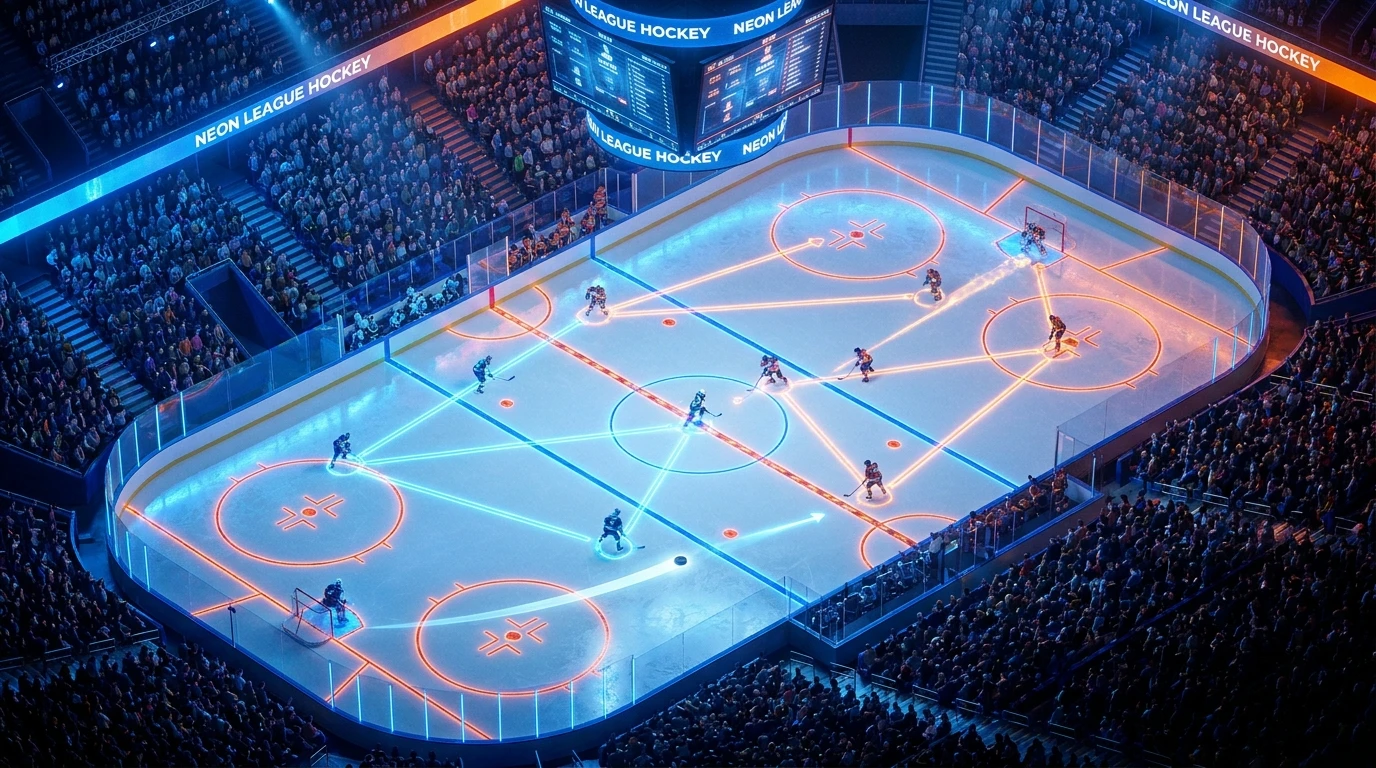
NHL 24: Elevating the Digital Ice Hockey Experience
When you boot up NHL 24, you immediately notice a distinct shift in how virtual hockey feels on the sticks. Gone are the days of endlessly skating in circles without consequence; this title demands a deeper understanding of real-world hockey tactics. If you want to dominate your opponents in World of Chel or climb the ranks in Hockey Ultimate Team, mastering the new mechanics is non-negotiable. The game fundamentally changed the pace of digital hockey by introducing systems that reward sustained offensive pressure and punish sloppy defensive positioning. You are no longer just reacting to the puck; you are anticipating the play, managing stamina reserves, and utilizing precision controls to outsmart the opposing defense. The core of this competitive shift revolves around the Exhaust Engine, a feature that dramatically alters team momentum based on zone time and shot volume. By grasping the intricacies of passing mechanics, physical contact, and goalie fatigue, players can entirely dictate the flow of the match. Understanding these nuances separates the casual player from the elite competitor. Let us dig deeply into exactly how these systems function and how you can exploit them for maximum competitive advantage.
Unpacking the Core Mechanics and Competitive Edge
To truly grasp what makes this iteration unique, you have to look closely at the mechanical additions that redefine standard gameplay. The Exhaust Engine is the most prominent feature, designed to simulate the grueling nature of an extended offensive zone shift. When an attacking team holds the puck in the offensive zone and registers shots on goal, they build up the Sustained Pressure meter. Once full, the attacking team receives a significant boost to their passing speed and accuracy, while the defending team suffers a massive penalty to their stamina and acceleration. This forces defenders to play frantically, often leading to desperate icing attempts or costly turnovers. Alongside this, the Vision Passing system allows players to map direct passes to specific face buttons, completely removing the unpredictability of directional analog passing. You can now execute complex tic-tac-toe plays with absolute certainty.
Read also: Master Call of Duty Warzone Mobile: Complete Guide; Ultimate Guide to the Best Racing Games PS5.
| Gameplay Feature | Core Mechanic | Competitive Advantage |
|---|---|---|
| Exhaust Engine | Stamina depletion based on offensive zone time | Forces defensive mistakes and degrades goalie reaction times |
| Vision Passing | Face-button mapping for exact receiver targeting | Eliminates random directional passing errors during rushes |
| Physics-Based Contact | Ragdoll collision physics based on momentum | Creates instant turnovers through precise, heavy body checks |
To maximize your win rate, you need to implement these mechanics into your daily gameplay loop. Here are the top three strategies to dominate using these systems:
- Prioritize Sustained Pressure over rush chances: Instead of forcing a low-percentage shot off the rush, cycle the puck back to the point. Let the Sustained Pressure meter fill up, draining the opposing team’s energy before moving in for a high-danger scoring chance.
- Exploit the Vision Passing system during power plays: When you have the man advantage, the defense is already scrambling. Use the specific button icons to quickly snap the puck across the ice faster than the AI defenders can rotate their hips to intercept.
- Capitalize on Goalie Fatigue: The new goalie desperation animations mean that if you force the netminder to make three or four rapid saves, they will eventually flop out of position. Keep throwing the puck on the net from bad angles if you know a teammate is ready for the rebound.
Origins of the Franchise
The EA Sports hockey lineage stretches back to the early 16-bit era, setting the gold standard for sports simulation long before modern 3D graphics were a reality. Early titles focused heavily on arcade-style action, where speed and simple one-timers ruled the ice. As console hardware advanced through the successive generations, the developmental focus shifted toward authentic simulation. The introduction of the Skill Stick years ago revolutionized how players handled the puck, moving away from simple button presses to dual-analog control schemes that mimicked the actual physical movement of a hockey stick. This steady progression built a highly dedicated, hardcore community that constantly demanded more realism, better physics, and deeper tactical options.
Evolution of the Physics Engine
Transitioning into the modern era, the development team migrated the series to the Frostbite engine. This change allowed for vastly improved lighting, arena atmospheres, and player likenesses, but the most crucial upgrades occurred beneath the hood. The physics engine evolved to handle complex collisions, stick-on-stick interactions, and realistic puck deflections. In earlier versions of the game, hits were determined by simple animations snapping into place. With the current engine, momentum, speed, and player weight calculate in real-time to determine the outcome of a physical engagement. This evolution means that a smaller, faster player can no longer easily bump a massive defenseman off the puck without building up significant speed, adding a critical layer of team-building strategy to modes like HUT.
Modern State of EA Sports Hockey
By the time this specific edition launched, the game had fully embraced the live-service model. The modern state of the game relies heavily on continuous content updates, tuner patches to balance gameplay exploits, and a vibrant esports scene. World of Chel serves as the ultimate social hub, where players create their own avatars, join clubs, and compete in 6v6 matches that require intense communication and teamwork. The integration of battle passes, cosmetic rewards, and seasonal tournaments keeps the player base engaged long after the traditional hockey season concludes. The meta is constantly shifting, requiring players to adapt their loadouts, traits, and strategies to stay competitive on the digital ice.
The Mathematics of the Exhaust Engine
Beneath the flashy visual effects of the Sustained Pressure system lies a complex mathematical algorithm that calculates stamina drain and momentum shifts. The engine continuously runs telemetry data based on puck possession coordinates. If the puck remains within the offensive zone boundaries, a hidden timer begins ticking. Every blocked shot, hit, and pass attempt adds specific numerical values to the pressure threshold. Once the threshold surpasses 100 percent, an adrenaline multiplier activates for the offensive players, increasing their top speed attributes by a set percentage while simultaneously applying a friction modifier to the defending players. This friction modifier mathematically slows down the defensive team’s acceleration curves, simulating lactic acid buildup in the players’ virtual legs.
Frostbite Engine Animation Telemetry
The visual representation of these mathematical shifts relies on advanced animation branching telemetry. The Frostbite engine constantly reads the inputs from both players and the AI, deciding which animation frame to load next based on collision hitboxes and physical geometry. This technical depth is what makes the gameplay feel heavy and authentic.
- Frame-level animation branching: Allows players to cancel out of a shot animation instantly to perform a deke, reading the input delay down to the millisecond.
- Dynamic friction coefficients: The ice degradation system alters the glide speed of the puck based on the period, meaning passes in the third period require more power than in the first.
- Real-time AI pathfinding: Computer-controlled players constantly recalculate their positioning based on the location of the puck and the current defensive strategy set by the user.
- Goalie momentum algorithms: Netminders have individual weight transfers; if they push off too hard to the left, their recovery time to the right is mathematically delayed based on their specific agility rating.
Day 1: Master the Vision Passing System
To truly elevate your game, you need a structured practice regimen. On your first day, ignore shooting entirely. Jump into free skate mode and focus solely on the Vision Passing system. Hold down the pass button to bring up the receiver icons. Practice skating at full speed while processing which button correlates to which player. The goal here is muscle memory. You want to reach a point where you do not even have to look at the button prompts to know that holding R2 and tapping X will send a saucer pass to your trailing defenseman. Spend at least an hour drilling these cross-ice passes until they become second nature.
Day 2: Perfecting the Exhaust Engine
Day two is all about zone control. Play against the AI on a high difficulty setting and make it your sole objective to trigger the full Sustained Pressure meter on every single offensive shift. Do not worry about scoring goals today. Practice cycling the puck along the boards, using the protect-the-puck mechanic to shield it from defenders, and taking low-risk point shots purely to generate rebounds and keep the zone time ticking. Notice how the AI defenders begin to sag and move sluggishly once the meter is full. Understanding this timing is crucial for competitive play.
Day 3: Defensive Positioning and Stick Checking
Now that you know how the pressure system works, you must learn how to defend against it. Day three focuses on gap control. Never chase the puck carrier behind the net. Instead, practice staying between the puck and your goalie. Use the defensive skill stick to actively block passing lanes rather than constantly spamming the poke check button, which will only lead to tripping penalties. Learn the exact distance required to successfully lift an opponent’s stick without taking a hooking call.
Day 4: Goalie Controls and Anticipation
Even if you prefer playing out, understanding how to control the goalie is vital for EASHL and penalty shots. Spend day four in the practice arena as the netminder. Learn how to use the precision movement modifier to make tiny adjustments to your angle. Practice reading the shooter’s shoulders to anticipate whether they are going high or low. Understanding the limitations of the goalie’s momentum will actually make you a better goal-scorer when you return to playing as a skater, because you will know exactly what movements leave the goalie vulnerable.
Day 5: Faceoff Counters and Grips
Puck possession starts at the faceoff dot. On day five, memorize the rock-paper-scissors mechanic of the faceoff circle. The forehand grip beats the stick lift, the backhand grip beats the tie-up, and the tie-up beats the aggressive forehand. Go into offline games and pay close attention to the opposing center’s grip. Practice timing the right stick pull exactly as the referee drops the puck. Dominating faceoffs instantly increases your offensive zone time and denies your opponent the chance to set up their own pressure.
Day 6: Special Teams Optimization
Power plays and penalty kills win tight hockey games. Spend day six setting up your custom strategies. Adjust your power play formation to an Umbrella or 1-3-1 setup to maximize passing options using your newly mastered Vision Passing skills. On the penalty kill, set your AI to a passive box formation to protect the slot. Practice clearing the puck off the glass to relieve pressure. A disciplined penalty kill that successfully clears the zone completely resets the opponent’s momentum.
Day 7: Online Competitive Readiness
On your final day, take all these isolated skills into the online arena. Start with some casual online versus matches to get a feel for the human element, including latency and unpredictable playstyles. Do not get frustrated by losses. Analyze what your opponent is doing right. Are they exploiting a gap in your defense? Are they trapping you in the neutral zone? Use the skills from the previous six days to adapt mid-game. Once you feel comfortable, step into HUT Champions or EASHL club finals and test your mettle against the best.
Navigating Myths and Community Realities
Every competitive gaming community generates rumors and misunderstandings about how the game actually functions. Clearing up these misconceptions is vital for maintaining a strong mental game.
Myth: Crossplay matchmaking is completely unrestricted across all game modes and platforms. Reality: Crossplay functionality is heavily restricted by console generation. Players on older hardware cannot match up against players on the newest generation of consoles due to fundamental differences in processing speed and engine performance.
Myth: The Sustained Pressure system makes playing defense literally impossible. Reality: It simply punishes passive defense. If you actively challenge the puck carrier at the blue line and force quick clears, the meter never has a chance to build up, making defense entirely manageable.
Myth: Goalie animations and fatigue are completely random. Reality: Goalie fatigue operates on a strict mathematical threshold based on the number of lateral movements forced and shots faced within a specific time window. It is entirely predictable once you understand the underlying algorithm.
Frequently Asked Questions
What consoles is the game available on?
The game is available on both the current and previous generation of major gaming consoles, ensuring a wide player base across different hardware setups.
Is there a PC version available?
No, the franchise has remained strictly a console-exclusive title for many years, with no official PC port available for this specific release.
How does the sustained pressure meter work?
The meter fills up when the attacking team maintains possession in the offensive zone and registers shots, eventually applying a massive speed boost to the offense and a stamina drain to the defense.
Can you use classic skill stick controls?
Yes, while the Total Control layout is the new default, players can easily revert to the classic Skill Stick mapping in the main settings menu for a more traditional feel.
How do you initiate a lacrosse goal?
Using the new Total Control scheme, the lacrosse (or Michigan) goal is mapped to a single face button combined with the right stick, making it significantly easier to pull off than in previous years.
What is the best camera angle for World of Chel?
Most highly competitive players utilize the Overhead or Zone camera angles, as they provide the widest field of view to see passing lanes and defensive breakdowns developing.
Does goalie fatigue reset between periods?
Yes, goalie stamina fully resets during intermissions, meaning a goalie who was flopping around desperately at the end of the first period will start the second period completely refreshed.
Understanding the deep mechanics, mastering the advanced controls, and practicing disciplined positioning will dramatically elevate your digital hockey experience. By utilizing the tactical knowledge of the Exhaust Engine and Vision Passing systems, you can outsmart and outplay even the most seasoned opponents. Grab your controller, hit the virtual ice, and show the world your new skills!



Leave a Reply