What a Fallout Remastered Really Means for Gamers
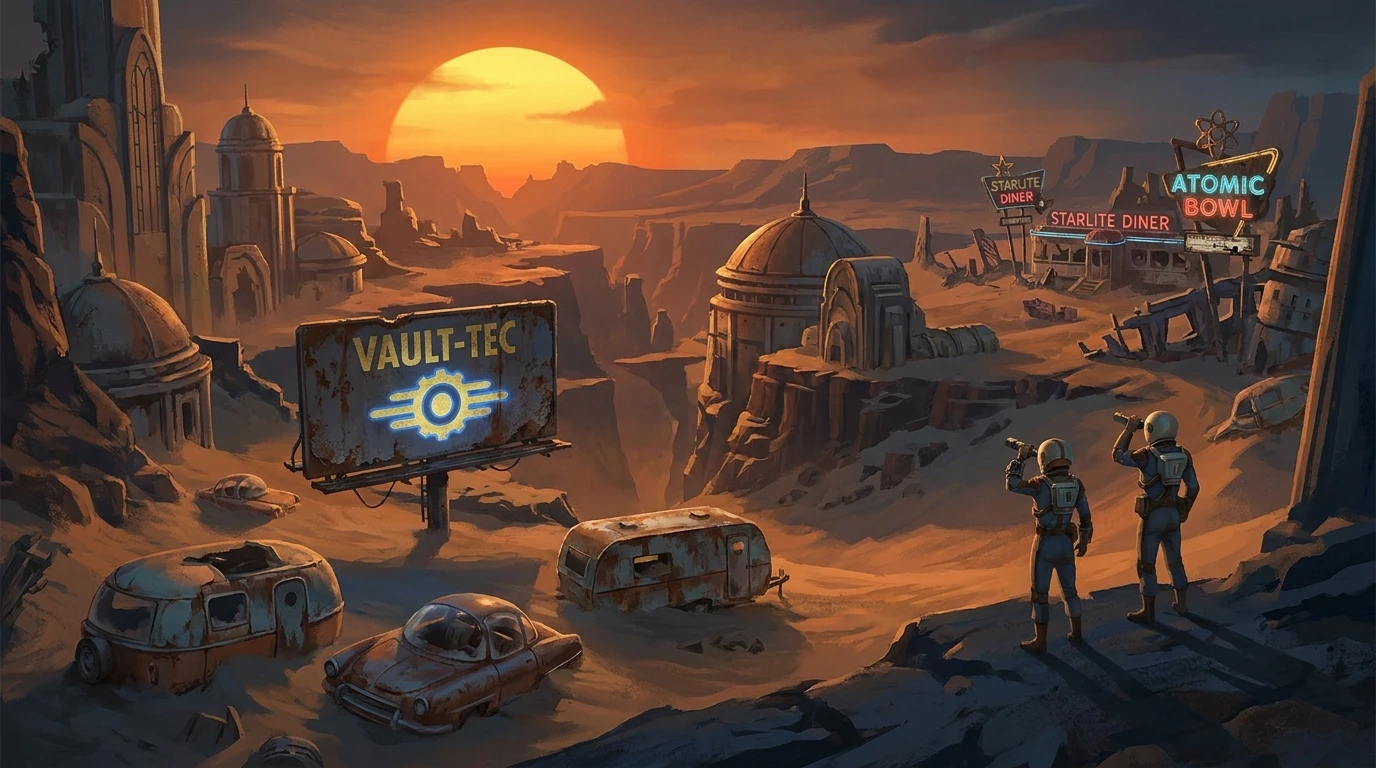
Gamers have spent years asking for a true Fallout Remastered, and the noise is louder than ever right now. Whether you started your journey surviving the harsh wastes of New California in 1997 or tracking down your father in the Capital Wasteland a decade later, the craving to replay these iconic adventures on modern hardware remains incredibly strong. However, going back to older titles can be surprisingly frustrating. Legacy engines struggle with multi-core processors, high refresh rate monitors, and modern operating systems. The core thesis here is simple: updating these legendary role-playing games is not just a cheap nostalgia grab. It is an absolute necessity for digital preservation and for allowing a completely new generation of players, who recently discovered the franchise through massive television adaptations or newer entries, to experience the roots of the series without wrestling with technical bugs. Rebuilding the wasteland for today’s platforms requires striking a delicate balance. Developers must overhaul outdated lighting systems, upgrade heavily compressed textures, and optimize background performance parameters, all while rigorously maintaining the grim, satirical atmosphere that made the original releases universally acclaimed masterpieces. The conversation around updating these classics is heating up rapidly, fueled by recent industry leaks, persistent community demands, and the undeniable cultural momentum of the entire intellectual property.
We need to talk about the massive difference between a simple software port and a comprehensively executed upgrade. When players demand a modernized classic, they are looking for specific, tangible improvements that directly enhance moment-to-moment gameplay without compromising the original vision. Older versions often suffer from a range of severe limitations. For instance, navigating user interfaces built for old aspect ratio monitors on a modern widescreen display usually results in tiny, unreadable text and stretched menu screens. A proper update fixes this immediately by introducing scalable vector graphics and native widescreen support. Furthermore, stability remains the most crucial benefit. Anyone who has tried to run classic personal computer ports knows the pain of sudden desktop crashes when transitioning between interior and exterior cells. Modernized code structures effectively eliminate these constant interruptions by utilizing better memory management protocols.
Read also: Xbox Games Coming to PS5: The Big Console Strategy Shift; Silent Hill 2 Xbox: The Ultimate Console Experience.
Here is a breakdown of how the classic experience compares to a modernized vision:
| Feature Category | Original Game Experience | Modern Upgraded Vision |
|---|---|---|
| Visuals and Lighting | Low-resolution textures, flat static lighting, short draw distances | Volumetric lighting, high-definition texture packs, massive terrain draw distance |
| System Stability | Frequent crashes on modern multi-core operating systems | Native compatibility, multi-threading support, seamless cloud save integration |
| Accessibility and Controls | Clunky keyboard-heavy menus, limited gamepad mapping | Full native controller support, customizable keybinds, adjustable text sizing |
The value proposition here is massive for both veterans and newcomers. Example one: imagine experiencing the grim ruins of Washington without having to manually install third-party patches just to bypass defunct online gaming services. Example two: picture playing the original isometric adventures with a user interface that does not require a magnifying glass, accompanied by high-quality, uncompressed audio tracks that bring the ambient atmospheric sounds to life.
To truly succeed, any official update absolutely must include the following foundational features:
- Fully unlocked and stable framerates that do not accidentally accelerate the in-game physics engine into chaos.
- High-resolution environment meshes that retain the original artistic direction without looking unnaturally clean or polished.
- Native, seamless gamepad support ensuring perfect parity between desktop computer players and home console users.
- Integrated modification support directly from the main menu to support the massive digital creator community.
Origins of the Remaster Demand
The push for updated classics did not happen overnight. It began slowly as older hardware became obsolete and players realized that running early millennium software on cutting-edge machines was a recipe for constant frustration. As graphical standards advanced rapidly throughout the industry, the visual gap between current releases and classic role-playing games widened significantly. Nostalgic fans wanted to revisit their favorite narratives, but the friction of dealing with broken save files, incompatible display drivers, and frequent memory leaks made the barrier to entry entirely too high for casual enjoyment. The demand reached a boiling point when rival gaming studios began successfully reviving their own legacy catalogs, proving undeniably that there is a highly profitable, eager market for well-executed technical upgrades.
Evolution of Fan Projects
Nature abhors a vacuum, and the dedicated modification community quickly stepped up to fill the void left by official developers. Over the past decade, incredibly ambitious volunteer teams have dedicated thousands of unpaid hours to creating massive total conversion projects. Endeavors aiming to recreate famous virtual deserts or metropolitan ruins within newer, more stable game engines have garnered massive mainstream attention. These community-driven initiatives prove the immense dedication of the fanbase. Creators painstakingly hand-crafted digital assets, re-recorded voice lines to avoid complicated legal copyright issues, and engineered complex scripts to mimic legacy gameplay mechanics. While these massive projects often take years to reach completion and face numerous developmental hurdles, they have kept the dream of a modernized classic experience alive in the hearts of gamers worldwide.
Modern State of Official Rereleases
As we observe the entertainment landscape in late 2026, the corporate approach to legacy titles has shifted dramatically. Internal documents leaked during major industry acquisitions previously revealed that high-definition updates for classic properties have been heavily considered by top-level executives. The explosive global popularity of multimedia television adaptations has only accelerated these boardroom discussions. Right now, major publishers recognize that a polished, accessible rerelease serves as both a lucrative standalone product and a powerful marketing tool to bridge the long developmental gap between major mainline franchise installments. Although official release schedules remain closely guarded corporate secrets, the underlying business logic supporting a dedicated technical overhaul has never been stronger.
Engine Limitations and Upgrades
Understanding exactly why running legacy role-playing games on brand new systems is so extraordinarily difficult requires looking directly at the underlying software architecture. Many classic titles were built using older iterations of proprietary game engines specifically designed for thirty-two-bit operating systems. This fundamental engineering design choice severely restricts the amount of Random Access Memory the game application can utilize—typically capping out at roughly two gigabytes. When players attempt to load high-resolution texture packs or dense script overhauls, the software quickly hits this strict memory ceiling and crashes instantly. Upgrading to a sixty-four-bit executable environment is the primary technical hurdle for any modernization effort. A sixty-four-bit architecture allows the application to access virtually unlimited system memory, dramatically improving load times, significantly reducing environmental stutter, and allowing for massively more complex background calculations without risking total application failure.
Rendering the Wasteland in High Definition
Another major technical challenge lies in how these older software engines handle physical object interactions and rendering framerates. In many legacy games, the physics calculations are permanently tied directly to the visual rendering framerate. If a modern graphics processing unit pushes the game to one hundred and twenty frames per second, the internal physics engine accelerates proportionally, causing digital objects to fly violently across the room, character animations to break completely, and quest scripts to fail spectacularly. Disconnecting the rendering pipeline from the physics simulation is a massive undertaking that requires rewriting deep-level foundational engine code.
Here are several highly specific technical facts concerning these necessary upgrades:
- Legacy physics engines rely on fixed-step calculations, which mathematically break down when exposed to variable high-framerate rendering environments.
- Translating outdated graphical application programming interfaces to modern standards requires complex software wrapper layers to prevent severe visual artifacting.
- Uncompressed ultra-high-definition texture mapping increases video memory usage exponentially, requiring advanced streaming protocols to prevent micro-stuttering during active gameplay.
- Implementing modern temporal anti-aliasing graphical techniques requires motion vector data that older rendering engines simply do not generate naturally.
Choosing the Right Game Engine Patches
If you want to experience these classic titles right now while waiting patiently for official corporate announcements, relying on the robust modding community is your absolute best bet. The very first step is identifying the correct stability patches for your specific purchased version. Never play the raw vanilla installations on modern operating systems. Instead, locate the community-created unofficial patches that expertly address thousands of lingering script errors, broken quest triggers, and typographical mistakes left behind by the original development teams. These comprehensive digital fixes are absolutely essential for completing a full playthrough without encountering frustrating, game-breaking roadblocks.
Installing Essential Stability Mods
Beyond basic quest bug fixes, you must address the core executable limitations discussed earlier. Your initial digital toolkit should include memory extenders, script extenders, and dedicated anti-crash plugins. Always prioritize foundational engine stability over flashy graphical overhauls. A beautiful game is worthless if it crashes every ten minutes.
- Download and meticulously configure a reliable modification manager to keep your base game directory completely clean and unmodified.
- Install specific memory patchers to allow older executables to utilize more of your system memory, preventing sudden desktop crashes during loading screens.
- Apply specialized engine plugins that resolve micro-stuttering issues caused by legacy rendering loops and audio processing bugs.
- Cap your monitor’s refresh rate to sixty frames per second using your graphics card control panel to forcefully prevent physics engine malfunctions.
Hardware Setup for Classic Gaming
You definitely do not need a three-thousand-dollar custom machine to run older titles, but you do need to configure your current hardware correctly. Ensure that your graphics drivers are fully updated to the latest certified version. If you are playing on a high-resolution display, use your driver settings to enforce integer scaling. This specific rendering technique prevents older, lower-resolution user interfaces from becoming hopelessly blurry when stretched across a modern widescreen monitor. Additionally, moving your game installations to a solid-state drive will virtually eliminate transitional loading screens, making travel between different world areas almost instantaneous.
Managing Save Files Securely
Older role-playing games are infamous for quietly corrupting save data during long, hundred-hour playthroughs. Never rely exclusively on quicksaves or autosaves, as these files get overwritten constantly and are highly prone to internal bloat. Create hard manual saves every hour and cycle through them systematically. Store routine backups of your save folder on an external drive or synchronize them to a secure cloud service. This simple, reliable habit will absolutely save you from losing dozens of hours of hard-earned progress if a random script error permanently breaks your current location data.
Myths & Reality
Myth: A remaster guarantees changing the original storyline, controversial quests, and branching dialogue to fit current cultural trends.
Reality: Proper technical upgrades focus entirely on visual fidelity, bug fixing, and performance improvements, leaving the original narrative, characters, and complex dialogue choices completely untouched to preserve the classic vision.
Myth: You need a high-end, extremely expensive modern gaming computer to run a remastered classic title.
Reality: Updated engine optimizations often lower overall system overhead by utilizing hardware much more efficiently, meaning these refreshed titles usually run beautifully on average modern laptops and budget-friendly desktop computers.
Myth: Fan remakes and massive community overhauls will inevitably be shut down by corporate lawyers before they ever see a release.
Reality: The parent studio has historically allowed total conversion projects and massive modding initiatives to thrive peacefully, provided the creators do not illegally distribute protected audio files or attempt to sell the modifications for direct profit.
Myth: Upgraded graphics automatically ruin the bleak, desolate, and intimidating atmosphere of the original early titles.
Reality: Talented art teams carefully color-grade new textures and utilize advanced volumetric lighting to actually enhance the gloomy, post-apocalyptic aesthetic rather than washing it out with overly vibrant colors.
Will Fallout Remastered include multiplayer functionality?
No, the classic entries being considered for upgrades are strictly single-player narrative experiences. Adding multiplayer modes would require rebuilding the entire underlying game structure completely from scratch.
Are original voice acting files kept intact?
Yes, standard licensing agreements typically allow developers to reuse original audio recordings. High-quality uncompressed versions sourced directly from the original studio archives are often implemented.
Can I use my old save files from ten years ago?
Typically no. Major engine updates drastically alter how the game stores variable data, meaning old save files will be entirely incompatible with the new software.
Is the third mainline entry getting updated first?
Past industry leaks and internal document reveals strongly suggest that the highly successful third installment is heavily prioritized for a comprehensive visual and technical upgrade.
Do I need to buy a brand new console to play it?
No. These modernized releases are generally optimized for broad cross-generation compatibility, running perfectly on both current and last-generation console hardware.
Will all previous downloadable content be included?
Yes. The standard industry practice for modernizing classic titles is to bundle every single piece of official downloadable content into one comprehensive, definitive package.
How much hard drive storage space is needed?
Expect the installation size to jump significantly due to massive texture upgrades and uncompressed high-fidelity audio, likely requiring around forty to fifty gigabytes of storage.
Will it support ultra-wide monitors naturally?
Yes, native support for ultra-wide aspect ratios is a strict standard requirement for any modern computer rerelease, entirely eliminating the need for complicated hex-editing tricks.
Are user interface elements going to be customizable?
Most modern updates include scalable user interfaces, securely allowing players to adjust text sizes and heads-up display opacity to their exact personal preferences.
Will there be official mod support on consoles?
Following recent established studio trends, it is highly probable that a curated selection of community modifications will be accessible directly through the main console menu.
To conclude, the prospect of jumping back into a beautifully restored, technically flawless wasteland is incredibly exciting for both veteran explorers and absolute beginners. Preserving these monumental gaming achievements with stable code, gorgeous modern textures, and critical accessibility options ensures they will be enjoyed by millions for decades to come. What classic feature or forgotten quest line are you most excited to see upgraded? Share your thoughts with fellow gamers below and start planning your perfect character build today.


Leave a Reply