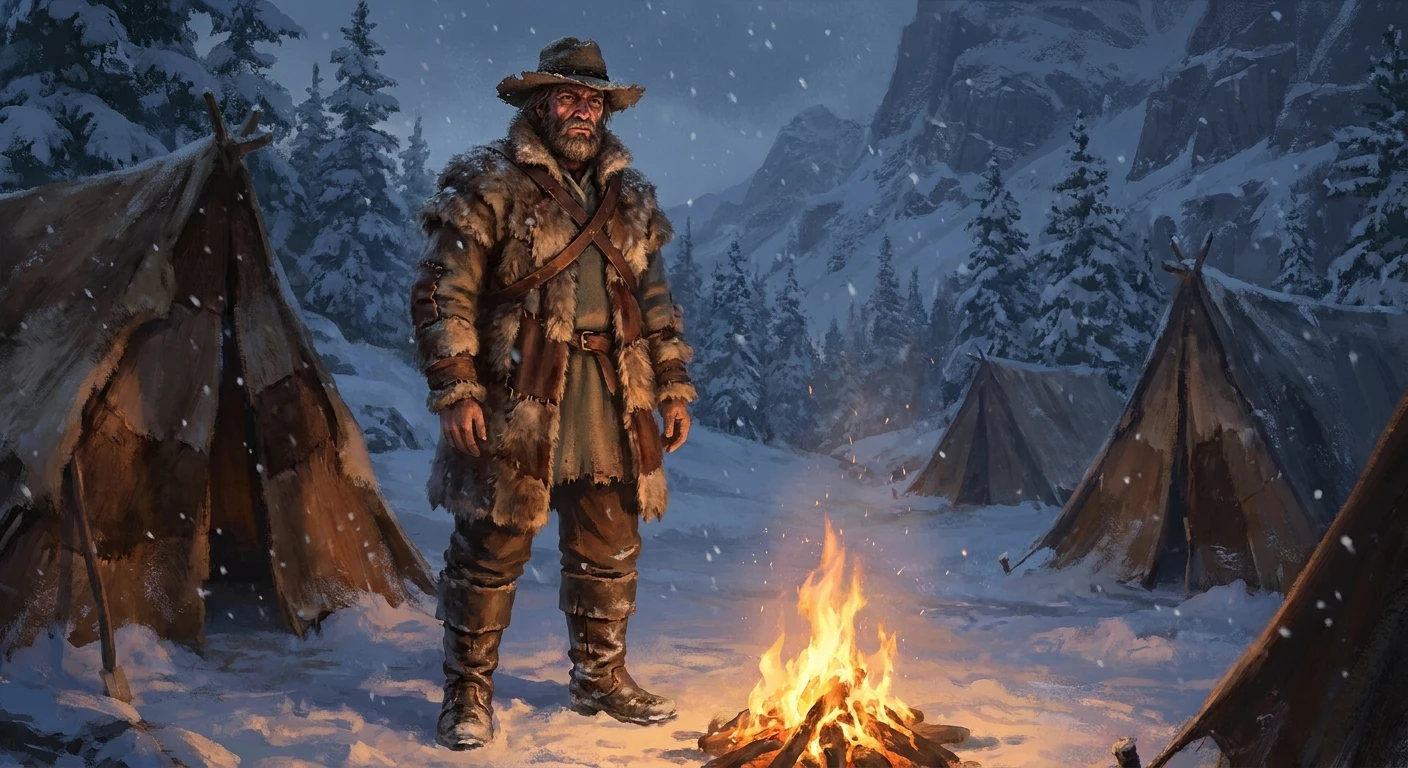
Mastering the Art of RDR2 Outfits
Curating the perfect RDR2 outfits requires more than just a sharp eye for late-nineteenth-century frontier fashion; it demands a strategic understanding of environmental survival mechanics. When you guide Arthur Morgan through the breathtaking expanses of Red Dead Redemption 2, what he wears directly dictates his stamina and health core drain rates. The transition from the sweltering bayous of Lemoyne to the freezing, snow-capped peaks of Ambarino is visually stunning, but if your wardrobe is ill-prepared, the harsh environment will actively punish your character’s vitality. This complete guide will break down everything you need to know about the dynamic clothing system, from managing internal temperature mechanics and unlocking rare Trapper garments to maximizing your saddlebag storage. By understanding the intricate details of digital tailoring, you can ensure that your character not only looks like an authentic, legendary outlaw but also functions at peak physical capacity regardless of the region or weather conditions.
To truly master the wardrobe mechanics, you need to treat your clothing as essential survival equipment. The game categorizes every piece of clothing into thermal tiers, meaning that assembling a functional look requires balancing aesthetics with mathematical temperature values. Knowing how to combine vests, heavy coats, chaps, and gloves can mean the difference between thriving in the Grizzlies and constantly draining your hard-earned provisions just to stay warm. We are going to break down the core mechanics of how to optimize your clothing choices for any given scenario, ensuring you remain comfortable, stylish, and physically formidable across the entire map.
Read also: Master Call of Duty Warzone Mobile: Complete Guide; Everything You Need to Know About the inZOI Demo.
Core Mechanics: Balancing Style and Survival
The clothing system in Red Dead Redemption 2 operates on a strict temperature scale divided into three primary categories: Hot, Average, and Cold. Every individual garment, from a simple cotton shirt to a massive Legendary Bear Coat, carries a hidden insulation value. When you combine these items, the game calculates a cumulative warmth score. If your clothing is too heavy for the humid swamps of Saint Denis, your stamina core will drain rapidly due to overheating. Conversely, riding into the snowy mountains of Colter in just a union suit and suspenders will cause your health core to plummet due to freezing temperatures. To navigate this system successfully, you must become familiar with the different classifications and how to seamlessly switch between them using your horse’s saddle storage.
| Climate Classification | Ideal Regional Environment | Core Health & Stamina Impact |
|---|---|---|
| Cold Weather Wardrobe | Ambarino, Grizzlies West, Colter | Prevents rapid health core drain from freezing. Requires heavy coats, gloves, and chaps. |
| Average Weather Wardrobe | New Hanover, The Heartlands, West Elizabeth | Maintains baseline core retention. Best suited for medium layers like vests over shirts. |
| Hot Weather Wardrobe | Lemoyne, Saint Denis, New Austin | Stops stamina penalties from overheating. Requires rolled sleeves, open collars, and no heavy outerwear. |
Creating custom wardrobes that cover all these bases is a rewarding process that requires gathering resources and utilizing the game’s robust customization menu. The value proposition of engaging deeply with this system is twofold: you optimize your gameplay efficiency by saving tonics and food, and you dramatically enhance the roleplaying immersion of your playthrough. To build the ultimate functional wardrobe, follow these essential guidelines:
- Assess the Geographic Needs: Before setting out from camp, check your map and determine your primary destination. If you are heading north into the mountains, ensure you have a dedicated cold-weather ensemble saved to your horse.
- Layer Strategically: Start with a basic shirt and pants. Add a vest for moderate climates, and equip a heavy duster or crafted animal-skin coat only when the temperature drops. Remember that accessories like gloves and half-chaps also add hidden warmth values.
- Upgrade Your Storage: Visit a stable to purchase upgraded saddlebags. This single investment allows you to store up to five custom ensembles on your horse, ensuring you can adapt instantly to dynamic weather shifts without returning to camp.
The Origins of Frontier Fashion in Gaming
The intricate design of western attire in video games has undergone a massive transformation over the past two decades. In the early era of open-world gaming, character models were static. Changing clothes meant swapping an entire, pre-rendered low-polygon mesh for another. You could not mix a specific hat with a specific pair of boots; you were locked into complete, unalterable skins. This rigid approach limited player expression and offered no tangible gameplay benefits beyond a simple visual palette cleanser.
The Evolution of Dynamic Clothing Systems
As gaming hardware advanced, developers began experimenting with modular systems. Rockstar Games initially pushed boundaries with Grand Theft Auto IV and V, allowing players to mix tops, bottoms, and shoes. However, these systems still lacked physical weight and environmental interactivity. The release of Red Dead Redemption 2 represented a monumental leap forward. Instead of simply pasting textures onto a character skeleton, the developers engineered a sophisticated layering system where every garment occupies its own physical space. Suspenders physically stretch over the contours of a shirt, and heavy coats rest naturally over holsters. This evolution transformed digital tailoring from a superficial feature into a deeply integrated survival mechanic.
The Modern State of Digital Tailoring
Today, the game’s wardrobe system is celebrated as an industry benchmark. The community surrounding the game has spawned massive forums and social media groups dedicated entirely to historical fashion recreation. Players spend dozens of hours hunting specific wildlife just to craft a historically accurate scout jacket or a specific pair of fringed chaps. The modern state of digital tailoring in this title proves that when developers invest in procedural physics, dirt accumulation algorithms, and precise historical detailing, the community will embrace it as a core pillar of the gameplay experience.
Understanding the Temperature Weighting System
Beneath the beautifully rendered wool and leather lies a complex mathematical framework. The game engine assigns a specific numeric thermal value to every item in the catalogue. When the player enters the wardrobe menu, the engine runs a real-time calculation, summing up the thermal values of the boots, pants, shirt, vest, coat, and accessories. If this total sum crosses specific numeric thresholds, the ensemble is dynamically reclassified from “Fair” to “Warm” or “Hot.” This modular approach means there are thousands of potential combinations that can achieve the exact same thermal rating. You are not forced to wear the thickest, ugliest coat to survive the snow; you can achieve the same insulation by layering a moderately warm jacket over a thick wool shirt, adding a heavy vest, and equipping warm badger-skin gloves.
Material Degradation and Physics Simulation
The visual fidelity of the garments is driven by advanced procedural algorithms and the Havok physics engine. Clothing in this world does not remain pristine. It reacts dynamically to the environment, accumulating specific types of dirt, snow, and water based on real-time interactions. If you fall into the mud in Valentine, the mud maps onto the specific fabric textures, drying and crusting over time. To fully appreciate the technical marvel of this system, consider these underlying scientific and technical facts:
- Dynamic Vertex Weighting: Coat tails and fringes utilize real-time physics calculations to swing naturally based on the character’s movement speed and the direction of the wind.
- Environmental Staining Shaders: The engine uses multi-layered shaders that allow wetness to darken fabrics procedurally, starting from the hem of the pants and creeping upward as you wade through water.
- Thermal Insulation Coding: Different materials simulate real-world insulation; wool and thick pelts provide high thermal values, while cotton and silk offer almost none.
- Clipping Prevention Algorithms: The game actively calculates the collision mesh of underlying layers (like a puffy shirt) to prevent them from clipping through tighter outer layers (like a tailored vest).
- Somatic NPC Reaction Triggers: The game tracks the cleanliness and origin of your clothing, triggering specific dialogue lines from non-playable characters if you are covered in blood or wearing eccentric animal pelts.
7-Step Guide to Perfecting Your Wardrobe
Building an adaptable, stylish, and highly functional wardrobe requires a methodical approach. By following this seven-step plan, you can master the tailoring mechanics and ensure Arthur Morgan is prepared for any situation.
Step 1: Evaluating the Regional Climate Demands
Before buying or crafting anything, assess the regions you plan to explore. If your story progression keeps you in the Heartlands, prioritize average-temperature gear. Check the in-game temperature gauge located in the pause menu or by pressing the down directional button to understand the exact climatic demands of your current location.
Step 2: Selecting the Base Layers
The foundation of any good look starts with the shirt and pants. Opt for the Everyday Shirt or the Collar Overshirt for a rugged, authentic look. Ensure you select pants that tuck neatly into your preferred boots. The base layer is crucial because, in hot weather, this is all you will be wearing to avoid stamina penalties.
Step 3: Layering for Warmth and Style
Once your base is set, add a vest. The vest is the most versatile piece of clothing, offering moderate warmth while maintaining a sharp silhouette. The Classic Vest is great for clean-cut looks, while the crafted Wilderness Vests from the Trapper provide excellent insulation and a rugged aesthetic. Only add a heavy coat over the vest when venturing into snowy territories.
Step 4: Accessorizing with Hats and Spurs
Accessories are the finishing touches that define a character’s silhouette. Hats not only protect from the sun visually but can be knocked off during gunfights, requiring you to retrieve them. Spurs add a satisfying auditory jingle when walking through towns. Choose accessories that complement the color palette of your base layers.
Step 5: Managing Stowed Outfits on Your Horse
A beautiful wardrobe is useless if you leave it back at camp. Visit a stable immediately and purchase the Upgraded Saddlebags. This increases your horse’s carrying capacity to five custom slots. Dedicate one slot to extreme cold, two to average temperatures, and two to hot weather. This setup guarantees you will never be caught unprepared during long hunting expeditions.
Step 6: Upgrading at the Trapper
The most unique and visually striking garments are not found in standard general stores; they must be crafted by the Trapper. This requires hunting legendary animals and securing perfect pelts. Use the correct weapon and ammunition (like the Varmint Rifle for small game or improved arrows for large predators) to ensure a clean kill. Deliver these pristine pelts to the Trapper to unlock exclusive, high-stat coats, hats, and chaps.
Step 7: Routine Maintenance and Cleaning
Over time, your gear will become covered in mud, blood, and grime, which negatively impacts how NPCs interact with you. To maintain your look, regularly visit hotels in towns like Valentine or Strawberry to take a bath. Alternatively, taking a quick swim in a clean river will wash off the worst of the surface dirt, keeping your carefully curated look sharp.
Myths & Reality
Because the game’s mechanics are so deeply intertwined, players often misunderstand how the clothing system actually works. Here is a breakdown of the most common misconceptions.
Myth: The clothes you choose are purely cosmetic and do not impact gameplay.
Reality: Clothing directly dictates your thermal regulation. Wearing winter gear in a swamp will rapidly drain your stamina core, severely crippling your ability to run, fight, and survive.
Myth: You are strictly limited to saving only three custom clothing sets on your horse.
Reality: By purchasing upgraded saddlebags from any stable, you can permanently increase your mobile storage capacity to five complete sets, allowing for much greater versatility.
Myth: The Trapper will accept any quality of pelt to craft his exclusive gear.
Reality: The Trapper requires strictly perfect (three-star) pelts, or specific Legendary animal pelts, to craft his unique garments. A poor or good pelt is only useful for selling for spare change.
Myth: Townspeople do not notice what you are wearing.
Reality: The game features complex reaction AI. If you walk into a high-end Saint Denis saloon covered in mud and wearing a giant bear head, NPCs will openly mock you, ask you to leave, or refuse service.
Frequently Asked Questions
How do I store more clothes on my horse?
To increase your mobile storage, ride to any stable in the game. Navigate to the Tack and Services menu, select Saddlebags, and purchase the Upgraded Saddlebags. This will instantly expand your storage capacity from three slots to five slots.
Can I remove my off-hand holster to change my look?
In the unmodified base game, once the off-hand holster is unlocked, it cannot be permanently unequipped from your wardrobe menu. However, you can change its style, leather color, and hardware to better match your belt and overall aesthetic.
Where is the easiest place to find perfect pelts for the Trapper?
The Heartlands and the forests of West Elizabeth are excellent hunting grounds. Always use your binoculars to study the animal first to ensure it is a three-star specimen, and use the correct weapon listed in the compendium to secure a clean, perfect kill.
Does swimming ruin my custom clothes?
Swimming will not permanently ruin your clothes, but it will dynamically alter their appearance. They will become visibly saturated, darken in color, and slowly dry over time. Swimming in clean water can actually wash away dried mud and blood.
Why are my saved slots disappearing from my saddle?
This is a common issue tied to picking up lost hats. If you pick up a glowing hat off the ground that you do not own, the game sometimes temporarily overrides a saved slot on your horse to store the “custom” look. Always double-check your stowed gear before leaving camp.
Do bandanas serve a functional purpose beyond style?
Yes, bandanas are highly functional. Equipping a bandana over your face before committing a crime hides your identity from ordinary civilians, meaning they will report a crime by an “unknown suspect” rather than identifying Arthur Morgan to the law.
How do I unlock the Legend of the East attire?
The Legend of the East is the most prestigious ensemble in the game. To unlock it, you must complete all 90 ambient challenges (Bandit, Explorer, Gambler, Herbalist, Horseman, Master Hunter, Sharpshooter, Survivalist, and Weapons Expert). It offers immense stat bonuses and protects against all weather conditions.
Curating your wardrobe is one of the most rewarding and immersive aspects of the game. By understanding the climate mechanics, utilizing the Trapper for high-quality crafted goods, and strategically managing your saddlebags, you can elevate your playthrough to cinematic new heights. Take the time to experiment with layers, manage your temperature cores, and ride out into the frontier in style. Start hunting those perfect pelts today, and completely transform your outlaw experience.




Leave a Reply