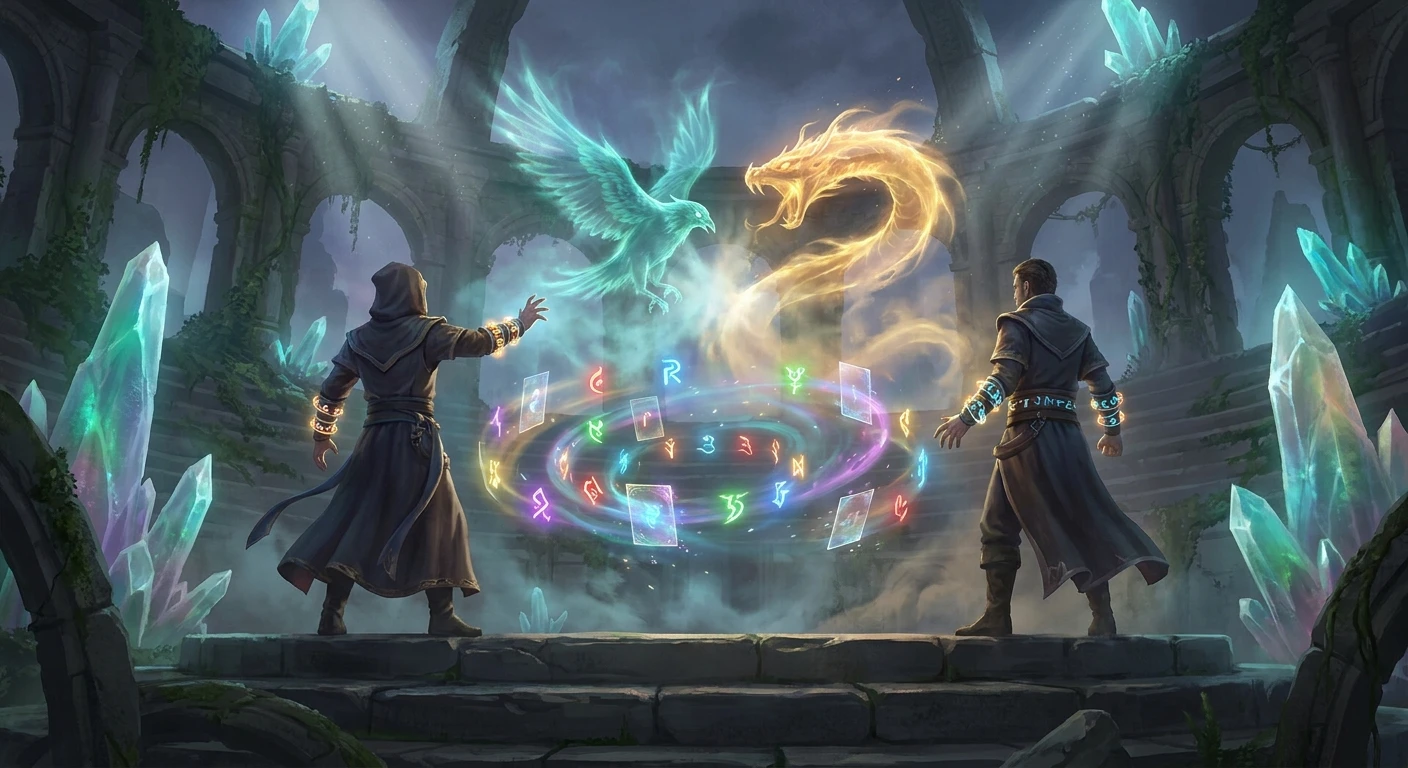
Magic the Gathering Final Fantasy: The Ultimate Crossover
When the strategic depth of tabletop gaming met the rich storytelling of Japanese role-playing games, the Magic the Gathering Final Fantasy collaboration fundamentally altered the trading card landscape. Released as part of the Universes Beyond product line in 2025, this expansion bridged decades of iconic lore—spanning from the pixelated beginnings of the original title to the modern cinematic spectacles of the sixteenth mainline installment—with the rigorous mechanical framework of the world’s premier trading card game. Players immediately recognized the meticulous care taken to adapt beloved characters, legendary summons, and intricate job systems into viable, competitive card designs. The integration required translating abstract role-playing mechanics into tangible tabletop resources, creating a seamless experience for both veteran spellslingers and dedicated RPG enthusiasts. By mapping specific character arcs to the traditional five-color pie of the game, designers established a rich drafting environment that rewarded deep thematic knowledge while maintaining strict competitive balance. This collaboration stands as a monumental achievement in intellectual property integration, proving that distinct gaming cultures can merge without sacrificing the core identities that made them legendary. The set introduced innovative mechanical interpretations of party dynamics, equipment management, and grand magical invocations, permanently reshaping the metagame across multiple sanctioned formats.
Core Gameplay Mechanics and Strategic Benefits
Understanding the value proposition of this massive crossover requires analyzing how specific role-playing elements were mechanically translated onto cardboard. The design team faced the monumental task of representing vast, multi-hour narratives within the confined text box of a standard trading card. They achieved this through keyword abilities, intricate synergy networks, and precise resource management systems. Rather than simply pasting character art onto generic effects, the set utilized specialized mechanical identities for different eras of the franchise. For example, early titles heavily focused on job classes and equipment, while later titles emphasized massive summoned entities and complex political allegiances. Players who master these distinct mechanical archetypes gain a significant advantage during gameplay.
Read also: mtg final fantasy Guide: Build Ultimate Decks; The Complete Gears of War Collection Blueprint.
| Game Element | Trading Card Equivalent | RPG Inspiration |
|---|---|---|
| Resource System | Mana Generation and Lands | Magic Points (MP) and Ether |
| Combat Units | Legendary Creature Spells | Party Members and Summons |
| Ultimate Attacks | Planeswalker Loyalty Ultimates | Limit Breaks and Overdrives |
To maximize your win rate and fully appreciate the expansion, players should focus on three primary benefits offered by the card pool:
- Cross-Format Versatility: The power level of the cards was carefully calibrated to ensure viability not just in casual multiplayer games, but also in highly competitive eternal formats. Many distinct legendary creatures immediately spawned entirely new deck archetypes.
- Drafting Cohesion: The limited environment functions as a highly synergistic puzzle, where players draft specific color pairs representing thematic elements like the Shinra Electric Power Company or the Garlean Empire, ensuring each draft feels distinct.
- Nostalgic Mechanical Resonance: The rules text of the cards directly mirrors the in-game functionality of the characters. A dragoon character utilizes abilities resembling the ‘Jump’ command to evade removal, while black mages focus on escalating direct damage spells.
Origins of the Universes Beyond Initiative
The foundation for this unprecedented collaboration was laid years prior through the Universes Beyond initiative. Wizards of the Coast recognized that the fundamental rules engine of their flagship game could serve as an operating system for diverse fictional universes. Early experiments with other prominent intellectual properties proved that players were eager to pilot decks featuring characters from outside the traditional multiverse. These initial products served as mechanical testing grounds, allowing designers to refine how external narratives could be mapped to traditional card types. The overwhelming commercial and critical success of these early endeavors provided the necessary data to pursue a partnership with Square Enix, a company historically protective of its flagship properties.
The Evolution of the Final Fantasy Partnership
Announced initially as a distant concept, the partnership evolved through rigorous design iterations before its monumental release in 2025. The development cycle required unprecedented coordination between the art directors of both franchises. The mandate was clear: the set had to encapsulate every mainline game from the first installment through the sixteenth. This sheer volume of source material necessitated a massive card pool and multiple supplemental products, including preconstructed decks and collector-focused booster boxes. The iterative process involved mapping out the color identities of hundreds of characters to ensure an even distribution across the traditional white, blue, black, red, and green mana spectrum.
Modern State of the Crossover Metagame
Following its integration into the global tournament scene, the expansion rapidly solidified its position within the competitive metagame. Currently, cards from this set are foundational pillars in various formats, particularly the multiplayer Commander format, where legendary heroes and villains serve as highly popular deck leaders. The competitive ecosystem quickly adapted to the new keyword abilities, with players constantly discovering novel interactions between classic cards and the new mechanics. Tournament data consistently highlights the resilience of these thematic decks, proving that the integration was not merely a cosmetic exercise but a robust expansion of the game’s strategic boundaries.
Mechanical Synergies and Card Architecture
Analyzing the underlying architecture of the set reveals a sophisticated approach to game theory and probability. The designers utilized the concept of ‘parasitic’ versus ‘modular’ mechanics with extreme caution. Instead of creating insular mechanics that only function when played alongside cards from the exact same set, they engineered the new abilities to interact favorably with decades of existing card history. For instance, equipment-focused characters synergize perfectly with artifacts printed ten years ago, maximizing the modularity of the deck-building experience. This structural elegance ensures that the cards remain relevant long after the initial release window has closed.
Probability and Resource Management
Successfully piloting a deck utilizing these new cards requires a firm grasp of hyper-geometric probability and mana curve optimization. When constructing a deck around high-cost summoning spells—representing massive entities like Bahamut or Leviathan—players must meticulously balance their mana-generating resources to ensure they survive the early stages of a match. The tactical depth lies in risk assessment: determining exactly when to deploy a vulnerable engine piece versus holding up resources for instant-speed interaction.
- Color Pie Distribution: Characters were strictly assigned colors based on their philosophical motivations, aligning perfectly with established game design rules.
- Mana Efficiency: The set features a unique scaling mechanic where low-cost spells gain additional utility in the late game, preventing dead draws.
- Combat Math: Evasion abilities are strategically distributed among specific character classes to ensure aggressive strategies can bypass stalled board states.
- Card Advantage Engines: Slower, control-oriented strategies rely on recursive mechanics that mirror the RPG concept of reviving fallen party members.
Step 1: Analyze the Color Pie Combinations
Mastering this expansion requires a methodical approach to deck construction. Begin by examining the distinct two-color pairs established within the set. Each color combination represents a specific mechanical theme and narrative faction. Identifying which combination aligns with your preferred playstyle—whether it is an aggressive red-white strategy or a controlling blue-black approach—is the foundational step in building a competitive list.
Step 2: Draft Archetype Identification
When participating in limited formats like booster draft, you must quickly identify the open archetypes being passed to you by other players. Memorize the ‘signpost uncommons’—specific cards designed to clearly signal the intended strategy for a specific color pair. Recognizing these signals early in the drafting process allows you to pivot your selections and assemble a highly synergistic deck.
Step 3: Core Synergy Building
Once you have selected your primary colors, focus strictly on internal synergy rather than raw power. A deck composed of moderately powerful cards that interact flawlessly will consistently defeat a pile of powerful but disjointed mythic rares. Look for specific interactions between job class types and specific equipment pieces to maximize your board presence.
Step 4: Balancing the Mana Curve
A mathematically sound mana curve is non-negotiable. Ensure your deck has a high density of early-game plays to establish tempo, tapering off into a few high-impact finishers. In this specific set, early-game plays often involve utility characters that set up the board for massive, game-ending summon spells in the later turns.
Step 5: Integrating Summon Spells
Summon spells in this expansion function as highly impactful, resource-intensive finishers. You must dedicate a specific portion of your deck to generating the necessary mana to cast these spells ahead of schedule. Utilize specialized resource-generating artifacts or ‘ramp’ spells to accelerate your game plan.
Step 6: Playtesting the Aggro Matchup
Before entering a tournament, rigorously test your deck against hyper-aggressive strategies. The metagame often heavily favors fast, proactive decks during the early weeks of a new format. Ensure you have sufficient early blockers and low-cost removal spells to survive the initial onslaught and stabilize the board.
Step 7: Refining the Sideboard
Your fifteen-card sideboard is critical for competitive success. Tailor these specific slots to combat the most popular strategies in the current metagame. Include localized graveyard removal, artifact destruction, and specialized counter-magic to adapt to your opponent’s specific threats during games two and three of a match.
Myths and Reality
Myth: The set entirely revolves around the aesthetics and characters of the seventh mainline game.
Reality: While iconic characters from that specific title are prominently featured, the expansion comprehensively covers all sixteen mainline games, ensuring equal mechanical representation for every era of the franchise.
Myth: Cards from Universes Beyond are explicitly banned in competitive tournament play.
Reality: The cards printed in this main-line release are fully legal in multiple sanctioned formats, including Modern, Legacy, Vintage, and Commander, fundamentally shaping the competitive landscape.
Myth: Role-playing game mechanics cannot translate effectively into a structured trading card game environment without breaking the rules.
Reality: The designers successfully utilized existing mechanical frameworks, such as equipment attachment and leveling systems, to perfectly emulate the RPG experience within the strict confines of the game’s comprehensive rules engine.
What formats allow these cards?
The cards are legal in Modern, Legacy, Vintage, and Commander formats, providing a wide array of competitive and casual play opportunities for all players.
Does the set cover all mainline games?
Yes, the expansion includes characters, locations, and thematic elements from every mainline installment, ranging from the original release through the sixteenth game.
Are there legendary creatures for Commander?
The set features a massive roster of legendary creatures specifically designed to lead decks in the popular multiplayer Commander format.
How do summon mechanics work?
Summons are typically represented as high-cost, high-impact spells that drastically alter the state of the board, often requiring dedicated resource management to cast effectively.
Is this a draftable set?
Absolutely. The set was meticulously balanced for limited play, offering a highly strategic and thematic booster draft experience.
Are there premium collector treatments?
The release includes specialized collector boosters featuring alternate art, unique foil treatments, and serialized cards highly sought after by collectors.
Where can players buy sealed product?
Sealed booster boxes, preconstructed decks, and individual booster packs are available at local game stores and major online tabletop retailers globally.
Mastering the intricacies of the Magic the Gathering Final Fantasy crossover offers an unparalleled tabletop experience that merges brilliant mechanical design with beloved narrative history. By rigorously analyzing the color pie, optimizing your mana curve, and understanding the hyper-geometric probabilities of your deck, you can dominate the competitive metagame. Secure your booster boxes, finalize your decklists, and prepare to summon victory at your next local tournament.



Leave a Reply