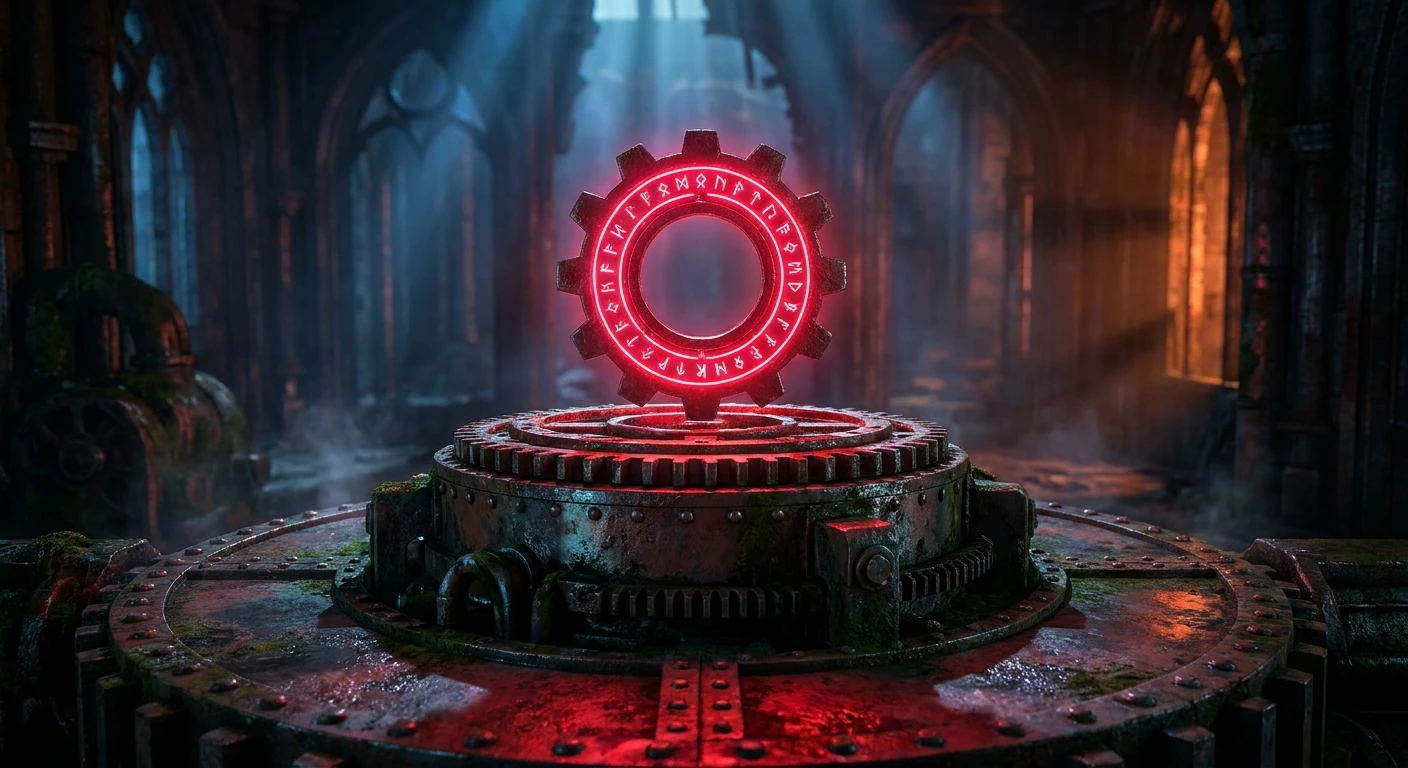
Gears of War Collection: The Ultimate Compendium
Securing a complete Gears of War Collection remains a fundamental rite of passage for dedicated players and tactical shooter enthusiasts alike. For decades, the franchise has defined cooperative multiplayer environments and cinematic campaigns, fundamentally altering how development studios approach third-person combat architecture. Compiling these titles offers more than just nostalgic value; it provides a comprehensive historical archive of interactive storytelling and engine optimization from 2006 to the present day. You are looking at a masterclass in pacing, mechanical feedback loops, and cooperative synergy.
The landscape of the gaming industry shifts constantly, yet the robust foundation built by the original releases holds firm against modern standards. Now, as the community stands merely weeks away from the highly anticipated October 2026 releases, revisiting the foundational entries provides crucial context. The mechanics established early on—specifically the cover system and dynamic reloading—continue to influence countless modern projects. Understanding exactly what constitutes a complete library ensures that no vital chapter of the saga is missed, from the gritty ruins of Sera to the refined technological showcases running on the latest iteration of the Unreal Engine.
Read also: Why You Should Replay dungeon siege 3 Right Now; How to Pre Order GTA 6: Complete Guide to Editions & Bonuses.
To fully appreciate the scope of this franchise, one must evaluate the individual components that comprise the overarching bundle. Whether you play on a legacy console, a modern rig, or via cloud streaming, having a structured approach to the series guarantees a superior entertainment experience and a deeper appreciation for the tactical depth it offers.
Core Mechanics and Foundational Value
Evaluating the true value of any Gears of War Collection requires an understanding of its mechanical innovations and content density. A standard comprehensive bundle typically encompasses the classic quadrilogy, providing hundreds of hours of combined single-player, cooperative, and competitive gameplay. The sheer volume of tactical encounters designed into these campaigns requires precise coordination, making them timeless benchmarks for cooperative design. For example, obtaining the classic legacy bundle grants instant access to Gears of War, Gears of War 2, Gears of War 3, and Gears of War: Judgment, effectively charting the initial era of the overarching narrative.
The value proposition here is exceptional. First, players receive access to seamless drop-in, drop-out cooperative mechanics, which remain highly responsive even on legacy servers. Second, the evolution of the Horde mode provides an endless, wave-based defensive challenge that heavily rewards map control and resource management. Whether holding down a chokepoint on Gridlock or managing fortifications in later iterations, the strategic ceiling is incredibly high.
| Title | Platform Origin | Signature Feature |
|---|---|---|
| Gears of War (Classic & Ultimate) | Xbox 360 / PC | Introduction of Active Reload and Cover Mechanics |
| Gears of War 2 | Xbox 360 | Debut of 5-player cooperative Horde Mode |
| Gears of War 3 | Xbox 360 | 4-Player Campaign Co-op and Dedicated Servers |
| Gears of War: Judgment | Xbox 360 | Declassified Missions and Class-based Overrun Mode |
To master the gameplay loop, players must internalize three essential pillars of the series:
- The Active Reload System: A rhythm-based mechanic where pressing the reload button at a specific frame window grants a temporary damage boost and accelerates the reload speed. Missing the timing results in a jammed weapon and a severe tactical disadvantage.
- Dynamic Cover Traversal: Movement is intrinsically tied to environmental geometry. Players navigate combat arenas by sprinting between concrete blocks, vehicles, and debris, utilizing the terrain to break lines of sight and flank entrenched positions.
- The Down But Not Out (DBNO) State: Upon sustaining critical damage, characters fall into a crawling state rather than dying instantly, allowing squadmates a brief window to revive them before the opposition can execute a finishing maneuver.
Origins: The Birth of a Cover Shooter
The inception of the franchise in 2006 marked a definitive paradigm shift for action titles. Prior to its launch, third-person shooters struggled to balance agile movement with tactical pacing. The development team solved this by heavily emphasizing spatial awareness and environmental interaction. Players could no longer run blindly into open spaces; survival mandated the intelligent use of cover. This design philosophy created a methodical, tension-filled rhythm where every engagement felt like an intricate chess match involving suppressing fire and aggressive flanking routes. The visual identity, characterized by its ruined gothic architecture and desaturated color palettes, further cemented its unique position in the market.
Evolution: Expanding the Sera Universe
As the series progressed, the underlying technology and narrative scope expanded significantly. The sequel introduced larger battlefields, significantly higher enemy counts on screen, and destructible environmental elements that forced players to constantly reposition. By the time the third installment arrived, the storytelling had evolved from a straightforward military operation into a deeply emotional saga of survival, sacrifice, and global devastation. The multiplayer component simultaneously matured, shifting from peer-to-peer matchmaking to robust dedicated server architecture, which drastically improved hit registration and competitive fairness. The introduction of intricate progression systems and unlockable character variants kept the community engaged for years beyond the initial launch window.
Modern State: Reloaded and Remastered Visions
The contemporary landscape offers unprecedented accessibility to these historic titles. With the advent of advanced backward compatibility and specific digital re-releases, maintaining a playable library is easier than ever. Dedicated storefronts provide avenues to acquire PC gaming storefronts versions, ensuring that framerates and resolution targets meet modern expectations. Furthermore, specialized packages like the all post-launch content bundles on digital platforms ensure that bonus campaign acts, DLC multiplayer maps, and expanded character rosters are preserved and integrated seamlessly into the base applications.
Unreal Engine Architecture
At the heart of the series lies the Unreal Engine, a proprietary rendering framework that has continually pushed graphical boundaries. The initial games served as the primary showcase for Unreal Engine 3, demonstrating advanced rendering techniques such as normal mapping, dynamic lighting, and specular highlights that gave metallic surfaces and weathered armor an unprecedented level of realism. The physics engine dictated the precise weight and momentum of character models, resulting in movement that felt deliberately heavy and grounded. When transitioning to more recent engine iterations, developers completely overhauled the global illumination systems, allowing for stunning, bounce-lit environments that react dynamically to particle effects and explosions without compromising the strict performance budgets required for smooth gameplay.
Server Code and Multiplayer Networking
The backbone of any competitive shooter is its network infrastructure, and this franchise has undergone a massive evolution in its data transmission protocols. Early iterations relied on user-hosted sessions, which often resulted in localized latency advantages. The shift to cloud-based dedicated servers fundamentally changed the competitive scene by standardizing the tick rate and ensuring equitable data exchange between clients. This infrastructure meticulously calculates hitboxes on a frame-by-frame basis, prioritizing consistent hit registration across massive distances.
- Frame Rate Scaling: Modern updates allow classic titles to operate at 60fps or even 120fps on capable hardware, cutting input latency in half.
- Texture Streaming Technology: High-resolution assets are dynamically loaded into memory based on camera proximity, ensuring that vast landscapes render without stalling the processor.
- Client-Side Prediction: Advanced network code masks inherent internet latency by anticipating player movement inputs, delivering a frictionless experience even on sub-optimal connections.
- Dedicated Tick Rates: Running server computations at higher frequencies guarantees that split-second decisions, like a synchronized active reload and firing sequence, are registered accurately by the central server.
Day 1: Establishing the Beachhead
Commence your journey with the original campaign or its Ultimate Edition remaster. Focus entirely on mastering the timing of the active reload and understanding the strict spatial requirements of the cover system. The early chapters introduce the foundational enemy types and the necessity of prioritizing targets. Keep a close eye on your flanks and practice blind-firing from behind barriers to suppress incoming hostile forces without exposing your central mass.
Day 2: Going Underground
Transition directly into the second installment, which significantly ramps up the scale of combat. Here, you will encounter aggressive subterranean environments and vehicular segments. This is the optimal time to experiment with heavy weaponry and localized explosive tactics. Utilize the newly introduced deployable cover shields and familiarise yourself with the pacing of the newly established Horde mode by attempting the first ten waves solo or with a trusted cooperative partner.
Day 3: The Lambent Threat
The third chapter fundamentally alters the tactical landscape by introducing highly volatile, mutating adversaries. Enemies will now explode upon defeat or alter their physical forms mid-combat, requiring extreme adaptability. Four-player cooperative play becomes highly advantageous here. Dedicate time to understanding the weapon sandbox updates, specifically the retro variations of standard assault rifles, which offer devastating close-range potential at the cost of severe recoil.
Day 4: Exploring the Tribunal
Judgment alters the narrative structure by utilizing flashbacks and integrating a dynamic scoring system via Declassified Missions. These optional modifiers enforce strict conditions on the player, such as restricted weapon loadouts or obscured vision. Embracing these challenges drastically improves your mechanical proficiency and forces you to break established habits, preparing you for higher difficulty tiers across the entire franchise.
Day 5: The Next Generation
Moving into the modern era, the fourth main entry introduces enhanced mobility mechanics, including the ability to vault over cover fluidly and execute close-quarters combat maneuvers without breaking stride. Focus on utilizing the environmental hazards scattered throughout the maps to neutralize threats efficiently. The defensive fortifications in the updated Horde mode require rigorous resource management, so coordinate energy deposits carefully.
Day 6: Open World Skirmishes
The fifth entry expands the linear formula into broad, explorable hubs. Utilize the skiff to traverse these massive icy and desert environments. The integration of RPG-lite elements and a customizable support drone means you must balance offensive firepower with tactical utility, such as localized scanning or targeted shock traps. Fully upgrade your support unit to maximize your survivability during the intense final acts.
Day 7: Preparing for E-Day
Consolidate your mechanical skills by engaging in high-tier competitive multiplayer or master-level Horde runs. The strategic groundwork you have laid over the past six days prepares you perfectly for the global release of E-Day, which launches on October 6, 2026. Review your control schemes, optimize your hardware settings, and ensure your reflexes are calibrated for the rigorous challenges ahead.
Myth: The collection only provides value for competitive multiplayer fans.
Reality: The overarching bundle contains hundreds of hours of meticulously crafted, narrative-driven single-player and cooperative campaign content that stands entirely independent of the competitive matchmaking modes.
Myth: PC players are locked out of the classic console iterations entirely.
Reality: Through robust digital frameworks, official streaming services, and optimized ports, PC users have unfettered access to the vast majority of the classic library in high fidelity.
Myth: The active reload mechanic is merely a cosmetic visual flourish.
Reality: It is a deeply mathematical system that directly impacts damage output, firing rate, and time-to-kill metrics, making it a mandatory skill for high-level survival.
Myth: The story is completely linear and lacks any background lore.
Reality: Countless collectibles, environmental storytelling cues, and expanded universe novels tie directly into the campaigns, offering a rich, interconnected historical timeline of the fictional universe.
What exactly does the legacy collection include?
A standard classic digital bundle typically features the original Gears of War, the sequel, the third installment, and the prequel Judgment, complete with their respective base campaign and multiplayer functionalities.
Do these older titles support cross-platform play?
While the original Xbox 360 releases operated within a closed console ecosystem, modern ports and newer entries in the franchise fully support cross-platform lobbies between console and PC users.
Are the dedicated servers still operational for older games?
Yes, the central infrastructure for the primary titles remains active, allowing communities to continue organizing competitive matches and cooperative defense lobbies without relying purely on peer-to-peer connections.
What is the Exfil Dom Character Skin?
This specific cosmetic is an exclusive digital reward tied to the early access Open Beta and Collector’s Edition pre-orders for the 2026 release, offering veteran players a unique visual identity.
Can I play the entire campaign in split-screen mode?
Couch cooperative play is a cornerstone of the franchise. The vast majority of the main series supports two-player local split-screen for both narrative campaigns and specific multiplayer modes.
Is the defensive Horde mode accessible offline?
While playing with a full squad requires an active network connection, you can initiate local matches of Horde mode with AI companions or via split-screen without connecting to external servers.
When exactly does the new E-Day title launch?
The Collector’s Edition drops on October 1, 2026, followed immediately by the standard global release scheduled for October 6, 2026.
How large are the installation files for the complete set?
Due to uncompressed high-resolution textures and extensive audio files, installing the entire modern and classic library simultaneously can require several hundred gigabytes of storage space.
Maintaining a comprehensive Gears of War Collection ensures that the monumental legacy of tactical third-person combat is preserved directly on your hard drive. By understanding the mechanical nuances, historical development, and networking evolution detailed above, you equip yourself with the knowledge necessary to dominate both the campaigns and the competitive arenas. Organize your digital library, finalize your loadouts, and secure your pre-orders today to stand ready for the next massive chapter in this legendary franchise.


Leave a Reply