Finding the Best Games Like Until Dawn
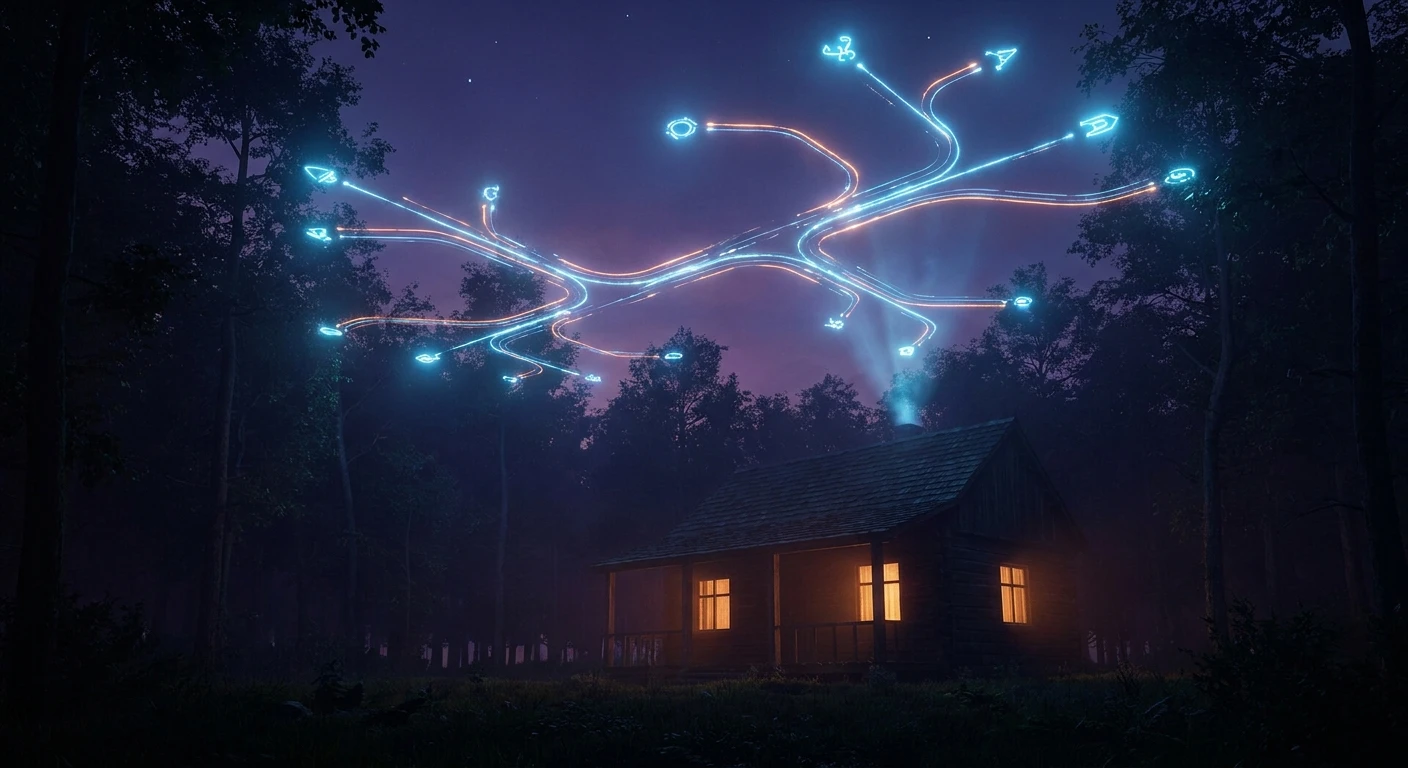
If you just finished surviving the nightmare on Blackwood Mountain, you are likely hunting for more thrilling Games Like Until Dawn to keep that adrenaline pumping. The interactive drama genre has carved out a massive space in modern entertainment, blending the passive enjoyment of a teen slasher movie with the intense, white-knuckle stress of video game decision-making. You know the exact feeling: the timer is ticking down, the music is swelling, and a single button press will decide whether a beloved character makes it to morning or meets a gruesome fate. This unique blend of cinematic presentation and high-stakes agency is exactly why players constantly seek out similar choice-based horror experiences.
Finding the perfect follow-up title requires looking at games that understand the delicate balance of the butterfly effect. Every action needs to have a consequence, even if that consequence does not surface until hours later. The market for narrative-driven horror has expanded significantly over the past decade, offering players multiple avenues to experience these branching paths. From ghost ships stranded in the middle of the ocean to supernatural summer camps isolated from the rest of the world, the gaming industry has stepped up to deliver cinematic tension. The core appeal remains the same: handing you the director’s chair in a horror movie where the script is written in real-time by your split-second reactions and moral dilemmas.
Read also: The Best Multiplayer Games PS5 Players Must Try; Best multiplayer ps5 games to Play.
Why We Crave Choice-Based Horror Mechanics
The interactive horror genre relies on a very specific value proposition: the illusion and reality of absolute control over life and death. Traditional horror games often rely on resource management, hiding in lockers, or precisely aiming a weapon at a monster. Cinematic choice-based games, on the other hand, test your psychological endurance, your ethical boundaries, and your ability to stay calm under intense cinematic pressure. You are not just managing health bars; you are managing relationships, personalities, and branching timelines. When looking for the best alternatives in this genre, certain core mechanics must be present to deliver that authentic, movie-like thrill.
Let us break down how some of the top contenders stack up against each other:
| Game Title | Core Setting & Theme | Standout Mechanic |
|---|---|---|
| The Quarry | Summer camp creature feature | Extensive multiplayer couch co-op options |
| Man of Medan | Abandoned WWII ghost ship | Shared Story online multiplayer mode |
| Heavy Rain | Gritty urban serial killer mystery | Complex investigative QTE sequences |
To truly replicate that specific interactive horror magic, a game needs to nail three foundational elements. If you are shopping for your next digital nightmare, keep an eye out for these crucial pillars:
- Branching Narrative Trees: The storyline must be capable of splintering into dozens of different directions. If the game forces you down a linear path regardless of what you choose, the tension evaporates. The best titles ensure that failing a quick-time event (QTE) does not result in a “Game Over” screen, but rather forces the story to adapt to a tragic new reality.
- High-Fidelity Cinematic Presentation: The fear factor relies heavily on realism. High-quality facial animations, professional voice acting, and dynamic camera angles lifted straight out of Hollywood cinematography are required to make you care about the characters on screen.
- Unpredictable Moral Dilemmas: The choices should rarely be black and white. Deciding whether to run or hide is basic; deciding whether to save your best friend or the person holding the only weapon introduces genuine psychological weight.
Origins of the Interactive Drama
The roots of cinematic choice-based games trace back much further than high-definition graphics. In the 1980s, text adventures and “Choose Your Own Adventure” books laid the foundational logic for branching narratives. Players were fascinated by the idea of reading a story where their input directly altered the ending. As technology advanced into the 1990s, Full Motion Video (FMV) games like Night Trap attempted to merge real video footage with player input. While these early FMV titles were often clunky and visually compressed, they proved that players wanted to interact with live-action or movie-like scenarios.
Evolution of the Butterfly Effect
The true evolution of the modern interactive drama began in the mid-2000s, spearheaded heavily by studios like Quantic Dream. Titles such as Fahrenheit (Indigo Prophecy) and later Heavy Rain established the modern grammar for these games: contextual button prompts, right-stick gestures to mimic real-world actions, and narratives that continued seamlessly even if a main character died. This era shifted the focus from pixel-hunting point-and-click mechanics to fluid, cinematic pacing. The concept of the “butterfly effect”—where a seemingly minor decision in the first act drastically reshapes the climax—became the gold standard for narrative design.
The Modern State of Choice-Based Horror
Today, the genre is a polished, high-budget powerhouse. Supermassive Games took the framework of interactive drama and perfectly applied it to the teen slasher horror trope, creating a formula that feels like playing a classic 1980s horror VHS tape. The modern state of the genre heavily incorporates multiplayer elements, acknowledging that playing these games is often a communal experience. Features like “Movie Night” modes allow groups of friends to pass a controller around, assigning different characters to different people, effectively turning the video game into an interactive party event.
Game Engine Architecture and Branching Logic
Under the hood, managing a narrative where anyone can live or die requires incredibly complex software engineering. Instead of a linear script, developers use massive node-based state machines. Every time you make a choice, the game engine updates hidden boolean variables (true/false flags) in the background. If you pick up a baseball bat in chapter one, the “has_bat” variable switches to true. By chapter eight, the game engine checks that specific variable to determine if a character can defend themselves against an attacker. Tracking hundreds of these variables simultaneously without breaking the game’s logic or causing dialogue inconsistencies is a massive technical hurdle.
Motion Capture and Facial Rigging Technologies
To bridge the gap between video games and movies, developers rely on cutting-edge performance capture technology. The fear in a character’s eyes needs to look authentic to trigger a genuine emotional response from the player.
- Photogrammetry: Developers use dozens of high-resolution cameras to scan real actors’ faces and bodies, creating one-to-one digital replicas.
- Performance Capture Volumes: Actors wear specialized suits covered in reflective markers, recording their body movements, voice, and facial expressions simultaneously on a dedicated soundstage.
- Micro-Expression Rigging: Advanced facial rigs manipulate hundreds of digital muscles to capture subtle human expressions, successfully avoiding the unsettling “uncanny valley” effect that plagues lower-budget titles.
- Dynamic Lighting Engines: Real-time rendering calculates how light bounces off skin and eyes, ensuring the digital actors look grounded in their terrifying, shadow-filled environments.
Day 1: The Quarry – A Summer Camp Nightmare
Kick off your interactive horror marathon with the spiritual successor to the cabin-in-the-woods trope. The Quarry drops you into Hackett’s Quarry summer camp on the last night of the season. The counselors are packing up, but the locals and something lurking in the woods have other plans. Your goal here is to manage teenage hormones, terrible decision-making, and brutal quick-time events. Tip: Do not trust the friendly locals, and always double-check your surroundings before locking a door behind you.
Day 2: Man of Medan – Ghost Ship Mysteries
Transition from the woods to the open ocean with the first entry in The Dark Pictures Anthology. A group of wealthy twenty-somethings goes on a diving trip, only to be hijacked and forced aboard an abandoned World War II freighter. The tight, claustrophobic corridors of the ship create immense tension. The core challenge here is managing your characters’ panic levels; a racing heartbeat can literally give away your position if you fail the rhythm-based mini-games.
Day 3: Little Hope – Witch Trials and Fog
For your third day, dive into psychological, supernatural horror. A college field trip goes wrong when a bus crashes, leaving a group stranded in an abandoned town shrouded in impenetrable fog. The story heavily intertwines with 17th-century witch trials, jumping between past and present. Pay close attention to the character traits here; leaning too heavily into a character’s negative personality flaws will directly lead to their demise in the final act.
Day 4: House of Ashes – Underground Monsters
Shift the tone from supernatural ghosts to visceral, action-heavy creature horror. Set during the end of the Iraq War, opposing military forces fall into a buried Sumerian temple. They must work together to survive ancient, subterranean monsters. The military setting means characters are heavily armed, changing the dynamic from helpless victims to capable fighters. However, bullets cannot solve every problem, and managing the political and personal friction between the soldiers is key to survival.
Day 5: The Devil in Me – Murder Castle Escape
Step into a modern recreation of H.H. Holmes’ infamous murder hotel. A documentary film crew is lured to an island hotel filled with moving walls, deadly traps, and animatronic horrors. This title introduces more traditional video game mechanics, like inventory management and tool usage, into the cinematic formula. Survival requires keen observation, puzzle-solving skills, and the ability to think logically while a serial killer watches your every move.
Day 6: Heavy Rain – The Serial Killer Thriller
Take a break from monsters and dive into a grounded, gritty psychological thriller. You control four different characters, all connected to the hunt for the Origami Killer. While older than recent titles, its branching narrative remains one of the most ambitious in gaming history. The tension comes from mundane realism—searching crime scenes, conducting tense interviews, and dealing with extreme emotional trauma.
Day 7: Detroit: Become Human – Sci-Fi Survival
Conclude your marathon with a massive sci-fi epic about androids gaining sentience. While not a traditional horror game, the sheer volume of branching paths, life-or-death situations, and intense QTE combat sequences provides the exact same thrill. The flowcharts at the end of each chapter reveal just how many different ways a single scene could have played out, highlighting the true power of interactive drama.
Myth: Your Choices Do Not Actually Matter
Reality: While it is true that all players must hit specific narrative bottlenecks to keep the story moving, the journey and the final roster of survivors change drastically. Advanced state machines track hundreds of micro-decisions, from picking up a hidden clue to agreeing with a friend in casual conversation, which can entirely lock or unlock different endings.
Myth: These Are Just Interactive Movies, Not Games
Reality: Dismissing them as simple movies ignores the high-stress gameplay loops. Players must maintain sharp spatial awareness during exploration, utilize rapid reflex-based logic during combat, and manage inventory systems. Failing these gameplay mechanics results in permanent narrative consequences.
Myth: You Can Easily Save Everyone on the First Run
Reality: Blind playthroughs almost always result in multiple casualties. The games are specifically designed to subvert expectations and throw psychological curveballs. A choice that seems obviously “good” can often be a trap, requiring deep environmental investigation to deduce the truly safe option.
What is the closest game to this genre?
The Quarry is widely considered the closest direct spiritual successor, offering the same teen-horror tropes, camp setting, and massive cast of recognizable actors.
Can you play these titles cooperatively?
Yes. Many modern titles in this genre feature dedicated couch co-op modes, where you assign characters to different controllers, as well as online shared-story modes.
Are quick-time events mandatory?
Mostly yes, but recent games have introduced extensive accessibility options. You can often change QTEs to require simple button holds rather than rapid mashing, or remove the time limits entirely.
Do I need a high-end PC to run them?
Because they rely heavily on high-fidelity graphics and realistic lighting, a mid-to-high-end PC or a modern console is recommended for the best cinematic experience.
Is there a direct sequel?
There is no direct numerical sequel, but the developers have released numerous spiritual successors and spin-offs set in similar cinematic universes.
Are these games highly replayable?
Absolutely. The core appeal is replaying the game making entirely different choices just to see the diverse death scenes, alternate relationships, and hidden clues.
How long do they typically take to beat?
Most titles in this genre range from 5 to 10 hours for a single playthrough, making them perfect for a weekend binge with friends.
Conclusion
The thirst for narrative agency in horror is stronger than ever. The beauty of these cinematic experiences lies in their ability to make you completely complicit in the unfolding tragedy. You cannot yell at the screen when characters make stupid decisions, because you are the one making them. If you are ready to face the consequences of your actions all over again, pick up one of the fantastic titles from our 7-day marathon list. Grab your controller, turn off all the lights, gather your friends, and let us know which character you accidentally doom first!

Leave a Reply