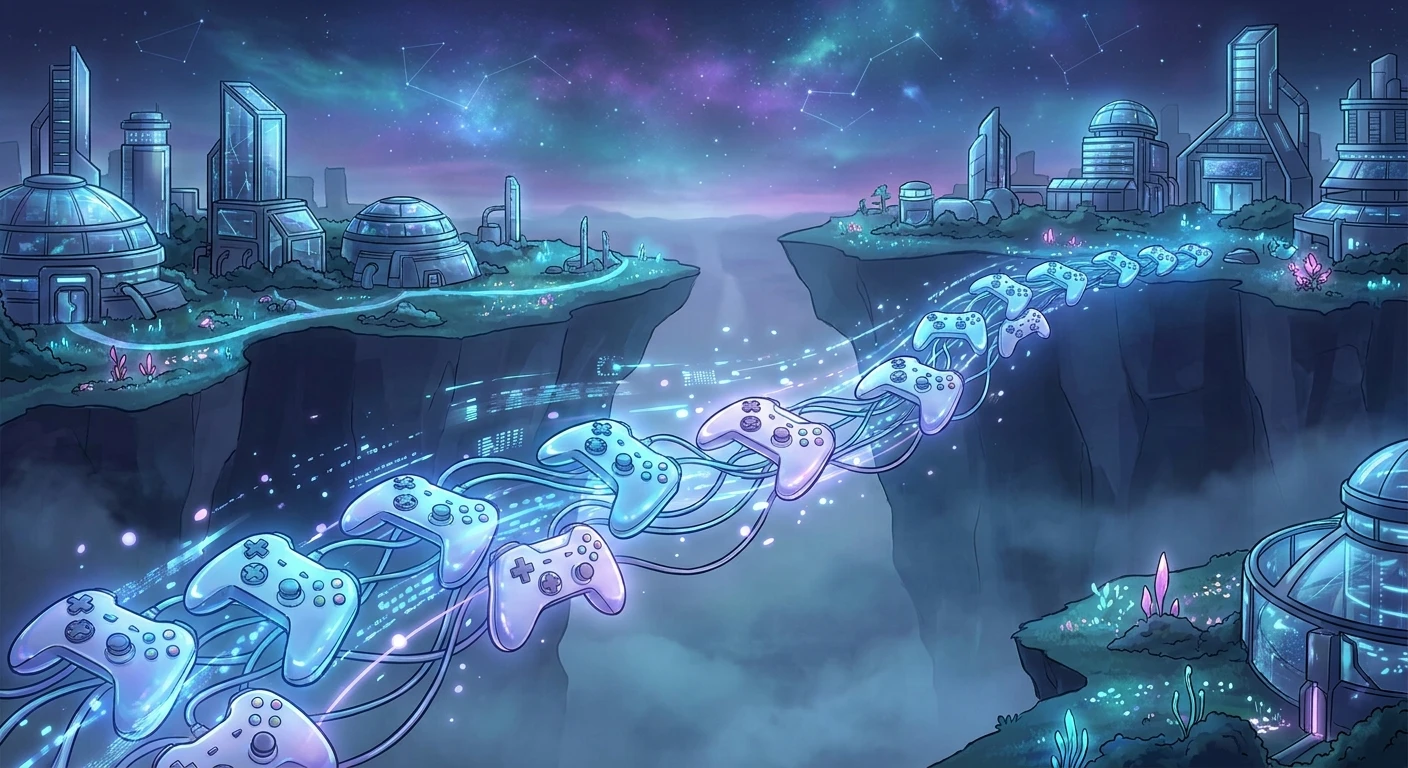
Finding the best multiplayer games ps5 players love
You are probably searching for the best multiplayer games ps5 can run right now, especially when your friends are waiting impatiently in the lobby. I know exactly how that feels. Back here in Kyiv, coordinating gaming sessions with friends has occasionally felt like an extreme sport. When the power grid is stable and everyone is finally online, you absolutely do not want to waste thirty precious minutes scrolling through the digital store menus arguing over what to download. You need guaranteed hits that work immediately. Gaming with friends is far more than just a way to pass the time; it is the ultimate social glue that keeps long-distance friendships alive and thriving.
Whether you want cooperative puzzle solving, high-speed racing, or intense team sports, the current generation console library has matured immensely. We are now in 2026, and the massive leap in matchmaking speed and controller haptics makes sharing a virtual couch better than ever. My crew and I have tested countless titles under tight time limits to figure out exactly which shared experiences hold up to repeated, obsessive play. I am giving you the straight facts on what to install to keep your squad fully entertained. Skip the frustrating trial and error. This guide provides pure, unadulterated fun that easily justifies paying for that premium online subscription month after month.
Why Choosing the Right Game Saves Your Evening
Choosing a title to play together requires carefully balancing skill levels, attention spans, and internet connections. The value proposition of a top-tier co-op or competitive title is incredibly simple: it provides equal parts challenge and laughter without leaving anyone behind. Take accessible party titles or colorful 3D platformers as perfect examples of this balance. They allow a seasoned, hardcore gamer and a total beginner to share a screen and still contribute meaningfully to the overarching objective. A poor choice, however, results in quick frustration, inevitable rage-quitting, and a completely wasted evening for everyone involved.
| Game Category | Ideal Player Count | Key Benefit for the Group |
|---|---|---|
| Couch Party Games | 2-4 Players | Instant accessibility, zero learning curve, high laughter potential. |
| Co-Op Story Campaigns | 2 Players | Deep narrative bonding, shared problem solving, ongoing progression. |
| Arcade Sports & Racing | 4-8 Players | Friendly rivalry, quick match times, easy drop-in/drop-out mechanics. |
When evaluating what to install, you have to measure the required time investment. Some groups just want a quick thirty-minute chaotic race, while others are begging for a massive fantasy campaign that stretches across several months of weekend sessions. The absolute beauty of the current hardware ecosystem is the SSD speed. Loading into a massive open world takes mere seconds, completely eliminating those awkward silences in voice chat while everyone stares blankly at a loading bar.
- Assess your group’s collective patience level before launching a complex, rules-heavy strategy game.
- Check the cross-play compatibility if some of your friends are playing on PC or older legacy consoles.
- Prioritize games with quick drop-in and drop-out mechanics so inevitable bathroom or snack breaks do not ruin the entire run.
Furthermore, the controller hardware adds physical feedback to the shared experience. When you high-five a teammate in-game and feel the subtle, synchronized tap in your palms, it creates a tactile, physical bond that previous hardware generations simply could not replicate.
Origins of Console Co-Op
Long before we ever worried about fiber optic speeds and cloud servers, playing together meant squeezing three friends onto a physical couch and dealing with a tangled, frustrating mess of wired controllers. The origins of shared gaming trace directly back to the golden arcade era, where side-by-side cabinets demanded quarters and sparked fierce local rivalry. When early consoles successfully brought this experience into the living room, the focus was entirely on split-screen magic. Those early, blocky polygon graphics might look rough to our modern eyes now, but they laid the exact foundation for squad-based communication and shared digital experiences.
Evolution of Online Infrastructure
The monumental shift from local split-screen to global online lobbies completely rewrote how developers approached game design. Early broadband days were heavily plagued with latency issues, making real-time synchronization a complete nightmare for competitive players. We had to deal with constant rubber-banding, dropped data packets, and massive host advantages where one player had zero lag. However, network engineers slowly built highly robust dedicated server networks over the decades. They created ingenious systems capable of predicting player movements to smooth out visual stuttering. This evolution meant you could finally team up with someone across the ocean without feeling like you were playing two completely different, out-of-sync matches.
Modern State of Multiplayer Gaming
As we sit here in 2026, the modern state of shared virtual worlds is practically flawless. We take cross-platform progression and zero-latency voice chat completely for granted. Developers now actively build games as ongoing services, dropping new maps, characters, and modes weekly to keep the community heavily engaged. The current server architecture allows for hundreds of players to exist in the exact same instance without melting the console’s internal processor. It is undoubtedly a golden age for extroverted gamers. The major technical barriers have vanished, leaving only the pure, creative joy of navigating beautiful digital landscapes together.
Understanding Netcode and Tick Rates
When you hit a button and see your character react simultaneously on your friend’s screen miles away, you are witnessing a miracle of modern computer science. At the heart of this seamless experience is “netcode,” an umbrella industry term for the complex algorithms managing synchronization between clients and remote servers. A highly crucial component here is the tick rate, which defines exactly how many times per second the server updates the universal game state. Higher tick rates mean tighter, much more responsive gameplay. If a server operates at 60Hz, it processes player inputs every 16 milliseconds, ensuring almost imperceptible delay between a button press and the on-screen action.
The Magic of Data Compression
Pushing high-fidelity graphics, 3D spatial audio, and localized haptic data across the internet requires massive amounts of bandwidth. Engineers utilize incredibly advanced data compression algorithms to shrink these massive packets of information on the fly. Instead of sending full graphic rendering files over the network, the console only transmits coordinates, velocity, and basic input commands. The local hardware then does the heavy lifting to render the visuals natively. This is precisely why you can have a visually stunning, massive-scale experience even on a highly moderate internet connection.
- Packet Loss Tolerance: Modern predictive algorithms can comfortably mask up to 5% packet loss by intelligently guessing your character’s forward trajectory.
- Haptic Data Streaming: The controller continuously receives localized frequency data, strictly allowing players to physically feel the exact same environmental vibrations simultaneously.
- Client-Side Prediction: Your console actually renders your physical actions before the server formally confirms them, completely eliminating the perception of sluggish lag for the local user.
- Lag Compensation: Servers actively rewind time by milliseconds to verify if a fast-moving projectile hit a target precisely when you pulled the trigger on your screen.
Day 1: The Casual Couch Co-Op Setup
Start your week by easing into things gently. Download a lightweight, hilarious party game that requires minimal tutorial reading. Get your squad into a private voice chat party, verify everyone’s microphone levels are balanced, and focus purely on chaotic fun that gets everyone laughing immediately. You want low stakes and high rewards to set a positive tone for the week.
Day 2: Cooperative Puzzle Solving
Now that communication is flowing naturally, test your teamwork with a two-player or four-player puzzle adventure. This step heavily requires patience and accurately calling out visual clues. It builds immense trust and ensures all players clearly understand how to share vital information without aggressively talking over one another.
Day 3: Team-Based Racing
Inject some much-needed adrenaline into the schedule. Load up a vibrant arcade racer where you can either compete aggressively against your friends or form a tight crew to take down rival ghost times. Focus heavily on track memorization, drifting techniques, and friendly trash-talking to keep the energy levels peaked.
Day 4: Survival Sandbox Gathering
Shift the pace completely. Launch a massive open-world survival game. Assign specific, vital roles to your group: one person strictly gathers wood, another hunts for food, and someone else starts building the base foundation. It creates an incredible sense of shared accomplishment when you survive the first in-game night.
Day 5: Tactical Squad Combat
Time to get highly serious. Enter a highly tactical environment where precise communication means virtual life or death. Practice coordinated flanking maneuvers, actively call out enemy positions using a compass, and work relentlessly on reviving downed teammates under extreme pressure.
Day 6: Large Scale Massively Multiplayer
Join a massive server populated with dozens of other real people. Run a complex raid or seamlessly complete dynamic world events as a cohesive, tight-knit unit. This proves your squad can maintain strict discipline even when there is total, blinding visual chaos happening all over the screen.
Day 7: The Competitive Tournament
End the week with an organized custom lobby tournament. Set up clean brackets, establish specific weapon rules, and officially crown a weekend champion. It is the absolute perfect wrap-up to test all the mechanical skills and communication habits you built over the previous six days.
Myths and Realities of Online Gaming
Myth: You absolutely need gigabit internet to play online smoothly.
Reality: Stability matters far more than raw speed. A steady, reliable 15 Mbps connection with low ping and zero packet loss will always outperform an unstable gigabit connection.
Myth: Cross-play means console players are at a severe mechanical disadvantage.
Reality: Developers actively implement strict input-based matchmaking and aim-assist balancing to ensure controller users can easily hold their own against keyboard and mouse enthusiasts.
Myth: Split-screen gaming is completely dead and gone.
Reality: While less common in massive graphical showcases, the indie scene and several major family-friendly franchises still fully support local couch co-op with dedicated offline modes.
Myth: Wi-Fi is just as good as a wired connection for competitive gaming.
Reality: Wi-Fi is highly subject to invisible environmental interference. Running a physical Ethernet cable directly to your router is always vastly superior for reducing sudden latency spikes.
Do I need a subscription to play online?
Yes, most premium titles actively require an active network subscription to access their multiplayer features, though free-to-play titles are usually exempt.
Can I play older generation games with my friends?
Absolutely. The entire digital ecosystem is fully backwards compatible, securely allowing seamless voice chat and grouping across both console generations without extra steps.
What is the maximum party chat size?
You can reliably have up to 100 players in a single voice chat group, though managing that many overlapping voices quickly gets chaotic.
Are free-to-play games actually good quality?
Some of the most massively popular and highly polished squad-based shooters and battle royales cost absolutely nothing to download and enjoy.
How do I fix severe microphone echo?
Lower your internal controller speaker volume and strictly ensure your headset microphone isn’t resting too close to your mouth or the earcups.
Is game sharing digitally possible?
Yes, setting a specific console as your primary home device easily allows anyone logging into that machine to access your entire digital library.
Can I use a traditional keyboard and mouse?
Many modern titles natively support simple USB or Bluetooth keyboards and mice for those who vastly prefer classic PC inputs for aiming.
Finding the absolute right digital playground for your squad keeps those vital social connections strong and healthy. The hardware has never been faster, and the library has never been deeper. Grab your controller, invite your friends to a lobby, and start making fantastic memories today!


Leave a Reply