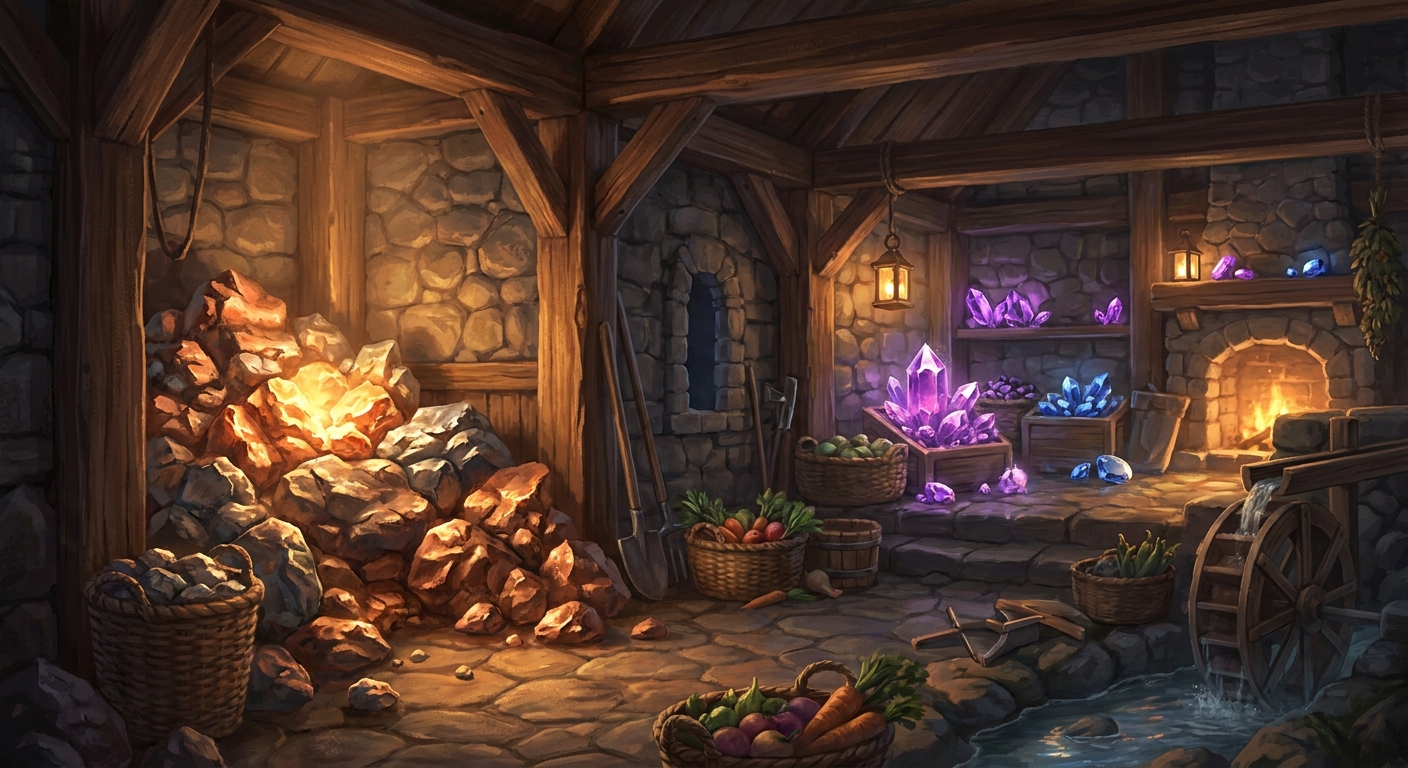
Stardew Miner or Geologist: Making Your Ultimate Farm Decision
So, you finally hit Mining Level 5 and now you are staring at the screen, agonizing over whether to pick stardew miner or geologist. Believe me, I totally understand the hesitation. Just last week, I was sitting in a dimly lit cafe here in Kyiv, sipping a flat white while hiding from a sudden rainstorm, and my friend texted me in a full-blown panic about this exact skill tree choice. My core thesis? This decision is not just about rocks; it fundamentally dictates your mid-game economy, your resource management strategy, and your entire farm infrastructure. If you want pure crafting materials to build a massive artisan empire, you go one way. If you want to crack open geodes for massive profit and rare artifacts, you go the other. I remember playing during the winter power outages, relying entirely on my fully charged Switch, and realizing how crucial this specific level 5 split is to keeping your farm momentum going. You either get a guaranteed +1 ore per vein or a flat 50% chance for gems to appear in pairs. It sounds incredibly simple, but the ripple effects are staggering. Let me walk you through my exact thought process and how to match this choice to your personal farm style without overthinking the math.
When you actually break down the numbers and the long-term utility, the value proposition of both paths becomes incredibly clear. If you choose the Miner profession, your immediate, tangible benefit is pure ore volume. Imagine you need to craft hundreds of kegs, preserve jars, or lightning rods. Copper and iron bottleneck your progress heavily during the first two seasons. Getting that extra ore per node cuts your physical grind time down substantially. On the flip side, the Geologist profession doubles your gem drops exactly half the time. This translates to pure cash and immense social capital. You grab a diamond, the game rolls a secret die, and boom, there are two diamonds in your inventory. Let’s look at a couple of concrete scenarios. Scenario one: you are desperately rushing quality sprinklers before Summer Year 1. You need massive amounts of iron and gold. Miner gets you there days faster, allowing you to water huge fields effortlessly. Scenario two: you want to set up a lucrative Crystalarium empire or gift everyone in Pelican Town their absolute favorite shiny rock to max out hearts quickly. Geologist makes you everybody’s best friend and pads your wallet instantly.
| Profession Path | Level 10 Upgrades Available | Ideal Farm Playstyle |
|---|---|---|
| Miner (Level 5) | Blacksmith or Prospector | Crafter / Artisan Goods Producer |
| Geologist (Level 5) | Excavator or Gemologist | Collector / Cash Farmer / Socialite |
| Core Benefit at Lvl 5 | +1 Ore per standard node | 50% chance for double gem drops |
Let’s lay out exactly how you should think about this progression moving forward.
- Assess your immediate farm goals: Are you building massive automated infrastructure, or are you aiming for pure liquid gold to buy expensive late-game buildings?
- Check your current resource bottlenecks: If you constantly run out of coal to smelt all the metal you find, the Prospector perk (which requires taking Miner first) will absolutely save your playthrough.
- Consider the extreme late game: Geologist leads directly to Excavator, which permanently doubles your geode finds. In the late game, cracking omni geodes is a prime, reliable way to get rare resources like iridium, artifacts, and even Prismatic Shards.
If you take the Miner route, you eventually choose between Blacksmith (metal bars are worth 50% more) and Prospector (double coal find chance). Honestly? Blacksmith is rarely the optimal choice because selling raw metal bars hurts your crafting potential. But Prospector? Coal is the absolute worst bottleneck when you start making bee houses and preserves jars. Meanwhile, on the Geologist tree, Gemologist makes gems worth 30% more. Combine that with a big shed completely full of Crystalariums pumping out diamonds, and you are literally printing money while you sleep. Excavator, though, remains the hidden MVP for museum completionists who desperately need to find that last elusive skeletal hand.
Origins of the Mining Skill
Back when Eric Barone first launched this farm-sim masterpiece, the mining system was fundamentally raw and somewhat unforgiving. The choice between extra ore and double gems was specifically designed to force players into a distinct early-game identity. You were either the industrious builder grinding away in the dirt, or the treasure hunter seeking fortune. Early adopters debated endlessly on forums about the hidden math behind these drop rates. Initially, ore scarcity felt incredibly punishing. Running out of copper for basic tappers or iron for sprinklers made the extra ore drop feel absolutely mandatory for anyone wanting an optimized farm before the end of Year 1.
Evolution Through Patches
Over the years, the game received massive content updates that dramatically shifted the balance of power between these two professions. The complete overhaul of the Skull Cavern, the introduction of Desert Trader bartering, and the massive Ginger Island expansion changed how we value raw materials versus geodes. When Omni Geodes became a literal currency in the Calico Desert—exchangeable for highly coveted items like Desert Warp Totems and Artifact Troves—the Geologist path suddenly skyrocketed in community value. Players started realizing that double geode drops from the Excavator perk meant practically limitless mobility and treasure. The meta shifted drastically from purely hoarding basic copper to farming deep-level iridium and geode clusters.
Modern State in 2026
Now, playing the most current optimized builds in 2026, the meta is remarkably balanced but still highly dependent on your personal min-maxing strategy. We have sprawling community challenges, new farm layouts, and advanced late-game resource sinks that demand thousands of materials. The choice still stands as a major defining moment of your early playthrough. With easy access to the Statue of Perfection later on (which solves your iridium needs completely), basic ore becomes much less of a daily issue. This reality makes many seasoned veterans lean heavily towards the gem-cloning and geode-smashing routes. However, speedrunners and pure efficiency players still swear by the massive immediate power spike of extra raw metal to rush automated farming machinery by mid-Spring.
The RNG Math Behind Node Generation
Let’s talk about the actual underlying code and hidden game mechanics running silently in the background while you swing your pickaxe. Stardew Valley uses a sophisticated pseudorandom number generator (PRNG) to determine everything from your daily luck forecast to exactly what spawns on a specific mine floor. When you climb down a ladder and enter a new floor, the game rolls a seed based on your total days played and the specific floor number. This algorithm completely determines the placement of standard rocks, gem nodes, ore veins, and monster spawns. If you have the Geologist profession equipped, the game adds a secondary, entirely separate check when you physically break a gem node. It basically flips a perfectly weighted coin—a flat 50% probability—to forcibly spawn a duplicate gem right onto the floor.
Optimal Skill Tree Routing
Routing your skill points efficiently requires a solid understanding of these hidden background drop rates. The absolute base chance for a standard geode to drop from a normal gray rock is relatively low, typically hovering around a small fraction of a percent depending on the specific rock type and your daily luck stat.
Let’s look at the hard scientific data dictating your success:
- Base Ore Yields: Standard ore nodes (copper, iron, gold) normally drop 1 to 3 pieces of ore. The Miner profession guarantees a flat +1 addition, effectively increasing your minimum possible yield by 100% and your maximum yield by 33%. Over thousands of nodes, the math heavily favors this perk.
- Geode Multipliers: The Level 10 Excavator perk literally doubles the base chance of finding any geode type. If a specific rock had a tiny 2% chance to drop a geode, it instantly becomes 4%. Over the course of clearing 1000 rocks in the Skull Cavern, this represents a statistically massive haul.
- Coal Probabilities: Dust Sprites, found in the icy levels, have a natural 50% base chance to drop coal upon defeat. The Level 10 Prospector perk explicitly doubles coal found from breaking rocks, but strictly does not affect monster drops. This is a highly crucial distinction for farm planning.
- Crystalarium Interactions: The Gemologist perk boosts the flat sell price of all gems by 30%. A diamond normally sells for 750g; with the active perk, it immediately jumps to a very lucrative 975g.
Understanding these raw numbers completely changes how you evaluate that prompt on your screen at Level 5. You stop seeing a simple “extra ore” text box and start seeing compounding mathematical advantages stretched over an entire in-game year.
Day 1: The Copper Grind
Start your optimization sprint by spamming floors 15 through 25 in the local mines. Focus entirely on hunting down copper nodes. Break nothing else unless it physically blocks your path to the ladder. You want pure volume today. Eat basic forage items like spring onions to keep your energy up.
Day 2: Iron Rush
Push your way down to floors 40 through 50. The enemies get significantly harder here, so bring lots of cheese, salads, or whatever high-energy food you have cooked. If you picked Miner, you will notice a huge, satisfying spike in your iron bar production right away as you load up your furnaces.
Day 3: Dust Sprite Farming
Hover exclusively around floors 55 to 65. Your main goal today is not actually ore; it is coal. Hunt and defeat every single Dust Sprite you see bouncing around. This directly sets up your smelting economy regardless of your profession choice, and works towards the Burglar Ring monster eradication goal.
Day 4: Pushing to Gold
Hit floors 80 and below where the magma flows. Gold nodes are widely scattered, and the magma monsters can drain your health rapidly. If you are specifically on the Geologist path, keep a very sharp eye out for red fire quartz sitting on the ground—getting double drops of those is incredible for crafting refined quartz without wasting coal.
Day 5: The Geode Haul
Take a brief break from deep progression and farm the top mine floors for basic stone and standard geodes. Stockpile them all in a chest for your next visit to Clint. If you have already reached Level 10 and selected Excavator, this chill day yields exactly double the normal treasure.
Day 6: Skull Cavern Prep
Take all that raw metal you have been diligently smelting all week and start crafting mega bombs. You need iron, gold, and solar essence. The Miner profession pays off massively here, letting you craft twice as many explosives because your raw ore stockpiles are so heavily inflated.
Day 7: The Desert Run
Wait patiently for the television fortune teller to announce a maximum luck day, grab your stacks of bombs, consume a Spicy Eel for speed, and hit the Skull Cavern. Ignore regular rocks completely, bomb huge clustered groups of stones, and grab the purple iridium. The profession you chose will either net you wildly more iridium ore to upgrade your tools or an absolute mountain of omni geodes to trade in.
Let’s clear up some massive misconceptions floating around the various community forums regarding these skills.
Myth: Miner makes crafting bombs completely obsolete because you can just pickaxe everything faster.
Reality: Bombs destroy nodes exactly like a pickaxe does. The +1 ore buff absolutely applies to bomb explosions, making explosives even more overpowered when paired with the Miner profession.
Myth: Geologist magically doubles Prismatic Shard drops from rare mystic stones.
Reality: Sadly, Prismatic Shards are hard-coded entirely differently in most of the game’s drop tables. You will not get two shards from a single stone just because you have this specific perk active.
Myth: You are permanently locked into your choice forever and can ruin your save file.
Reality: The Statue of Uncertainty located down in the sewers lets you easily pay 10,000g to switch professions overnight. It is absolute pocket change in the late game, so do not stress.
Myth: Blacksmith is the absolute best way to make fast money early in the season.
Reality: Selling raw metal bars is generally a terrible, farm-halting idea. You desperately need them for kegs, jars, and automated machines. Never sell your metal bars early on.
Does Miner affect iridium nodes?
Yes, you absolutely get an extra piece of iridium ore from every single node you break in the Skull Cavern or Volcano Dungeon.
Can I switch from Geologist to Miner later?
Absolutely, just unlock the sewers, find the dog statue, and pay the fee to change your skills overnight.
Does Geologist work on geodes?
No, it only strictly works on raw gem nodes like ruby, diamond, jade, and surface forage gems like earth crystals.
Is Prospector better than Excavator?
It highly depends on your current farm phase. Prospector completely solves mid-game coal shortages, but Excavator gives massive artifact wealth and late-game trading power.
Does Miner apply to copper panning?
No, panning yields are determined by an entirely separate set of mechanics and heavily influenced by your daily luck.
Will Gemologist affect Crystalarium outputs?
Yes! The cloned gems you harvest from your machines will instantly sell for 30% more when shipped.
Does luck affect the Geologist doubling chance?
No, it is a hard-coded, flat 50% chance regardless of what the fortune teller on TV says your luck stat is.
Do bombs trigger the Geologist perk?
Yes, breaking nodes with explosives still perfectly rolls the 50% chance to duplicate the gem.
Is the Gemologist buff permanent?
Yes, as long as you actively have the skill equipped, all gems sold via the shipping bin or directly over the counter to Clint get the bonus multiplier.
Which path is better for completing the museum?
Geologist leading directly into Excavator is vastly superior because you get double the geodes to crack open, vastly speeding up artifact discovery.
Choosing between these two paths defines your early momentum. Go Miner if you love building complex farm layouts, or go Geologist if you love collecting treasures and buying gifts. Boot up the game, lock in your path, and let me know how your agricultural empire turns out!



Leave a Reply