The Complete Guide to the Minecraft Sniffer
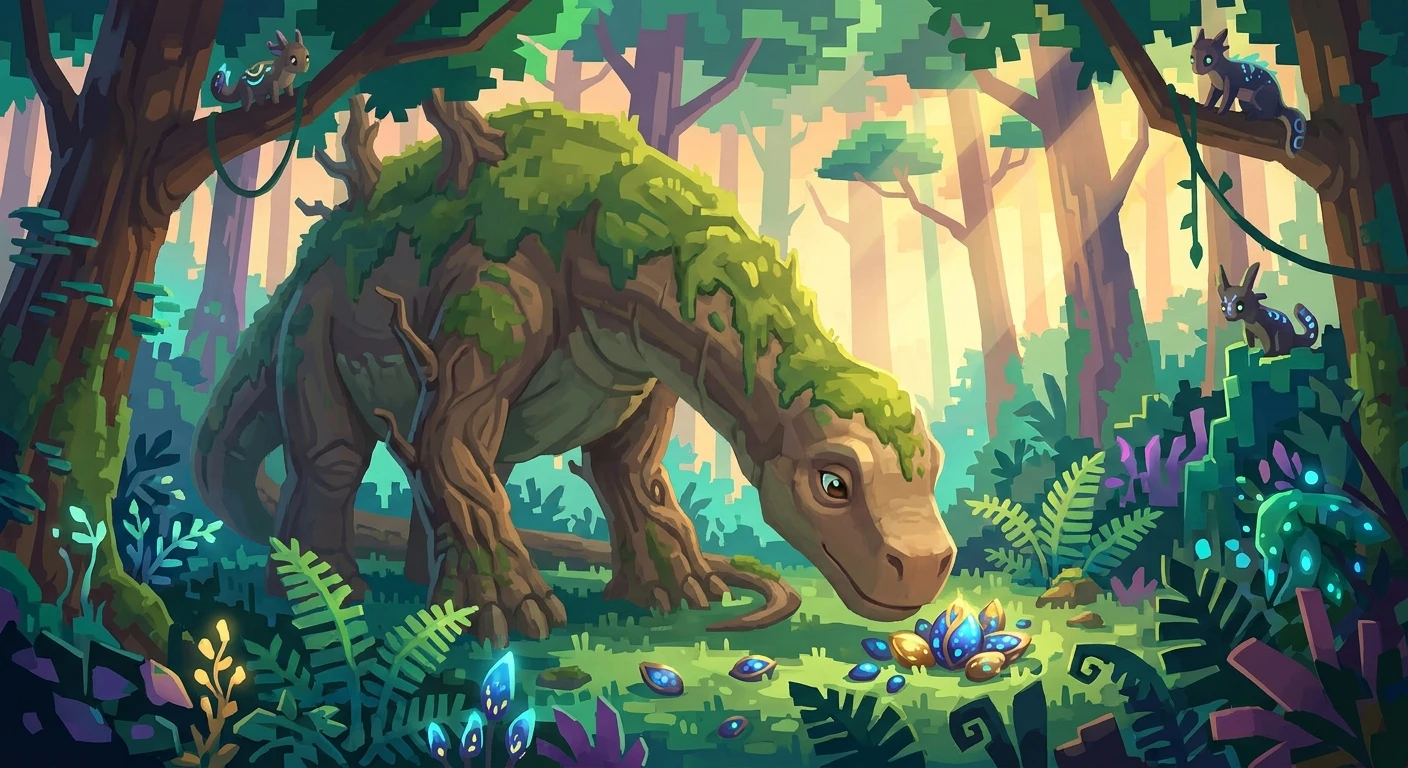
You need to know how the Minecraft Sniffer completely changes the way you approach archaeology and farming in the game. If you are digging around suspicious sand or brushing gravel in ancient ruins, you are already halfway to finding one of the most unique mobs ever introduced to the blocky universe. The Sniffer isn’t just a cute, oversized prehistoric beast; it represents a living mechanic that unearths exclusive flora you literally cannot find anywhere else in the Overworld. By reviving this ancient creature, you add a dynamic layer to your agricultural setups and garden designs. Securing a Minecraft Sniffer egg requires a deep understanding of ocean ruin generation, precise tool management, and patience. Once you bring this gentle giant back from extinction, your base will benefit from rare decorative plants that elevate your architectural builds. We are moving past standard wheat and carrot farms. This massive, moss-covered dinosaur functions as a biological metal detector for prehistoric seeds, constantly scanning the ground and pulling up ancient life. Your journey to master this mechanic demands preparation, specific resources, and a strategic enclosure design to maximize seed production. Let us break down exactly how you can turn your survival world into a thriving prehistoric sanctuary.
Understanding the Value of the Ancient Beast
Integrating the Minecraft Sniffer into your daily survival routine provides tangible benefits that go far beyond simple aesthetics. When you allow this creature to roam across grass, dirt, podzol, or moss, it activates a specialized pathfinding behavior. The mob literally presses its large nose into the terrain, tracking invisible scent trails coded into the game’s backend. After a brief digging animation, it extracts either a Torchflower seed or a Pitcher Pod. These prehistoric plants serve multiple structural and functional purposes in advanced gameplay. The Torchflower, despite its name, does not emit light, but it acts as the primary breeding item for the mob itself. Pitcher Plants grow through multiple distinct stages, creating visually striking landscaping options for builders who are tired of standard roses and peonies. Establishing a dedicated foraging pen ensures a constant supply of these items without requiring you to venture back into dangerous ocean biomes.
Read also: How to find cherry blossom biome in your world; How to Survive the minecraft warden Quickly.
| Prehistoric Item | Foraging Method | Practical Utility in Survival |
|---|---|---|
| Torchflower Seed | Dug up by adult mobs from dirt/grass | Used to breed two adults, accelerate baby growth, and farm orange dye. |
| Pitcher Pod | Extracted rarely during sniffing cycles | Planted on farmland to grow a two-tall crop yielding cyan dye. |
| Sniffer Egg | Brushed from Suspicious Sand in Ocean Ruins | Hatched into a Snifflet to begin your prehistoric farming operation. |
To maximize the utility of your new prehistoric companions, you must recognize the three primary benefits they bring to your established base.
- Exclusive Dye Production: Pitcher Plants and Torchflowers break down into cyan and orange dyes respectively. Farming these through a dedicated creature enclosure eliminates the need to strip-mine flower forests or rely entirely on random bone meal generation.
- Suspicious Stew Crafting: Crafting a Suspicious Stew with a Torchflower grants the player Night Vision. This provides a highly renewable, potion-free method for navigating deep caves or underwater monuments without relying on brewing stands and Nether Wart.
- Automated Collection Synergy: By pairing the foraging area with an Allay or a cleverly designed hopper minecart system underneath the grass blocks, you can create a fully automated seed collection facility that runs silently in the background while you focus on other projects.
The Origins of the Ancient Mob
The concept of this prehistoric creature originated during the massive community event known as the 2022 Mob Vote. Mojang presented the player base with three distinct choices: the item-retrieving Rascal, the decorative Tuff Golem, and the extinct, plant-finding behemoth. Capturing over half of the total community votes, the ancient beast dominated the competition. The developers designed this creature to synergize directly with the newly announced archaeology system, linking the mob’s revival to the physical act of brushing away the dust of history. The lore established that these creatures once roamed the Overworld in massive numbers before succumbing to an unknown extinction event, leaving only their dormant eggs hidden in the ruins of ancient oceanic civilizations.
Evolution Through Snapshots
During the development cycle of the 1.20 Trails & Tales update in early 2023, the creature underwent several mechanical iterations via weekly experimental snapshots. Initially, the developers had to fine-tune the creature’s massive hitbox, as early versions struggled to navigate complex terrain and frequently suffocated inside standard animal pens. The sniffing animation also received extensive visual polish, adding particle effects and specific audio cues to signal when a seed was about to be unearthed. The most significant mechanical adjustment involved the egg incubation process. Developers introduced a unique temperature mechanic where placing the egg on a moss block doubled the hatching speed, directly rewarding players who understood the biological connection between the mossy creature and its environment.
The Modern State of the Sniffer
Today, the creature functions as a highly polished, passive mob with complex behavioral AI. Upon spawning, it logs a memory of the last several blocks it dug up, preventing it from repeatedly sniffing the exact same coordinate and forcing it to wander naturally. It possesses a base health of 14 hearts, making it surprisingly durable for a passive creature, though it has no defensive attacks and will simply attempt to flee if struck. Breeding two adults produces an egg rather than a live baby, a unique reproductive mechanic shared only with turtles. This egg drops as an item in the world, allowing you to pick it up and transport it securely to a designated incubation chamber before the hatching process begins.
Hatching Mechanics and NBT Data
Understanding the underlying mechanics of this creature requires a look at its specific NBT tags and block state data. The egg exists as a physical block in the world, distinct from an item frame or standard entity. The egg’s block state includes an hatch integer tag that ranges from 0 to 2, tracking its progression toward spawning a baby. The game relies on random tick speed to advance this state. On standard blocks like dirt or stone, the egg requires roughly 20 real-world minutes to hatch. When placed on a moss block, the game alters the random tick threshold, accelerating the process to approximately 10 minutes. The mob itself utilizes a highly specific Brain tag that tracks its digging cooldowns. Once it successfully unearths a seed, a hidden internal timer activates, preventing another foraging attempt for a randomized duration of up to 8 minutes.
Pathfinding and Digging Algorithms
The creature’s AI pathfinding is significantly more advanced than standard livestock like cows or sheep. It performs a continuous 8×8 block radius check around its current coordinates, searching for valid diggable tags: dirt, grass blocks, podzol, coarse dirt, rooted dirt, mud, and moss. If the block is obstructed by tall grass, slabs, or water, the algorithm rejects it. Once a valid target is acquired, the entity smoothly interpolates its head position toward the block, triggering the sniffing animation state. The loot table for the dug-up items is hardcoded, heavily weighting the Torchflower seed over the Pitcher Pod.
- Hitbox Dimensions: The adult entity possesses a massive bounding box of 1.9 blocks in width and 1.75 blocks in height, requiring double-wide gates for proper transportation.
- Health Capacity: The creature boasts 28 health points (14 full hearts), rendering it highly resilient to accidental fall damage or minor creeper explosions.
- Breeding Cooldown: After successful reproduction, the adults enter a mandatory 5-minute cooling phase before they will accept another Torchflower seed.
- Memory Array: The mob’s internal AI stores the coordinates of the last 20 blocks it successfully dug, ensuring continuous movement across the enclosure.
Day 1: Preparing Your Archaeology Kit
Your first task is assembling the right tools. You cannot mine suspicious sand with a shovel; doing so destroys the block and the loot inside instantly. You must craft a Brush using one feather, one copper ingot, and one stick aligned vertically in a crafting table. Because ocean ruins are underwater, you also need to brew several Potions of Water Breathing. Gather pufferfish, nether wart, and redstone to create 8-minute duration potions. Crafting a few doors to create underwater air pockets is also a highly effective survival strategy.
Day 2: Locating Warm Ocean Ruins
The extinct creature’s eggs only spawn in one specific location: Warm Ocean Ruins. Grab a boat and sail toward warm ocean biomes, identifiable by their light blue water and vibrant coral reefs. You are looking for sandstone and sea lantern structures clustered on the ocean floor. Cold ocean ruins, built from stone bricks, will never contain the correct loot tables. Bring a bed and sleep on a nearby shore to set your spawn point, as Drowned mobs armed with tridents frequently guard these archaeological sites.
Day 3: Brushing Suspicious Sand
Once you secure the ruin, carefully clear out the hostile Drowned and kelp. Look closely at the sand blocks. Suspicious Sand has a slightly grainier texture than standard sand. Equip your brush and hold the use button on the block. You will see dust particles and the gradual reveal of an item. The egg has roughly a 6.7% chance to drop from these specific blocks. Be incredibly careful with your mouse clicks; accidentally punching the block will break it permanently. Continue brushing until you secure at least two eggs.
Day 4: Setting Up the Incubation Chamber
Return to your main base and construct a secure, well-lit incubation room. Hostile mobs do not actively seek out and trample these eggs like they do with turtle eggs, but a stray creeper explosion will destroy your hard work. Acquire a moss block from a lush cave or a wandering trader. Place the moss block directly in the center of the room. This specific biological foundation is mandatory if you want to cut the waiting time in half and ensure rapid progression.
Day 5: Hatching the Snifflet
Place your two eggs onto the moss blocks. You do not need to do anything else but wait. Over the next 10 minutes, the eggs will visually crack, emitting distinctive sound effects as the internal NBT tags update. You must stay within the chunk for the random ticks to apply. Once the eggs crack for the third time, a baby mob, officially called a Snifflet, will burst out. The babies have oversized heads and will immediately begin wandering around the room. They take roughly 20 minutes to grow into adults, but you can feed them Torchflower seeds to speed this up.
Day 6: Building the Foraging Enclosure
While the babies grow, construct their permanent home. The enclosure must be expansive, at least 15 by 15 blocks, filled entirely with grass or dirt. Remove any stones, gravel, or wooden floors, as the mob cannot dig through them. Surround the area with fences or walls at least two blocks high to contain their massive hitboxes. Ensure the area is heavily lit with torches or glowstone to prevent zombies and skeletons from spawning inside the pen and harassing your prehistoric livestock during the night.
Day 7: Harvesting Prehistoric Plants
Once the babies mature into adults, they will immediately begin their pathfinding routine. Watch as they collapse onto their stomachs and violently throw dirt into the air. Walk behind them and collect the seeds they pull from the ground. Use your hoe to create farmland and plant both the Torchflowers and Pitcher Pods. Apply bone meal to rapidly grow the crops. Harvest the fully grown Torchflowers to breed your two adults, generating a new egg, and officially completing your sustainable prehistoric farming loop.
Myth: The Mob Drops Rare Armor
Reality: A persistent rumor in the community claims that killing this ancient creature yields prehistoric armor plates or exclusive weapons. This is entirely false. If you kill the creature, it drops absolutely nothing of value—only 1 to 3 experience points and occasionally a single moss block. The game actively discourages harming them; their entire value lies in keeping them alive to forage.
Myth: You Can Tame and Ride Them
Reality: Because of their massive size and flat backs, players often assume you can place a saddle on them like a horse or a ravager. The creature is completely untamable and unrideable. You can attach a lead to them to guide them across terrain, and you can lure them with Torchflower seeds, but they will never become a standard mount.
Myth: Eggs Spawn in Jungle Temples
Reality: Some players waste hours brushing suspicious gravel in trail ruins or searching jungle temple chests for eggs. The loot tables are strictly hardcoded. You will only ever find these eggs within suspicious sand located in warm ocean ruins. No other archaeological site in the game contains them.
Myth: They Will Eat Regular Seeds
Reality: Players often try to breed or heal the mob using standard wheat seeds, melon seeds, or pumpkin seeds. The creature’s diet is strictly prehistoric. They will completely ignore regular agricultural items and only respond to the Torchflower seeds they dig up themselves.
Can you heal a damaged Sniffer?
Yes, you can heal a damaged creature by feeding it Torchflower seeds. Each seed consumed restores a small portion of its health. Additionally, they will naturally regenerate health over time if they are kept out of danger.
Do they take fall damage?
Yes, despite their massive size and thick mossy coats, they are bound by standard game physics. Falling from a height greater than three blocks will inflict standard fall damage. Ensure your enclosures are flat and safe.
Can the mob swim in water?
Yes, they are highly capable swimmers. If they fall into a river or ocean, they will instinctively float and paddle to the surface. However, they cannot dig or forage while submerged, so keep their pens relatively dry.
How long does the baby take to grow?
A newly hatched Snifflet takes exactly 20 real-world minutes to mature into an adult. You can accelerate this growth cycle by 10% each time you feed the baby a Torchflower seed.
Do they need water to survive?
No. Even though their eggs are exclusively found underwater in warm ocean ruins, the living creatures do not require a water source to survive, breed, or dig. They are entirely terrestrial once hatched.
Are they hostile to any other mobs?
No, they are completely passive entities. They will not attack players, hostile mobs, or other animals. If they take damage from a zombie or a player, their only response is to panic and flee.
Can they dig through snow?
No. If the ground is covered by snow layers, the creature’s pathfinding AI will fail to recognize the dirt underneath. You must clear snow away or place the pen in a biome where snow does not settle.
Final Thoughts on the Ancient Beast
Bringing the Minecraft Sniffer into your survival world completely revitalizes the agricultural loop and rewards players who engage heavily with the archaeology mechanics. By securing eggs from warm ocean ruins, utilizing moss blocks for efficient hatching, and designing a massive dirt enclosure, you unlock a limitless supply of exclusive decorative plants and unique dyes. Stop relying entirely on standard crops and start building a functional prehistoric sanctuary today. Grab your brush, brew your water breathing potions, and go unearth history!





Leave a Reply