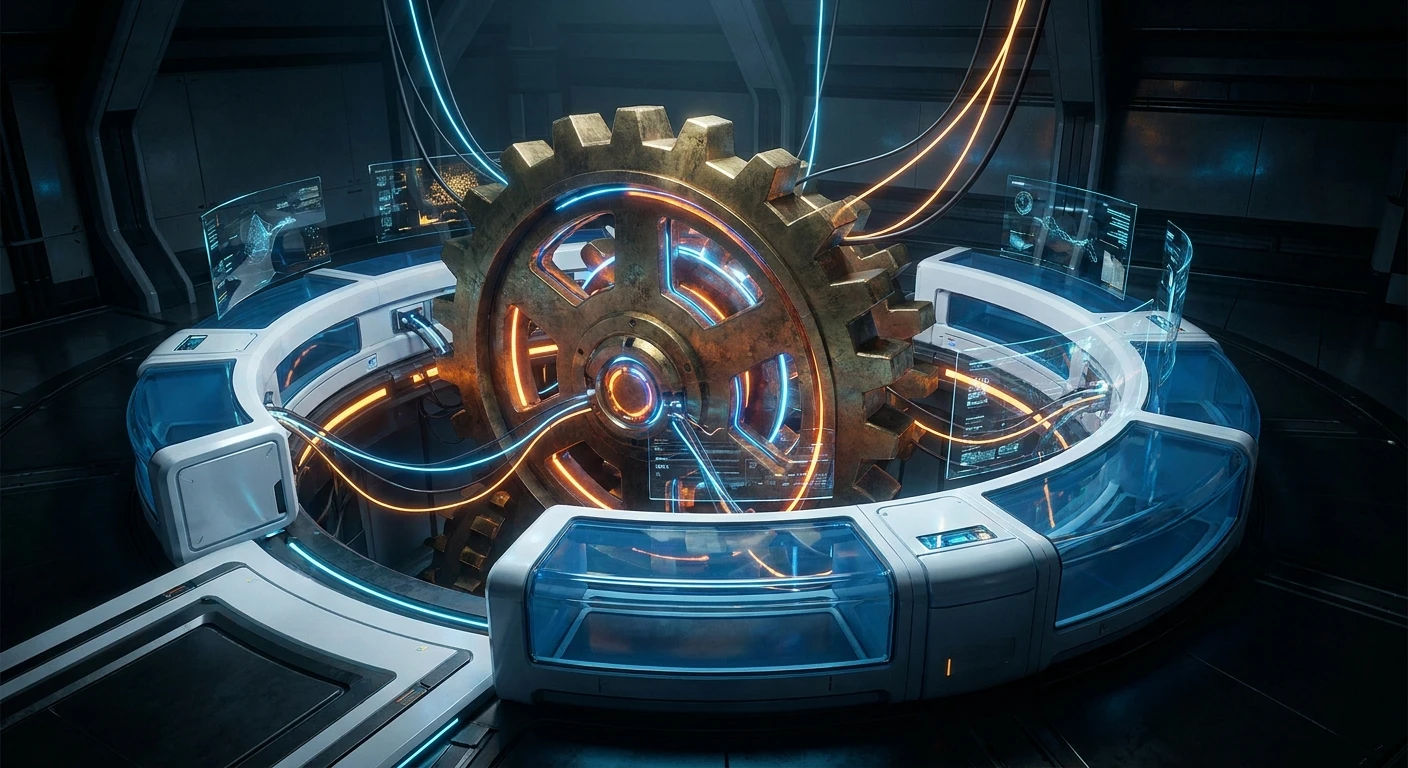
The Real Deal on gears of war ps5
Did you ever think we would see the day where gears of war ps5 becomes an actual talking point instead of just wild internet speculation? Seriously, if you told me this a few years ago, I would have laughed. I distinctly remember sitting in a cozy, dimly lit coffee shop in the Podil district of Kyiv with a group of friends. The power grid was acting up, so we had plenty of time to argue passionately about console ecosystems, hardware loyalty, and the impossible dream of unified platforms. We swore certain franchises were locked behind corporate walls forever. Yet here we are, watching the walls crumble as the industry completely reshapes how we access premium entertainment.
This massive shift in platform strategy isn’t just a corporate maneuver; it is a fundamental win for the entire community. It completely shatters the old boundaries that kept friends from teaming up simply because they bought a different piece of plastic. By bridging the gap between historically rival systems, developers can now foster massive, unified player bases that keep multiplayer lobbies vibrant and healthy for years. So, grab a coffee, get comfortable, and let’s talk about what this monumental change actually means for your gaming setup, your friends, and your weekend plans.
Why Bridging the Console Divide Matters
Listen, the concept of specific software running on rival hardware used to be a massive taboo. But when we look at the reality of game development right now, the costs have skyrocketed. Studios literally cannot afford to limit their audiences anymore. That is exactly why opening up a historic franchise to an entirely new hardware ecosystem provides extraordinary benefits. The value proposition here is twofold: developers get the massive return on investment they need to keep producing blockbuster hits, and players get the freedom to choose their preferred hardware without sacrificing their favorite virtual experiences.
Take a look at two prime examples of this value in action. First, cross-progression ecosystems allow you to maintain your hard-earned ranks, cosmetic unlocks, and campaign progress regardless of where you log in. If your primary console is tied up, you can seamlessly switch screens. Second, the integration of distinct hardware features—like advanced controller haptics—brings an entirely new sensory dimension to familiar mechanics. The feedback loop feels fresh, reinvigorating mechanics you have known for a decade.
Platform Hardware Comparison Matrix
| Feature Category | Traditional Hardware (Series X) | New Platform Arrival (PS5) |
|---|---|---|
| Visual Fidelity & Performance | Native 4K Targeting / 60 FPS | Dynamic 4K / 60 FPS with custom rendering tweaks |
| Controller Feedback | Standard Rumble & Impulse Triggers | Advanced Haptics & Adaptive Resistance Triggers |
| Storage Architecture | Custom NVMe Architecture | Ultra-High Speed SSD with Kraken Compression |
| Audio Output | Spatial Audio / Dolby Atmos | Tempest 3D AudioTech Integration |
This expansion impacts the gaming market in several incredibly positive ways. Here are the main ripples we are seeing right now:
- Unifying Fragmented Player Bases: Multiplayer communities no longer suffer from localized droughts. Finding a co-op partner or a full competitive match happens in absolute record time because the player pool is effectively doubled.
- Maximizing Hardware Utilization: Developers are forced to optimize their engines across wildly different architectures, resulting in vastly superior codebases that run smoother and load faster across the board.
- Funding Future Innovations: The financial influx from reaching tens of millions of new console owners guarantees that future installments will have the budget for groundbreaking mechanics rather than playing it safe.
The Origins of Console Exclusivity
Origins of the Hardware Wars
To really appreciate where we are, we have to look back at the early 2000s. Back then, exclusivity was the absolute gold standard for driving hardware sales. Manufacturers treated flagship titles like ultimate system sellers. It was an arms race. If you wanted the premier sci-fi shooter experience or the definitive driving simulator, you had exactly one option at the retail store. This era bred fierce brand loyalty. The playground arguments we had back in school were entirely fueled by these artificial walls. Companies poured hundreds of millions into proprietary engines specifically tailored to extract every ounce of performance from their unique, heavily guarded silicon.
Evolution of the Multi-Platform Strategy
But hardware limits eventually hit a plateau, and the real money shifted toward software and subscription services. We watched a slow, calculated pivot happen right before our eyes. The first cracks in the wall appeared when major first-party titles started trickling onto PC. At first, it was a test run. Then, it became a standardized practice. The corporate mindset shifted from ‘we must sell consoles’ to ‘we must sell subscriptions and software everywhere there is a screen.’ This evolution was completely necessary. As development cycles stretched from two years to sometimes six or seven years, restricting a massive project to a single box simply became terrible business logic.
The Modern State of Gaming in 2026
Fast forward to the year 2026, and the landscape is unrecognizable compared to a decade ago. Hardware is no longer the absolute dictator of your library; it is simply the gateway you choose based on personal preference. Ecosystems are software-driven. This climax in multi-platform strategy means that prestige titles are crossing borders that were once heavily guarded. Gamers are no longer defined by the logo on their console. We are simply enthusiasts united by the love of brilliant art design, tight mechanics, and compelling narratives. It is a golden age for accessibility.
Scientific and Technical Deep Dive
Unreal Engine 5 Architecture on New Hardware
Let’s talk tech. You do not need a computer science degree to appreciate what is happening under the hood, but understanding it makes the experience way cooler. The underlying engine powering these massive visual spectacles relies on two primary pillars: advanced geometry rendering and real-time global illumination. Instead of manually optimizing every single polygon, the engine uses dynamic scaling. This means the system continuously adjusts the complexity of the digital models on the fly based on how far away they are from the camera. If you are looking at a crumbling architectural ruin up close, you see millions of tiny geometric details. As you step back, the system smartly reduces the load. This ensures the frame rate stays butter-smooth without sacrificing visual integrity, no matter which piece of hardware is doing the heavy lifting.
Haptic Feedback and Audio Geometry
Then we have the sensory hardware integration. Translating an experience built for one ecosystem onto another means adapting to different controller paradigms. The current standard involves highly sensitive voice-coil actuators inside the grips, replacing old-school spinning rumble motors. These actuators provide tactile feedback that mimics physical textures—like the feeling of boots crunching on gravel versus slipping on mud. Combined with the localized audio engine, the console calculates the exact acoustic properties of the virtual room you are in, reflecting sound waves off digital walls to create pinpoint accurate 3D audio cues.
Here is exactly what this technical wizardry accomplishes behind the scenes:
- SSD IO Throughput Matching: Data decompression protocols run directly through a dedicated chip, ensuring textures load fast enough to completely eliminate loading screens during fast-paced cinematic transitions.
- Ray-Traced Ambient Occlusion: Shadows are calculated by mimicking actual light physics rather than using pre-baked, static image files, giving environments a dense, realistic atmosphere.
- Adaptive Trigger Algorithms: The physical resistance on the controller’s triggers changes dynamically based on the specific virtual tool or mechanic you are utilizing, requiring genuine physical effort.
- Unified Memory Bandwidth: The system rapidly shuffles massive assets between the graphics processor and the main memory, completely eliminating texture pop-in when you quickly turn the camera.
Actionable 7-Day Readiness Plan
You do not want to jump into a massive, highly anticipated release without preparing your setup. Trust me on this. The experience is infinitely better when your environment is fully optimized. Follow this exact 7-day checklist to make sure you are totally ready.
Day 1: Audit Your Console Storage Space
Modern blockbuster releases are massive, often pushing well past the 100GB mark. Start your week by clearing out the digital clutter. Delete games you haven’t touched in six months, clear your cache, and ensure you have at least 150GB of pure, unallocated NVMe storage available on your primary drive. If you are using external storage, remember that next-gen titles require the internal high-speed architecture to function properly.
Day 2: Upgrade Your Display Settings
A beautiful game is entirely wasted on bad television settings. Dig into your display menus. Ensure that Game Mode is actively toggled on to reduce input latency to the absolute minimum. Double-check that your HDMI port supports full 2.1 bandwidth so you can actually utilize the 120Hz refresh rate modes and Variable Refresh Rate (VRR). Calibrate your HDR properly using the system-level tool so the deep shadows don’t wash out.
Day 3: Master the DualSense Mechanics
If you are coming from a different ecosystem, the controller is going to feel completely foreign at first. Spend a few hours playing a first-party title that heavily features haptic feedback and adaptive triggers. You need to train your muscle memory to expect the sudden physical resistance. Understanding how the controller communicates environmental cues through your palms is a total game-changer.
Day 4: Network and Cross-Play Configuration
You want to play with your friends, right? Go into your system settings and make sure cross-network play is fully enabled. Create or recover whatever universal third-party accounts are required to sync your progress. Run a wired ethernet cable directly from your router to your console if you can; Wi-Fi spikes are the absolute enemy of tight, competitive mechanics.
Day 5: Catch Up on the Lore
Rich, narrative-heavy franchises have deep backstories. You don’t want to start a new campaign completely lost. Spend this evening watching a high-quality lore recap on YouTube. Understand the factions, the key betrayals, and the timeline of events. Having the emotional context makes every cinematic cutscene hit significantly harder.
Day 6: Optimize Your Audio Environment
Audio is half the experience. If you are using a headset, make sure 3D audio processing is toggled on in the system settings. If you use a home theater receiver, calibrate the speaker distances and crossover frequencies. You need to be able to hear footsteps coming from exactly the right direction. Good audio completely changes your situational awareness.
Day 7: Organize Your Co-Op Squad
Don’t wait until launch day to figure out who is playing. Message your friends, synchronize your download schedules, and lock in a specific time to jump into the lobby together. Set up a dedicated voice chat channel, grab your favorite snacks, and get ready for an incredibly smooth launch night.
Myths and Reality
Whenever major platform shifts happen, the internet gets flooded with absolute nonsense. Let’s clear the air and debunk some of the loudest misconceptions floating around right now.
Myth: Performance is automatically downgraded when moving to a new ecosystem.
Reality: Absolute fiction. The hardware architecture across modern premium consoles is incredibly similar. Developers optimize specifically for each machine’s strengths, guaranteeing top-tier frame rates and native resolution targets across the board.
Myth: Cross-play will completely ruin competitive matchmaking balance.
Reality: Not true at all. Modern matchmaking algorithms strictly utilize input-based sorting. If you play on a controller, you get matched with other controller players, keeping the competitive integrity completely intact regardless of the plastic box they own.
Myth: Classic franchises lose their core identity when they reach wider audiences.
Reality: Widening the audience actually strengthens the community. The core mechanics remain entirely untouched, but the influx of new players ensures the franchise receives long-term developmental support and massive community events.
Myth: The advanced controller haptics are just battery-draining gimmicks.
Reality: While they do use slightly more battery, the tactical feedback they provide genuinely improves gameplay. Feeling the tension of a weapon or the exact direction of incoming damage is a massive mechanical advantage.
Frequently Asked Questions & Conclusion
Is the multiplayer fully cross-platform?
Yes, the entire matchmaking infrastructure is built from the ground up to support seamless cross-platform play, allowing you to invite friends instantly no matter what hardware they are currently running.
Will my old saves and progression transfer over?
Absolutely. As long as you link your primary ecosystem account to the game’s universal server, all of your cosmetics, stats, and campaign milestones sync automatically through the cloud.
What visual resolution does the game target?
You get multiple options. You can choose a high-fidelity mode that locks in gorgeous dynamic 4K graphics at a steady 30 frames per second, or a performance mode that sacrifices a bit of sharpness for a buttery 60 frames per second.
Does it fully utilize the adaptive triggers?
Yes, the development team completely mapped the physical weight of the mechanics to the triggers. You will feel heavy resistance and specific recoil patterns directly in your fingertips.
Are the original franchise creators involved?
The current studio consists of incredibly talented veterans who deeply respect the legacy. They maintain strict consultation with key legacy figures to ensure the tone and weight of the universe remain perfect.
Do I need a specific online subscription to play?
You will need your platform’s standard premium online multiplayer subscription to access the competitive and co-op network features, just like any other premium multiplayer title.
Is there a local split-screen co-op mode?
Yes, local couch co-op remains a foundational pillar of the experience. You can grab a second controller and play through the entire campaign alongside a friend in the same room.
How large is the initial download size?
Expect the total file size to hover around 110GB, but smart delivery systems allow you to download the multiplayer and campaign components separately to save precious drive space.
At the end of the day, breaking down hardware barriers is exactly what the community has needed for a very long time. The freedom to play incredible titles on your chosen setup without sacrificing performance or community connection is a massive victory for gamers everywhere. So, clear up your hard drive, optimize your display, and prepare your squad. Have you set up your console for the big download yet? Check your network settings tonight and make sure you are ready for the drop!



Leave a Reply