Finding the Best Games Like Genshin Impact
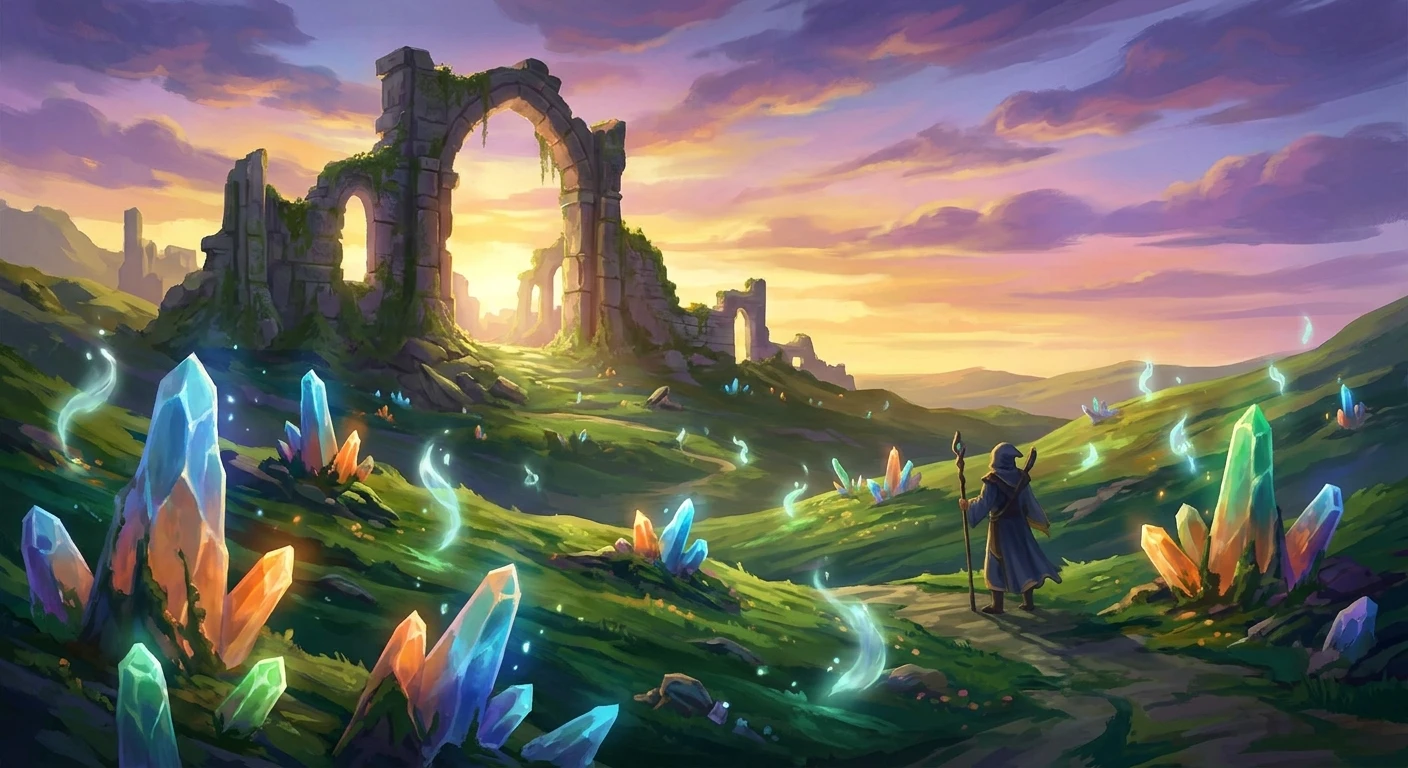
If you have spent hundreds of hours exploring Teyvat, you are probably hunting for games like genshin impact to scratch that exact same open-world itch. I remember sitting in a cozy underground café in the Podil district of Kyiv, sipping an espresso while glaring at my phone screen. My resin was fully depleted, every chest in my world was already looted, and the next patch was still weeks away. I desperately needed a new digital world to get lost in. When you hit that endgame wall, the craving for a fresh adventure with beautiful anime aesthetics, deep elemental combat, and endless exploration becomes overwhelming.
The good news is that the gaming industry has noticed our collective obsession. Now that we are deep into the year 2026, developers have released a massive wave of high-quality titles that capture the same magic. You do not have to settle for cheap knock-offs anymore. There are genuine masterpieces out there that offer brilliant storytelling, engaging character progression, and stunning environments. Whether you want a more challenging combat system, a futuristic science-fiction setting, or a multiplayer-focused experience to enjoy with your friends, the options available right now are absolutely incredible.
Understanding exactly what makes these experiences so addictive helps you pick the perfect alternative. When players look for new worlds to conquer, they are usually chasing a specific blend of mechanics: seamless map traversal, team-building with distinct combat roles, and the thrilling rush of the gacha system.
Here is a breakdown of the top contenders dominating the market.
| Game Title | Core Vibe & Setting | Best Feature |
|---|---|---|
| Wuthering Waves | Post-apocalyptic sci-fi fantasy | Fast-paced, parry-heavy combat |
| Tower of Fantasy | Cyberpunk MMORPG | Multiplayer raids and custom characters |
| Zenless Zone Zero | Urban retro-futurism | Incredible animations and stylish music |
| Arknights: Endfield | Industrial alien frontier | Factory building mixed with RPG mechanics |
The value proposition of stepping away from your main game is immense. First, you get to experience the honeymoon phase all over again. Remember the joy of unlocking your first glider or pulling your first five-star character? Games like Wuthering Waves give you that exact same rush, but with mechanics that feel fresh. Wuthering Waves, for instance, offers a much higher skill ceiling where dodging and parrying enemy attacks rewards you with massive damage combos. Tower of Fantasy, on the other hand, provides something entirely different by leaning heavily into multiplayer. You can actually see other players running around the map, hop on a cybernetic motorcycle, and take down world bosses together.
If you are planning to switch, keep these core elements in mind:
- Seamless Open World Freedom: The best alternatives do not restrict you with invisible walls. If you see a mountain, you should be able to climb it.
- Synergistic Combat Mechanics: Mashing one button gets boring fast. Look for systems that require swapping characters to trigger explosive elemental reactions.
- Fair Progression Systems: Gacha mechanics are fun, but the game must respect your time with a reasonable pity system so you can eventually guarantee the characters you want without spending money.
Origins of the Anime Open-World
The massive boom of anime-styled open-world adventures did not happen overnight. Years ago, mobile gaming was mostly restricted to simple puzzle games and linear turn-based RPGs with extremely limited scope. Hardware constraints meant developers could not dream of rendering vast landscapes on a phone. The paradigm shifted massively when console mechanics began inspiring mobile developers. The idea was incredibly ambitious: take the physics-based exploration and climbing mechanics of popular console titles and fuse them with the live-service character-collection model dominant in Asia. This fusion created a blueprint that completely disrupted the industry.
Evolution of the Genre
Following the initial explosion of the genre, the market saw a flood of quick, low-effort clones hoping to cash in on the hype. However, players quickly grew tired of poor optimization and greedy monetization schemes. The evolution of this space required studios to actually innovate. We started seeing titles introduce robust multiplayer frameworks, complex traversal tools like grappling hooks and jetpacks, and darker, more mature storylines. Developers realized that just copying the aesthetic was not enough. They had to offer unique gameplay loops, such as introducing roguelike game modes or deep base-building mechanics, to keep the player base engaged between major story updates.
The Modern State in 2026
Fast forward to 2026, and the sheer quality of these games is staggering. The lines between mobile, PC, and console gaming have completely blurred. Modern titles are launching simultaneously across all platforms with cross-save functionality as a mandatory standard. File sizes have ballooned, with some games requiring over 100 gigabytes of storage space due to fully voiced dialogue in multiple languages and ultra-high-resolution textures. We are also seeing the integration of highly advanced AI behaviors for non-playable characters, making these digital worlds feel more alive than ever before. The competition is incredibly fierce, which ultimately benefits us, the players, through better rewards and continuous massive content updates.
The Psychology Behind the Gacha Pull
To truly understand the appeal of these titles, we have to look at the underlying behavioral psychology and algorithms at play. The character acquisition process relies heavily on a concept called variable ratio reinforcement. This is the same psychological mechanism that makes slot machines so captivating. You never know exactly when you will receive a high-tier reward, which causes your brain to release a continuous stream of dopamine in anticipation. However, modern games have mathematically refined this process by implementing Pity algorithms. Pity is a deterministic mathematical safeguard ensuring that if the Random Number Generator (RNG) fails you consistently, the system automatically forces a high-value drop after a set number of attempts. This eliminates extreme bad luck and maintains player retention by providing a mathematically guaranteed horizon for success.
Rendering Massive Worlds on Small Devices
From a technical standpoint, making these massive environments run smoothly on a pocket-sized device requires brilliant software engineering. Developers heavily utilize advanced Memory Streaming and Level of Detail (LOD) scaling.
Here are the scientific and technical realities making these games possible:
- Dynamic Asset Streaming: The game engine only fully renders objects directly in your camera’s field of view. Everything behind you is instantly dumped from the RAM to save processing power.
- Cel-Shaded Rendering Tech: By using non-photorealistic rendering, the graphics card calculates flat colors and bold outlines instead of complex, resource-heavy lighting bounces. This creates the signature anime look while saving massive amounts of GPU overhead.
- Server-Side Validation: To prevent cheating, almost all combat calculations, drop rates, and movement physics are verified by secure remote servers in real-time, requiring incredibly optimized network code to prevent latency spikes.
- Cross-Platform Scaling: Engines like Unity and Unreal Engine 5 are heavily customized to seamlessly scale texture resolutions down by 80% when switching from a high-end gaming PC to a standard smartphone. This involves dynamic resolution scaling, which instantly adjusts the internal rendering resolution based on the device’s thermal throttling, ensuring the frame rate remains stable even during visually chaotic combat sequences.
Day 1: Research and Download
Starting a massive new RPG can feel like a part-time job. Your first day should be spent solely on research. Watch gameplay footage of the top competitors, check out their character rosters, and decide which art style appeals to you. Once decided, initiate the massive download over a stable Wi-Fi connection and prepare your device’s storage.
Day 2: The Reroll Strategy
If you want a head start without spending cash, Day 2 is for rerolling. This involves creating multiple guest accounts, playing through the initial 30-minute tutorial, and spending the free launch currency. If you do not get a top-tier character from the gacha, wipe the account and try again until you strike gold.
Day 3: Mastering Basic Combat
Forget about exploring the entire map right away. Spend Day 3 thoroughly reading your characters’ skill descriptions. Practice swapping between your team members to understand how their attacks chain together. Mastering the dodge, parry, and elemental combo systems early will save you massive headaches later.
Day 4: Strategic Resource Hoarding
By Day 4, the game will start throwing dozens of different upgrade materials at you. Stop spending them. Only invest experience books and weapon upgrades into your single most powerful damage-dealing character. Spreading your resources too thin across multiple characters will completely ruin your progression curve.
Day 5: Map Exploration Tactics
Now it is time to wander. Pick one specific region of the map and comb through it methodically. Grab every single collectible, solve the overworld puzzles, and unlock all the fast-travel waypoints. Getting distracted and running aimlessly will leave your map partially incomplete and chaotic.
Day 6: Finding a Guild or Community
These games are much better with friends. Spend Day 6 joining the game’s official Discord server or a dedicated Reddit community. Finding a casual guild will help you clear difficult multiplayer content and provide a space to ask questions when you inevitably get stuck on a tough boss.
Day 7: Setting Your Daily Routine
By the end of the week, you should reach the standard gameplay loop. Set up a fast 15-minute daily routine: log in, complete your basic daily commissions, spend your regenerating stamina on farming dungeons, and log out. This prevents burnout and keeps your account steadily growing.
Myth: All anime-style open-world games are just cheap copies of each other.
Reality: While they share similar visual aesthetics and UI designs, the core gameplay loops are vastly different. Some focus entirely on hardcore action combat, while others emphasize massive multiplayer server events or base building.
Myth: You have to spend hundreds of dollars to clear the hardest content.
Reality: Almost every single game in this genre can be completely beaten by free-to-play users. If you manage your resources wisely, utilize strategy, and build synergistic teams, skill will always easily outperform raw monetary spending.
Myth: Mobile games cannot deliver emotional, high-quality storytelling.
Reality: The narratives in these modern live-service RPGs frequently feature hundreds of pages of fully voiced, emotionally devastating lore. The writing quality regularly rivals, and occasionally exceeds, standard full-priced console games.
Myth: You absolutely need a high-end gaming PC to enjoy the graphics.
Reality: Thanks to aggressive optimization and cloud gaming options, even a three-year-old mid-range smartphone can run these titles smoothly on medium settings.
What is the absolute best alternative right now?
Wuthering Waves currently offers the most satisfying mechanical combat and fluid movement, making it a top choice for hardcore action fans.
Can I play these games completely offline?
No. Because character data and economy systems require server-side validation to prevent hacking, a constant internet connection is strictly required.
Do these titles feature multiplayer?
Yes, most offer co-op domains or open-world instances where up to four players can join together, while others like Tower of Fantasy offer full MMO servers.
Are the gacha rates fair?
It varies by title, but most reputable games feature a hard pity system, guaranteeing a top-tier character after 70 to 90 consecutive pulls.
Is it too late to start playing an older game?
Never. Older games offer hundreds of hours of permanent story content and usually provide massive catch-up mechanics for completely new players.
Do I need to play every single day?
While daily logins offer premium currency, skipping days will not ruin your account. Play at your own pace to avoid burning out.
Will my phone overheat?
Playing on maximum graphical settings will strain any battery. Lowering the frame rate to 30 FPS drastically reduces heat generation.
If you are tired of staring at an empty map, it is time to take the leap. Download one of these fantastic games like genshin impact today, build a fresh team of heroes, and lose yourself in an entirely new universe!

Leave a Reply