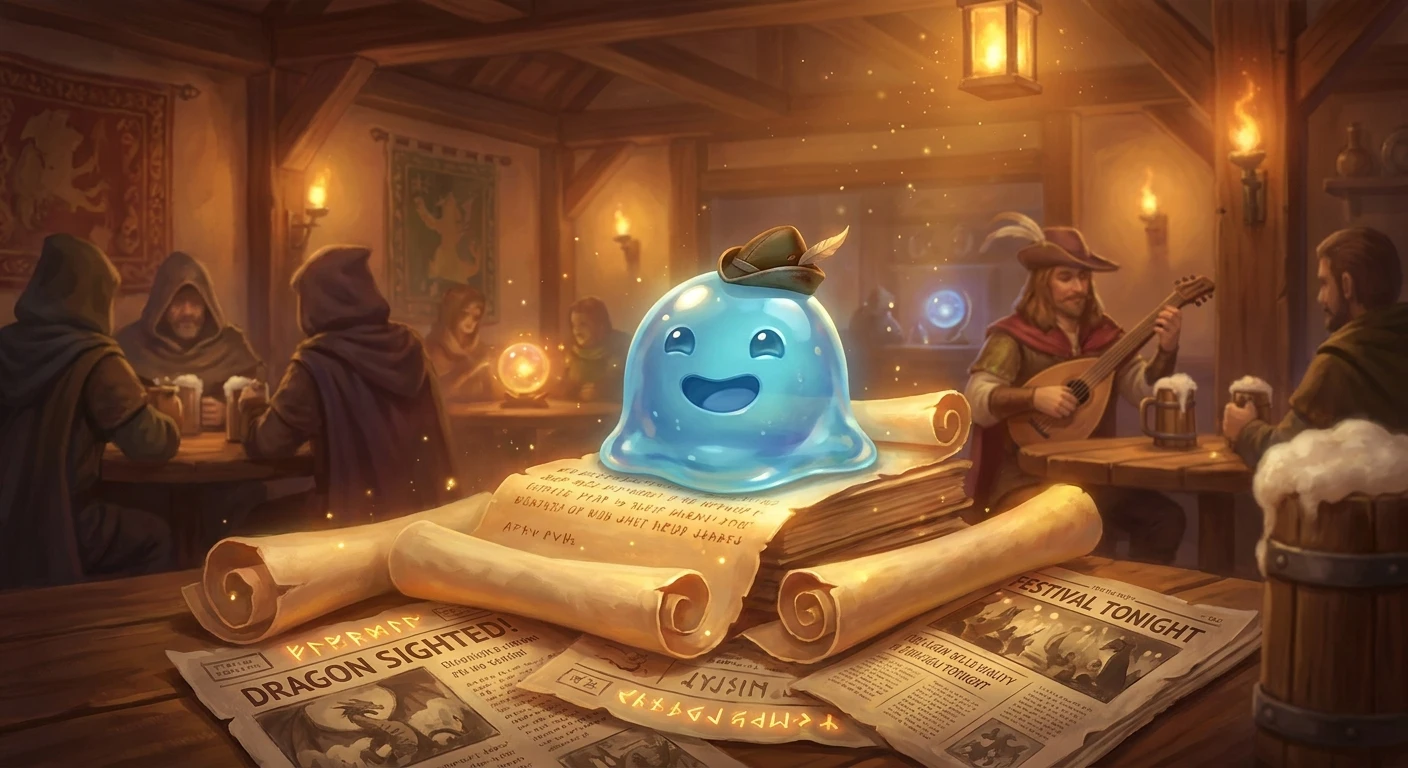
Your Ultimate Source for Dragon Quest News
If you have been frantically searching the web for the absolute best dragon quest news, you can finally take a deep breath because you just hit the jackpot. I know exactly how frustrating it is to constantly refresh your feeds, hoping for a breadcrumb of information from your favorite developers. I remember sitting in a dimly lit cafe here in Kyiv during the random power outages a few years back, gripping my fully charged console, just praying my spotty mobile connection would load the latest translated press release. Fast forward to 2026, and the global gaming landscape has shifted massively. Getting updates localized—even in Ukrainian—is becoming the norm, breaking down the massive language barriers that used to keep fans waiting for months.
Staying entirely on top of the newest game developments, spinoff titles, and exclusive creator interviews is not just about boarding the hype train. It is about actively connecting with a massive global community of passionate role-playing game fans who share the exact same slime-loving DNA. Knowing when the next big patch drops or when a limited-edition merchandise run goes live gives you a serious edge. You do not want to be the last person to find out that a beloved classic is getting a massive HD-2D overhaul, do you? Keep reading, because I am breaking down exactly how to navigate the constant stream of announcements, where to find the most accurate translations, and how to filter out the noise so you only get the updates that actually matter to your gaming experience.
Why Knowing the Latest Information Matters
Let’s talk about the real value behind tracking these updates. Being out of the loop usually means missing out on crucial preorder bonuses, highly sought-after physical collector’s editions, or even early access to beta testing phases. When a major publisher announces a new title, the initial wave of information usually contains hidden clues about gameplay mechanics, returning beloved characters, and sweeping lore changes. If you are catching up weeks later, the community has already moved on, and you are left digging through scattered forum posts trying to piece the puzzle together.
To give you a better idea of how different announcements impact the community, look at this breakdown of update types:
| Type of Announcement | Typical Frequency | Impact on the Community |
|---|---|---|
| Mainline Game Releases | Every 4 to 5 years | Massive global hype, instant sell-outs |
| Spin-off Titles & Mobile | Bi-annually | Moderate interest, genre-specific buzz |
| Merchandise & Concerts | Monthly | High urgency for niche collectors |
Getting your updates fast provides a massive advantage. You get a clear value proposition that directly impacts how you engage with the franchise. For example, catching wind of a limited-edition metal slime controller right when it is announced guarantees you secure your preorder before scalpers drain the inventory. Similarly, knowing exactly when the orchestral concert tours are hitting Europe allows you to book tickets before they vanish.
Here are a few major benefits to staying glued to reliable sources:
- Securing pre-order bonuses: Many exclusive digital items or physical art books run out within the first 48 hours of an announcement.
- Avoiding massive story spoilers: Staying current means you know exactly when launch week happens, allowing you to mute specific keywords on social media to protect your playthrough.
- Connecting with local meet-up events: When official cafes or pop-up shops are announced, early birds get the reservation slots.
The Origins of the Hype
Back in the late 1980s and early 1990s, getting information about Japanese role-playing games was basically a myth-hunting expedition. If you did not live in Japan, you were entirely reliant on a handful of specialized gaming magazines that trickled into local newsstands months after the actual announcements happened. Word of mouth was the primary engine. Kids would literally trade rumors on the playground, claiming they knew someone whose uncle worked at a publishing house. It was chaotic, deeply mysterious, and entirely inefficient. The sheer isolation of regional releases meant western audiences were basically living in a totally different timeline compared to the Japanese fanbase.
The Evolution of Media Coverage
When the internet finally started speeding up, everything shifted. Fan translation groups and dedicated forum boards became the absolute lifelines for international fans. Dedicated hobbyists would stay up until dawn translating grainy scans from Japanese weekly magazines just so the rest of the world could figure out what new monster designs were coming. This grassroots journalism paved the way for massive gaming portals. Suddenly, the delay between a Tokyo press conference and a localized article shrank from three months to three hours. It was a completely revolutionary shift in how fans consumed their favorite media.
The Modern State of Gaming Journalism
Now, as we push further into 2026, the entire architecture of announcements has shifted to simultaneous global broadcasts. Publishers have realized that the international market is just as hungry as the domestic one. We get high-definition livestreams with multi-language subtitle options airing exactly at the same time worldwide. The modern state of gaming coverage is incredibly fast, heavily reliant on short-form social media video drops, and instantly dissected by thousands of content creators within minutes. The gap between regions is virtually gone, leaving fans with a unified, instant celebration whenever a new title is teased.
The Architecture of Global Content Delivery
Have you ever wondered how an HD trailer drops flawlessly to millions of people across dozens of countries at the exact same millisecond? It comes down to heavily optimized Content Delivery Networks (CDNs) and localized API pipelines. When a publisher prepares a massive reveal, they upload the encrypted video files to servers strategically placed around the globe days in advance. At the precise moment of the announcement, a digital key unlocks the content, preventing server crashes by distributing the bandwidth load geographically. It is a highly synchronized digital ballet that ensures the viewer in Tokyo and the viewer in Kyiv get the exact same crisp, buffer-free experience.
Psychology Behind Gaming Anticipation
There is an actual neurochemical reaction that happens when you are waiting for a highly anticipated reveal. Game developers and marketers have basically perfected the art of the dopamine loop. By dropping cryptic countdown timers or tiny teaser images, they trigger the brain’s reward system. The anticipation of the news actually releases more dopamine than the news itself. This psychological hook keeps communities heavily engaged, endlessly theorizing over minor details, and driving organic social media trends without the publisher having to spend a dime on extra advertising.
- Server caching techniques: Edge servers temporarily store heavy graphical assets locally to prevent central database overloads during peak traffic spikes.
- Localization API pipelines: Automated translation tools assist human localizers in rapidly converting thousands of text strings into multiple languages simultaneously.
- Neurological response: Nostalgia triggers the amygdala, blending emotional comfort with high-arousal excitement when familiar musical cues are used in fresh trailers.
Day 1: Audit Your Current Sources
Your first step is to clean up your messy feeds. Unfollow all the inactive fan accounts and clickbait aggregation sites that just repost stale rumors. You need to streamline your digital environment so that only high-quality, verified information reaches your screen. Bookmark the official publisher pages and reputable community managers who actually provide direct communication.
Day 2: Set Up Automated Alerts
Do not rely on algorithms to show you what you need to see. Go into your preferred social media apps and set up push notifications for the official developer accounts. You can also use automated RSS feed readers to ping your phone the second a dedicated gaming news outlet publishes an article with specific keywords. This guarantees you are the first to know.
Day 3: Join Regional Communities
Global news is great, but regional news dictates what actually happens in your specific area. Join localized Discord servers or dedicated subreddit groups. These communities are incredibly fast at pointing out regional pricing errors, exclusive local merchandise pre-orders, and fan-run meetups that massive global accounts completely ignore.
Day 4: Deep Dive into Developer Interviews
Press releases are heavily sanitized marketing talk. If you want the real juice, you need to read translated interviews with the actual directors and producers. They frequently slip up and mention canceled concepts, engine limitations, or hints at future downloadable content that never makes it into the glossy trailers. Read between the lines.
Day 5: Track Localization Progress
Sometimes a game is out in Japan but entirely radio silent overseas. You can often track localization progress by looking at public trademark filings or ratings board classifications in your specific country. Whenever a localized title suddenly appears on a European rating board, you know an official announcement is just a few weeks away.
Day 6: Analyze Financial Reports for Clues
This sounds boring, but it is a massive cheat code. Publicly traded gaming companies release quarterly fiscal reports detailing their upcoming projected revenue. These documents often include unannounced release windows for major intellectual properties to reassure their investors. It is literally the most accurate crystal ball available to fans.
Day 7: Prepare Your Gaming Setup
Once you have secured all the latest updates and know exactly when the next massive title is dropping, prep your hardware. Clear out storage space on your solid-state drive, update your firmware, and maybe even request a day off work. Being mentally and physically ready for a launch day is the final step in mastering the information cycle.
Myths and Realities in Gaming Coverage
Myth: Western releases are always years behind the original launches.
Reality: Simultaneous global launches are absolutely the industry standard now. Publishers leave massive money on the table if they delay regional releases, so they have massively scaled up their internal translation teams to ensure everyone plays on the exact same day.
Myth: Only the giant mainline numbered titles actually matter to the lore.
Reality: Spin-offs frequently test bold new gameplay mechanics and establish expanded universe lore that directly feeds back into the main franchise. Skipping them means you are missing critical context.
Myth: Leaked information on anonymous image boards is usually highly accurate.
Reality: The vast majority of internet rumors are basically just glorified fan-fiction disguised as insider information. Always wait for the official press release before getting your hopes up.
Myth: Traditional print gaming magazines are completely dead and irrelevant.
Reality: Specific Japanese print magazines still hold exclusive contractual rights to debut major character designs before they ever hit the internet.
Where can I find official announcements?
The most reliable spots are the publisher’s official website, their verified social media channels, and major scheduled livestream events. Always verify the source URL to avoid fake phising accounts.
Are there region-exclusive events?
Yes. While game launches are generally global, physical pop-up cafes, orchestral concerts, and certain collaboration merchandise are often locked to specific cities or countries.
How often do major directs happen?
Most publishers stick to a bi-annual schedule, heavily favoring the early summer months and late autumn for their most massive, earth-shattering reveals.
Do developers listen to Western fans?
Absolutely. The international market makes up a huge percentage of total sales. Developers actively monitor global community feedback to adjust difficulty spikes and requested features.
Is merchandise hard to import?
Not anymore. Dozens of reputable proxy shipping services exist specifically to help international fans purchase limited goods directly from domestic Japanese storefronts.
What is the best platform for the latest titles?
Modern titles are incredibly multi-platform. However, checking the specific engine requirements will dictate whether you want the portability of a handheld or the raw power of a high-end PC.
Will older games get remakes?
The current trend heavily favors HD-2D remakes and full 3D overhauls for legacy titles, bridging the gap between nostalgic older fans and newer players looking for modernized quality-of-life features.
Staying up to date does not have to feel like a second job. By optimizing your feeds, knowing exactly where to look, and understanding the rhythm of how publishers release information, you can effortlessly catch every single slime-filled announcement. Do not miss out on the next massive reveal—subscribe to our digital newsletter right now and get all the latest updates sent directly to your inbox!


Leave a Reply