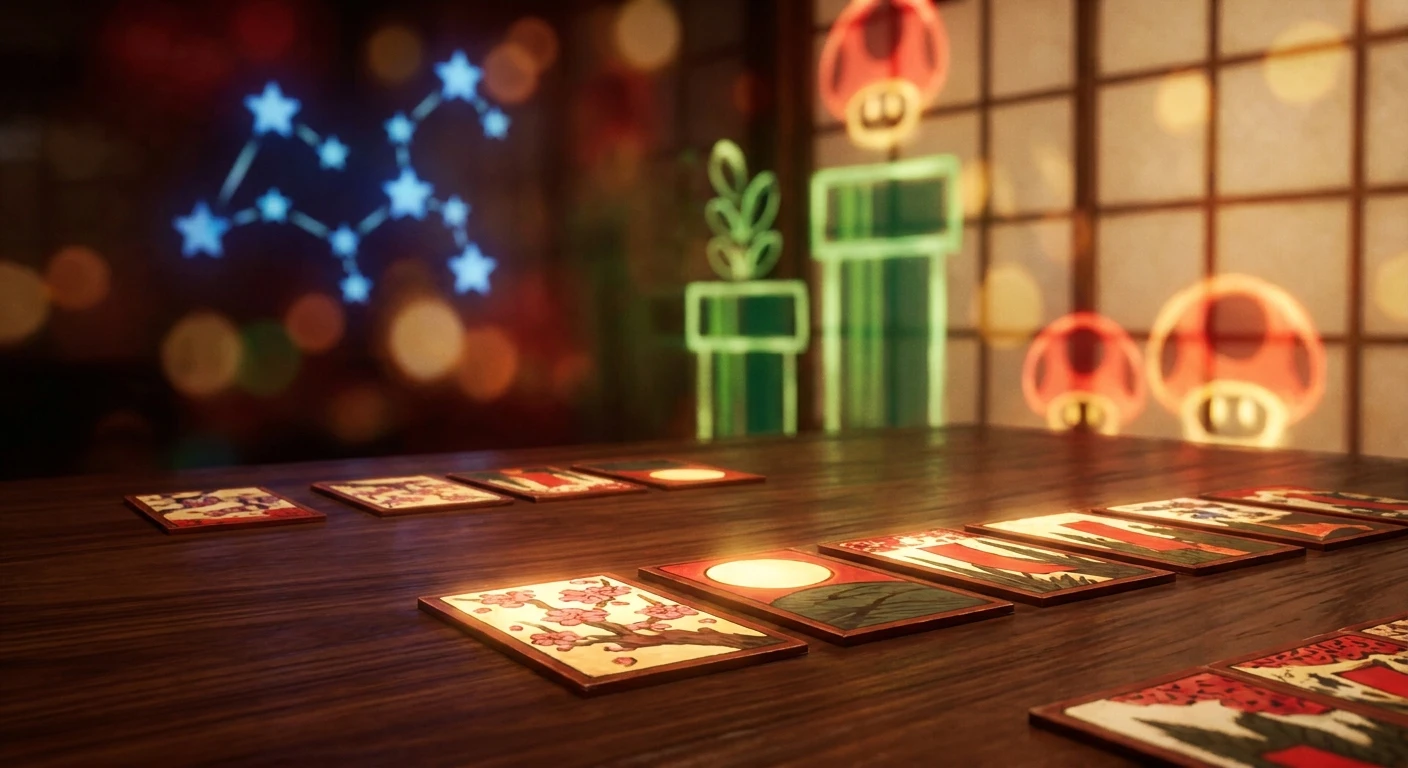
Nintendo Playing Cards: The Physical Roots of a Digital Empire
Did you know that long before the world was introduced to digital plumbers and mythical princesses, a small shop in Kyoto was quietly mastering the craft of Nintendo Playing Cards? Founded in 1889, this iconic company did not start with microchips or pixelated screens; they built their initial empire on beautifully illustrated, meticulously crafted cardboard and paper. The fascinating journey from a humble tabletop game supplier to a global entertainment juggernaut is a testament to the brand’s enduring commitment to quality and play. By exploring the rich history of Nintendo, we can see exactly how traditional Japanese aesthetics paved the way for modern pop culture. If you truly want to understand the DNA of this legendary company, you cannot just look at their consoles; you have to physically hold their earliest creations. The legacy of Nintendo Playing Cards remains actively alive today, bridging a century-old artisan craft with contemporary gaming enthusiasm. Whether you are a dedicated retro collector or just a curious fan of tabletop history, examining these decks offers a unique, tangible connection to the origins of interactive entertainment.
The Enduring Value and Benefits of Physical Decks
You might wonder why anyone would actively seek out physical decks when they can just play digital card games on their smartphones. The appeal of Nintendo Playing Cards goes far beyond simple novelty; they represent a distinct value proposition rooted in extreme durability, historical significance, and breathtaking artwork. Holding a deck is like holding a piece of interactive art. The craftsmanship involved in their production ensures that they survive decades of rigorous shuffling and snapping. Collectors and casual players alike recognize that these items are functional artifacts. Below is a breakdown of the core varieties you will encounter when exploring this physical medium.
Read also: The Art and History of Iconic Video Game Covers; mtg final fantasy Guide: Build Ultimate Decks.
| Deck Type | Primary Material | Typical Use Case |
|---|---|---|
| Traditional Hanafuda | Thick composite paper / Cardboard | Playing Koi-Koi and matching flora |
| Western French-Suited | Premium coated plastic | Standard games like Poker or Bridge |
| Character Novelty Decks | Plastic or standard cardstock | Collectible display and family gaming |
The value of owning these decks becomes immediately apparent when you look at two distinct examples. First, consider the modern retro releases: they offer gamers a tangible piece of nostalgia, often featuring exclusive artwork that never appeared in the video games themselves. Second, the traditional sets provide an authentic cultural experience, allowing players worldwide to engage with classic Japanese parlor games using the exact tools designed over a century ago. If you are still on the fence about starting a collection, here are three undeniable reasons to secure a deck for yourself:
- Unmatched Historical Connection: Every time you shuffle, you are participating in a tradition that predates commercial radio and television.
- Exceptional Material Quality: Their manufacturing standards are incredibly high, resulting in vibrant, long-lasting products that resist wear and tear.
- Compact and Portable Entertainment: Unlike bulky board games, these decks are highly travel-friendly, especially the classic sleek 5.3cm by 3.2cm cards that fit perfectly in your pocket for spontaneous sessions.
Origins with Yamauchi Fusajirō
The story begins in the late 19th century. In 1889, an ambitious entrepreneur set up a small shop in Kyoto. Did you guys know that Nintendo was originally a playing card manufacturer that was founded in 1889 by a guy named Yamauchi Fusajirō? His initial goal was simple but demanding: to produce hand-painted hanafuda decks for the local market. At the time, Japan was navigating complex gambling laws, and hanafuda (flower cards) used botanical illustrations instead of numbers to sidestep strict regulations. Yamauchi’s dedication to vivid colors and thick, satisfying cardstock made his products wildly popular. Demand skyrocketed so quickly that he had to hire assistants just to keep up with mass production. The local parlors, demanding fresh decks constantly to prevent players from recognizing marked or worn edges, fueled the company’s early financial success.
Evolution and the Disney Partnership
As the decades rolled on, the company realized it needed to adapt to survive changing entertainment landscapes. When Hiroshi Yamauchi took the reins in the mid-20th century, he sought to aggressively expand the business beyond traditional parlor games. In the late 1950s, he struck a brilliant licensing deal with Walt Disney. By printing iconic cartoon characters on standard 52-card decks, the company successfully marketed cards directly to children and families, shedding the old associations with gambling parlors. This move introduced millions of Japanese households to Western-style games. They heavily invested in modern manufacturing equipment to produce durable plastic decks, a major technological leap that cemented their reputation for premium, family-friendly products long before the first electronic toy was ever conceptualized.
The Modern State of Physical Production
Despite being a titan of the video game industry today, the company refuses to abandon its roots. They continue to actively manufacture physical decks, serving both traditionalists and modern fans. You can still purchase premium Hanafuda Cards like Daitoryo directly from specialty retailers and official stores. Furthermore, the brand frequently uses playing cards as exclusive rewards for their loyalty programs, tying their beloved digital franchises directly back to their cardboard origins. The modern state of Nintendo Playing Cards perfectly encapsulates a dual identity: a nod to a revered artisan past, seamlessly integrated into a contemporary pop culture empire.
Manufacturing Materials and Processes
Understanding the physical composition of these items requires looking at their unique manufacturing processes. Originally, artisans crafted hanafuda by pasting together multiple layers of mulberry bark paper. This layering technique resulted in a stiff, thick card that produced a distinct, satisfying ‘snap’ when thrown down on a wooden table. When the company modernized, they shifted toward synthetic materials. They became pioneers in utilizing polyethylene terephthalate (PET) and high-grade plastics for their standard French-suited decks. This plastic transition ensured the cards were waterproof, highly resistant to creasing, and capable of enduring thousands of shuffles without fraying at the edges. Today, collectors often seek out specific editions depending on their tactile preferences, with some searching for a set of cards more similar in size and material to French-suited playing cards, while others prefer the traditional, rigid miniature format.
Anatomy of a Hanafuda Deck
The structure of traditional hanafuda is vastly different from what Western players are accustomed to. There are no numbers, no kings, and no queens. Instead, the deck is heavily rooted in natural observation and seasonal shifts. The mechanics and iconography are beautifully complex:
- The deck consists of exactly 48 cards, divided equally into 12 distinct suits.
- Each of the 12 suits represents a specific month of the year, characterized by a specific plant or flower (such as Pine for January or Cherry Blossoms for March).
- Within each suit, the four cards are assigned different point values: typically two normal cards (junk), one poetry ribbon card, and one special animal or bright card.
- The physical dimensions are remarkably small, intentionally designed to sit securely in the palm of one hand, allowing players to hold a full hand without fanning them out widely.
Step 1: Learn the Traditional Suits
The very first step to building and enjoying a collection of Nintendo Playing Cards is education. Before you buy anything, spend a few hours studying the 12 months of the hanafuda calendar. Memorizing the visual difference between the Iris of May and the Peony of June will drastically enhance your appreciation of the artwork. You cannot truly value the product until you understand the visual language printed on it.
Step 2: Source a Classic Daitoryo Deck
Once you understand the visuals, your first acquisition should be the gold standard. Seek out a Daitoryo deck, which famously features a portrait of Napoleon on the case. This specific line has been the benchmark for quality for decades. Authentic Daitoryo decks showcase the traditional manufacturing thickness and vibrant red or black backing that the brand is historically famous for.
Step 3: Understand the Unique Dimensions
Prepare yourself for the physical reality of the product. Western buyers are often shocked by how small hanafuda pieces actually are. They are thick, almost like dominos made of cardboard, and much smaller than standard poker sizes. Calibrate your expectations so you can properly appreciate the compact, dense craftsmanship rather than feeling surprised by their miniature stature.
Step 4: Practice Proper Shuffling Techniques
You cannot riffle shuffle traditional hanafuda. Their stiffness will cause them to bend permanently or fly across the room. Instead, you must learn the overhand slide technique, where you gently drop blocks of cards into your opposite palm. Practicing this tactile skill connects you directly to the physical parlor culture of 19th-century Kyoto.
Step 5: Identify the Vintage Disney Era Prints
To diversify your collection, start hunting for the 1950s and 1960s plastic decks featuring licensed characters. These represent the crucial transitional period of the company. Look for the original plastic cases and the early corporate logos. Verifying the copyright dates on the jokers or the Ace of Spades will help you date your vintage finds accurately.
Step 6: Protect and Store the Collection
Proper preservation is critical. Keep your Nintendo Playing Cards away from direct sunlight, which will rapidly fade the vibrant floral inks. Store paper-based traditional decks in climate-controlled environments to prevent humidity from warping the layers. For the plastic decks, ensure they are wiped clean of finger oils before returning them to their acrylic cases.
Step 7: Play a Game of Koi-Koi
A collection should not just sit on a shelf gathering dust. The final step is to actually use them. Gather a friend, look up the rules for Koi-Koi, and start playing. Experiencing the tactical tension of deciding whether to call ‘Koi-Koi’ (continue) or cash in your points brings the historical artifact to vibrant, competitive life.
Myths & Reality
Myth: The company completely abandoned physical tabletop products once they released the Famicom in the 1980s.
Reality: They never halted production. They have continuously manufactured premium decks, utilizing them as cultural staples in Japan and as exclusive merchandise items for their dedicated fan base globally.
Myth: Hanafuda cards are just standard poker cards with different artwork printed on them.
Reality: They are mechanically and physically entirely different. They feature 48 cards without any numbers, rely on 12 botanical suits, and are printed on significantly thicker, much smaller cardstock.
Myth: Vintage decks from the 1960s are impossible to find and cost thousands of dollars.
Reality: While rare, mint-condition antique decks command high prices, the mass-produced plastic sets from the mid-20th century are surprisingly plentiful and remain quite affordable on secondary collector markets.
Myth: The brand only focused on Japanese traditional games before transitioning to video games.
Reality: They actively popularized Western-style 52-card games in Japan, being among the very first domestic companies to mass-produce high-quality, plastic-coated French-suited decks for the general public.
Are Nintendo Playing Cards still manufactured today?
Yes, the company continues to produce and sell physical decks. You can purchase traditional hanafuda, standard plastic playing cards, and special franchise-themed sets directly from their official stores and select import retailers.
What material are they made from?
Traditional sets are made from heavily layered, thick composite paper to provide stiffness and a satisfying snapping sound. Modern Western-style sets produced by the brand are typically made from highly durable, flexible plastic.
Where can I buy an authentic deck?
Authentic decks can be imported through Japanese specialty shops, official regional brand stores, or secondary collector platforms. Always verify the packaging seals and the Napoleon logo for traditional Daitoryo sets.
Did the company invent hanafuda?
No, the game and the card style existed long before 1889. However, Yamauchi Fusajirō standardized the high-quality production of them, making his specific brand the most famous and trusted manufacturer in Japan.
How many cards are in a traditional set?
A traditional hanafuda deck contains exactly 48 cards. These are divided evenly into 12 suits representing the months of the year, with four distinct cards belonging to each botanical suit.
Can you play poker with traditional decks?
No, you cannot play poker with hanafuda because they lack numbers, standard suits, and face cards. You would need to purchase one of the brand’s Western-style 52-card decks to play standard poker.
Are modern character decks made of paper or plastic?
It depends on the specific edition. Many promotional character decks are made of high-quality coated cardstock, while premium retail editions are often manufactured using their signature durable plastic.
The history embedded in Nintendo Playing Cards is a remarkable journey from 19th-century artisan craft to modern collectible treasure. Holding one of these decks is holding the very foundation of the world’s most famous gaming company. Whether you want to master Koi-Koi, appreciate the intricate botanical artwork, or simply own a piece of entertainment history, there has never been a better time to start hunting for your first set. Take the leap, secure an authentic deck today, and experience the tactile magic that started it all!





Leave a Reply