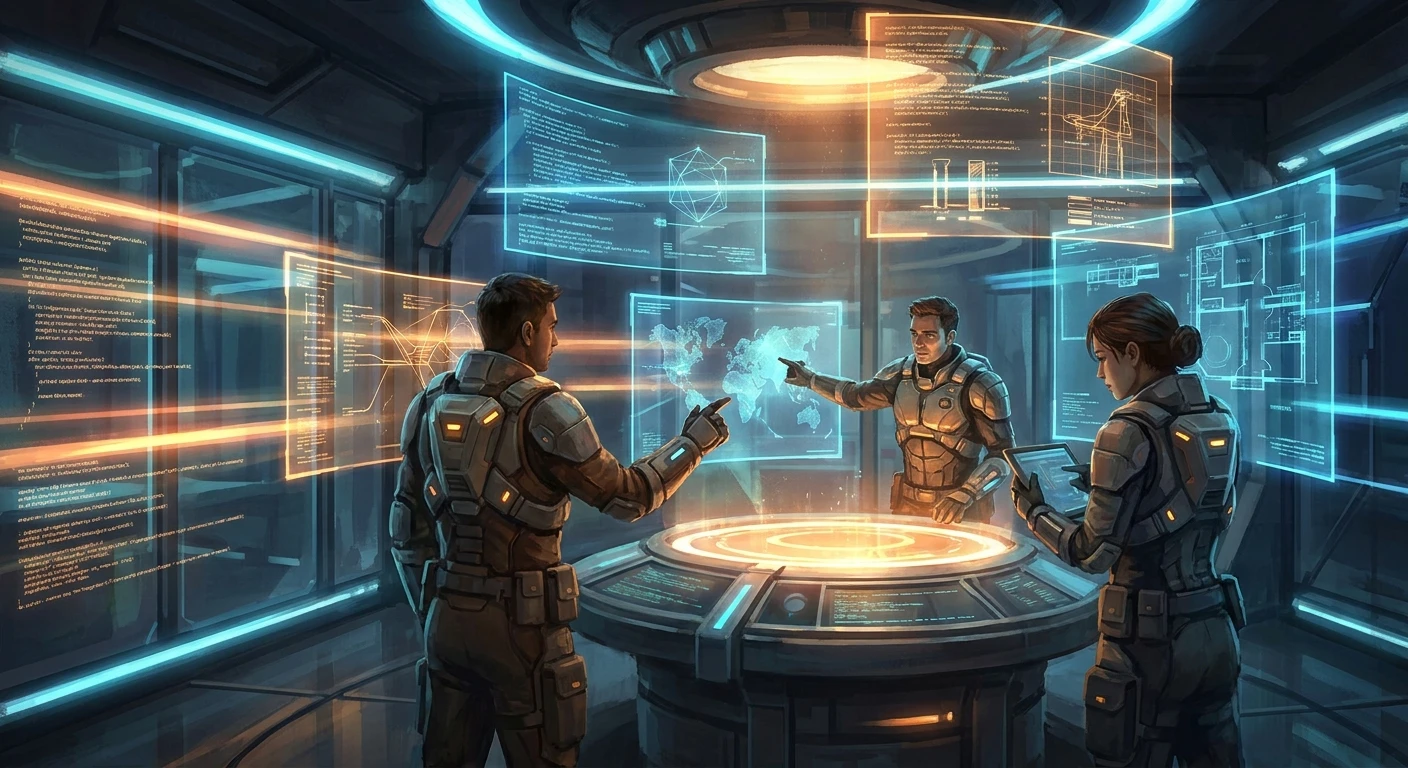
Mastering the Meta Through Overwatch 2 Patch Notes
Whenever a new competitive season or mid-cycle update drops, thoroughly reviewing the Overwatch 2 patch notes is your absolute first step toward securing victory. In a fast-paced hero shooter where split-second decisions and micro-adjustments determine the outcome of a match, flying blind into the competitive queue is a guaranteed way to lose your rank. Reading the official documentation provides you with the exact numerical adjustments, cooldown shifts, and ultimate cost changes that dictate which heroes dominate the current meta. The developer updates are not just casual reading; they are the blueprint for your strategic success.
Whether you are locking in a crucial support role or diving the enemy backline as a tank, knowing the exact mathematics behind your hero’s survival rate is what separates top-tier players from the rest of the pack. For instance, knowing that a support hero’s immortality mechanic now activates at a different health threshold completely changes how aggressively you can position yourself in team fights. We are going to break down exactly how you should interpret these developer updates, analyze the historical context of live-service game balance, and build a concrete action plan for adapting your gameplay every single time an update goes live on the servers.
Read also: Ultimate cod warzone patch notes Breakdown and Meta Guide; Latest Dragon Quest News and Updates.
To truly understand how game updates shift hero viability, we have to look closely at the mechanics of the game’s balance cycle. A simple five-point damage reduction on a primary weapon might seem insignificant on paper, but it can drastically alter the “breakpoints”—the exact number of shots required to eliminate a standard 200 or 225-health opponent. By tracking the official Overwatch update logs, you equip yourself with the foresight needed to counter-pick effectively before the match even begins. Reading these logs gives you a direct competitive advantage, allowing you to anticipate enemy compositions and adjust your own team’s synergy seamlessly.
Consider the value proposition of analyzing these updates immediately upon release. First, you prevent yourself from relying on outdated muscle memory. If a movement ability suddenly has a longer cooldown, instinctively pressing that key at the wrong time will leave you stranded in enemy territory. Second, you can exploit temporary power spikes in recently buffed characters before the broader player base figures out how to counter them.
| Hero Category | Common Change Type | Strategic Impact on the Meta |
|---|---|---|
| Support | Survivability & Healing Output | Dictates the speed of team fights. For example, Baptiste’s Immortality Field health increasing from 125 to 150 demands extra focus fire to destroy. |
| Tank | Armor Scaling & Cooldowns | Determines if teams play aggressive dive compositions or slower, methodical poke compositions. |
| Damage (DPS) | Damage Fall-off Ranges | Shifts optimal positioning and dictates which sightlines are safe for the enemy team to hold. |
To stay consistently ahead of the curve, you must integrate a few core habits into your routine whenever a new patch drops:
- Monitor cooldown adjustments meticulously: A two-second increase on an escape ability completely changes a hero’s risk profile.
- Track health threshold shifts: Knowing if an invulnerability mechanic triggers at 20% or 25% health dictates your target prioritization.
- Evaluate ultimate cost changes: Adjust your internal clock for when you expect the enemy team to unleash their game-winning combinations.
The Origins of Live-Service Balancing
The concept of aggressively balancing a hero shooter wasn’t fully crystallized when the original game launched in 2016. Early on, developers allowed metas to stagnate for months, leading to notorious team compositions that relied on stacking multiple tanks and healers to create unkillable deathballs. The community’s frustration with these slow, highly resilient compositions forced a massive shift in how developers approached their update cycles. Over time, the philosophy moved from making rare, heavy-handed adjustments to deploying frequent, targeted micro-patches to keep the gameplay loop feeling fresh and dynamic.
Evolution of Hero Adjustments
As the competitive scene grew, the way information was communicated to the player base had to evolve. Early update logs were often vague, simply stating that a character’s weapon felt “more responsive.” Today, the standard demands absolute mathematical transparency. The community relies on detailed databases and historical balance change archives to track how characters have morphed over the years. This evolution introduced role locks, eventually paving the way for the massive transition from a 6v6 format down to a tighter, more lethal 5v5 format, which entirely rewrote the rulebook on how tanks and supports interact.
The Modern State of Overwatch 2 Updates
Today, the modern update cycle is a highly structured, data-driven machine. Developers rely on massive data sets tracking win rates, pick rates, and unmirrored match outcomes across different skill tiers. The mid-season patches are now legendary for aggressively course-correcting any hero that becomes overwhelmingly dominant. The communication strategy has also vastly improved, with developers adding specific “Developer Comments” directly beneath each hero’s adjustments in the patch notes to explain their overarching philosophy and intent behind the tweaks.
The Mathematics of Hero Balancing
Diving into the technical mechanics of the game reveals just how delicate the balancing act truly is. When developers adjust damage numbers, they are manipulating “time-to-kill” (TTK) equations. If a projectile’s travel speed is increased by 10 meters per second, the lead time a player needs to compensate for drastically shrinks. This changes the mechanical skill floor required to operate the hero. Furthermore, understanding the technical geometry of the game—such as collision hulls and hurtboxes—is vital. A patch might reduce the physical size of a character’s head hitbox by 5%, which mathematically translates into a direct reduction in the critical hit accuracy of the opposing team’s sniper.
Server-Side Implementations and Bug Fixes
Not all updates are about tweaking damage numbers; many focus on complex backend systems and intricate bug resolutions. The game engine runs on a highly optimized tick rate, and how abilities interact within those server ticks can lead to unexpected behaviors. For example, tracking obscure interaction fixes via technical update tracking systems ensures you aren’t caught off guard by undocumented changes.
- Ability Interactions: Resolving complex state-machine bugs, such as when a targeted buff like Nano Boost is improperly removed if the receiving hero simultaneously uses an invulnerability skill like Fade.
- Barrier Deployments: Fixing frame-perfect vulnerabilities where deployed shields fail to initialize their collision mesh fast enough to block incoming projectiles.
- Health Threshold Algorithms: Adjusting the exact fractional percentages at which dynamic survival tools activate, shifting parameters from 20% up to 25% to grant slightly more leniency in high-ping environments.
- Latency Compensation: Tweaking the “favor the shooter” netcode logic to ensure that evasive maneuvers register fairly on both clients.
Adapting to a new update isn’t just about reading; it’s about actively integrating the new data into your muscle memory. Here is a definitive 7-step plan to follow the moment new patch notes go live.
Step 1: Read the Developer Comments First
Before looking at the raw numbers, read the paragraph where the developers explain why they made the change. Understanding their intent helps you predict how the broader community will react and adapt their playstyles.
Step 2: Test Changes in the Practice Range
Never take a newly adjusted hero straight into a competitive lobby. Spend at least ten minutes in the practice range feeling out new projectile speeds, cooldown rhythms, and recoil patterns to recalibrate your internal timing.
Step 3: Evaluate Breakpoints on Training Bots
If your main hero received a damage nerf, test exactly how many body shots and headshots are now required to eliminate a standard 200 HP target. You need to know if your standard combo is still lethal.
Step 4: Check Secondary Bug Fixes
Scroll down to the bottom of the community wiki update logs to find the bug fixes. Sometimes a “bug fix” actually removes an animation cancel or movement tech you heavily relied upon, acting as a secret nerf.
Step 5: Coordinate with Your Duo Partner
If you play with a regular teammate, discuss how the updates affect your combined synergy. If your tank’s armor was reduced, as a support player, you must agree to dedicate more direct healing resources to them during engagements.
Step 6: Play Unranked for Muscle Memory
Take your adjusted strategies into unranked matchmaking for a few games. The lower stakes environment allows you to push the boundaries of newly buffed abilities without risking your skill rating if you misjudge a cooldown.
Step 7: Take the New Meta into Competitive
Once you are completely comfortable with the adjusted timing and breakpoints, queue up for competitive mode. Exploit the fact that many opponents will not have read the notes and will still be playing according to the outdated meta.
Let’s clear up some of the most persistent misunderstandings players have about the update cycle.
Myth: Patch notes only matter for players in the highest competitive ranks.
Reality: Balance changes affect every tier of play. A seemingly small buff to an easy-to-play hero can absolutely dominate lower ranks where mechanical coordination is lower.
Myth: Developers secretly implement “shadow buffs” without telling the community.
Reality: Modern live-service games run on extremely tight version control. Undocumented changes are almost always unintentional bugs resulting from tangled code branches, not malicious secrets.
Myth: If your main hero gets nerfed in the notes, they are instantly unplayable.
Reality: A numerical nerf usually just changes a hero’s optimal playstyle or narrows their niche. With proper positioning and timing adjustments, “nerfed” heroes frequently remain highly viable in the right hands.
Do updates apply to all platforms simultaneously?
Yes, cross-platform progression and cross-play require that updates roll out to PC, PlayStation, Xbox, and Nintendo Switch at the exact same time to maintain competitive integrity.
How often do major balance patches release?
Major balance shifts typically happen at the start of a new season (every nine weeks) and exactly halfway through the season during the “mid-season update.”
Where can I find the absolute newest patch data?
The official Blizzard website and the Battle.net launcher provide the most accurate, immediately available data the moment a patch clears certification.
Do these changes impact existing replays?
Yes, significant updates will often invalidate your saved replays because the game engine cannot accurately reconstruct the match using updated numerical values and character geometry.
Why do developers sometimes revert changes?
If data shows that an update severely damaged the game’s competitive health or introduced game-breaking bugs, developers will issue a rapid “hotfix” to roll the servers back to a stable state.
What is the difference between a patch and a hotfix?
Patches are large, scheduled updates requiring a client-side download. Hotfixes are tiny, server-side tweaks that can be deployed instantly without interrupting the active player base.
How do I know if a specific bug was patched?
The bottom section of every update log contains an itemized list of squashed bugs, categorized by general gameplay, specific maps, and individual hero abilities.
Understanding the Overwatch 2 patch notes is the ultimate tool for remaining competitive in a constantly shifting landscape. By studying the mechanics, tracking ability interactions, and recalibrating your strategies before you queue up, you guarantee that you are never caught off guard by a sudden meta shift. Stop playing on autopilot, start reading the developer insights, and take control of your rank today!

Leave a Reply