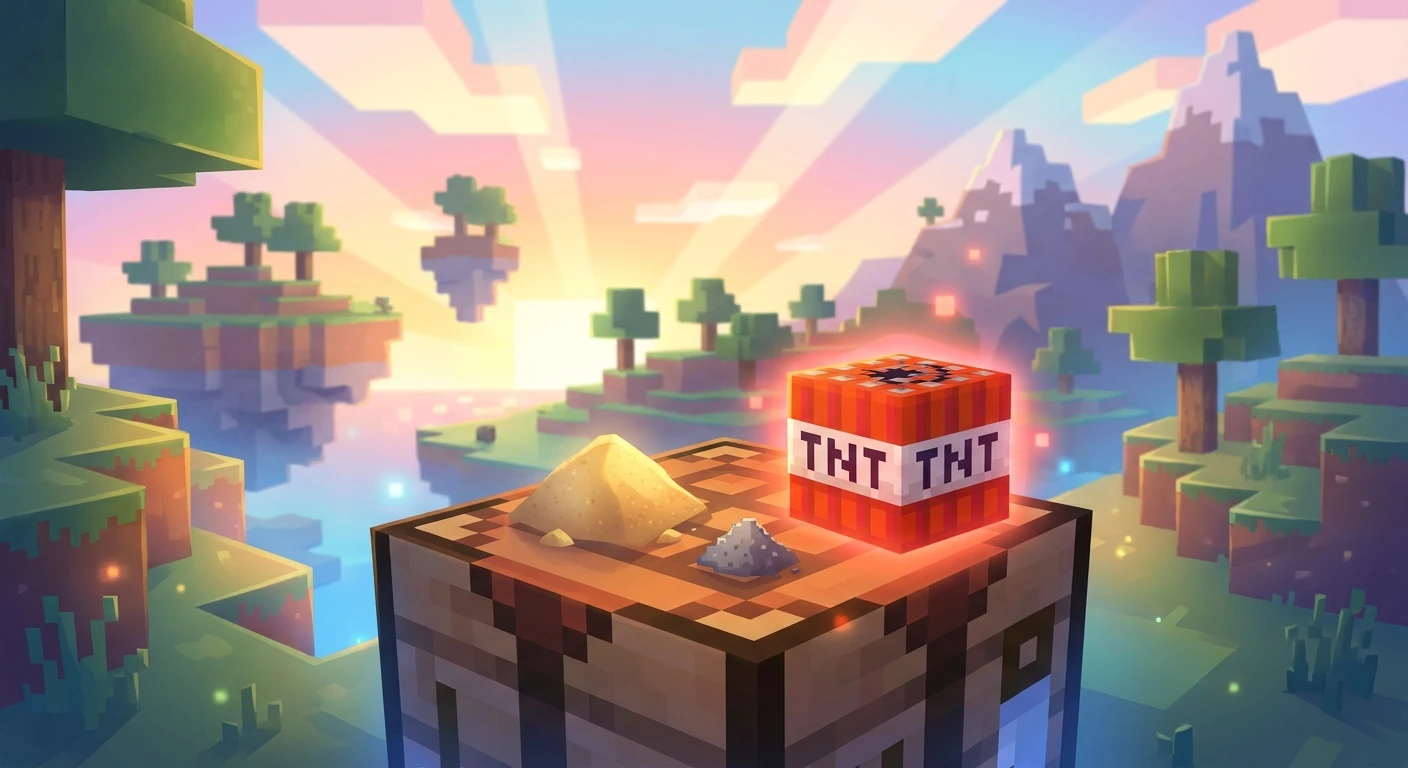
How to Make TNT: A Deep Dive into Virtual Crafting
If you’re wondering how to make tnt, you’ve likely spent time in popular sandbox video games where crafting is a core mechanic. While creating actual explosives in the real world is incredibly dangerous, illegal, and strictly prohibited, crafting virtual TNT in gaming environments is a staple activity. This guide will walk you through the fictional, pixelated process of gathering materials and combining them on your crafting table to clear digital landscapes.
In many gaming universes, the recipe for TNT is remarkably consistent and requires two primary, although fictionalized, ingredients. It’s a fascinating look at how games simplify complex, dangerous real-world chemistry into accessible, fun mechanics.
Read also: Guide: how to make a water elevator in minecraft; Guide: How to Make Paper in Minecraft.
The Fictional Recipe
To craft your virtual explosive, you typically need to gather specific resources found within the game world. Here is a common representation of the required materials and the crafting process.
| Material | Quantity Needed | Where to Find It (In-Game) |
|---|---|---|
| Gunpowder (or similar) | 5 units | Looted from specific hostile mobs (e.g., Creepers) |
| Sand | 4 units | Harvested from desert biomes or beaches |
| Crafting Table | 1 unit | Crafted from wood planks |
The process of combining these materials is straightforward in the virtual world:
- Open your crafting table interface to access the 3×3 grid.
- Place the 5 units of gunpowder in an ‘X’ pattern (corners and center).
- Fill the remaining 4 spaces (top-middle, bottom-middle, left-middle, right-middle) with sand.
- Collect your newly crafted TNT block from the output slot.
The History of Virtual Explosives
The inclusion of explosives in gaming has a long history, evolving from simple pixel flashes to complex physics simulations.
Origins in Classic Gaming
Early games used simple explosive mechanics, often represented by basic red barrels or cartoonish bombs, primarily to clear obstacles or defeat enemies.
Evolution of Crafting Mechanics
As games became more complex, particularly with the rise of the sandbox genre, developers introduced crafting systems. This allowed players to create items, including explosives, from raw materials, adding a layer of strategy and resource management.
The Modern State of Digital Demolition
By 2026, many games feature intricate physics engines where the placement and detonation of crafted TNT can realistically terraform the environment, block by block.
The Technical Side of Sandbox Explosions
While the crafting is simple, the game engine’s response to an explosion is technically complex.
Voxel Destruction
When a TNT block detonates, the game engine calculates a blast radius, determining which surrounding voxels (blocks) are destroyed or displaced based on their assigned blast resistance.
Physics and Particles
Modern games handle the visual and physical aftermath with sophisticated systems.
- Particle emitters create smoke and debris effects.
- Physics calculations apply force to nearby entities, sending them flying.
- Sound engines trigger localized explosion audio.
A 7-Step Plan for Virtual Mining with TNT
If you’ve crafted your virtual TNT, here is a structured approach to using it effectively in-game.
Step 1: Resource Gathering
Spend time collecting the necessary sand and gunpowder from the appropriate biomes and mobs.
Step 2: Crafting the Blocks
Return to your base and use your crafting table to assemble the TNT blocks.
Step 3: Scouting the Location
Identify an area that needs clearing, such as a large underground mining operation or a site for a new structure.
Step 4: Strategic Placement
Place the TNT blocks carefully. Avoid placing them too close to structures you want to keep intact.
Step 5: Rigging the Detonator
Set up a safe ignition method. This could be a simple button, a pressure plate, or a long line of virtual redstone dust.
Step 6: Seeking Cover
Retreat to a safe distance or behind blast-resistant blocks to avoid taking in-game damage.
Step 7: Ignition and Assessment
Activate the detonator, enjoy the pixelated explosion, and then assess the area to collect any exposed resources.
Myths vs. Reality in Gaming
Myth: You can use any type of dirt to make TNT.
Reality: Most games strictly require sand (or sometimes red sand) alongside gunpowder.
Myth: Bigger explosions always yield more resources.
Reality: In many games, explosives destroy a significant percentage of the blocks they break, meaning manual mining is often more resource-efficient.
Myth: TNT is only for griefing.
Reality: When used responsibly in single-player or cooperative modes, it’s an excellent tool for rapid terraforming and large-scale mining projects.
Frequently Asked Questions
Can I craft TNT without gunpowder?
In standard, unmodified versions of most sandbox games, gunpowder is a strict requirement.
Does TNT destroy items on the ground?
Yes, explosions will typically destroy dropped items caught in the blast radius.
What is blast resistance?
It’s a value assigned to different blocks; materials like obsidian have high resistance and survive explosions, while dirt has low resistance.
Can I detonate TNT with fire?
Yes, flint and steel or a flaming arrow can usually ignite a TNT block.
Is TNT effective against bosses?
It can deal damage, but many boss mobs have high explosive resistance, making other weapons more effective.
How do I make a chain reaction?
Placing TNT blocks close together means the explosion of one will trigger the others.
Can I mine diamonds with TNT?
It’s risky, as the explosion might destroy the diamond drops before you can collect them.
In conclusion, while learning how to make tnt in a video game is a fun exercise in digital resource management, it bears no resemblance to the highly dangerous real-world chemistry. Stick to the pixels, enjoy your virtual terraforming, and keep building!


Leave a Reply