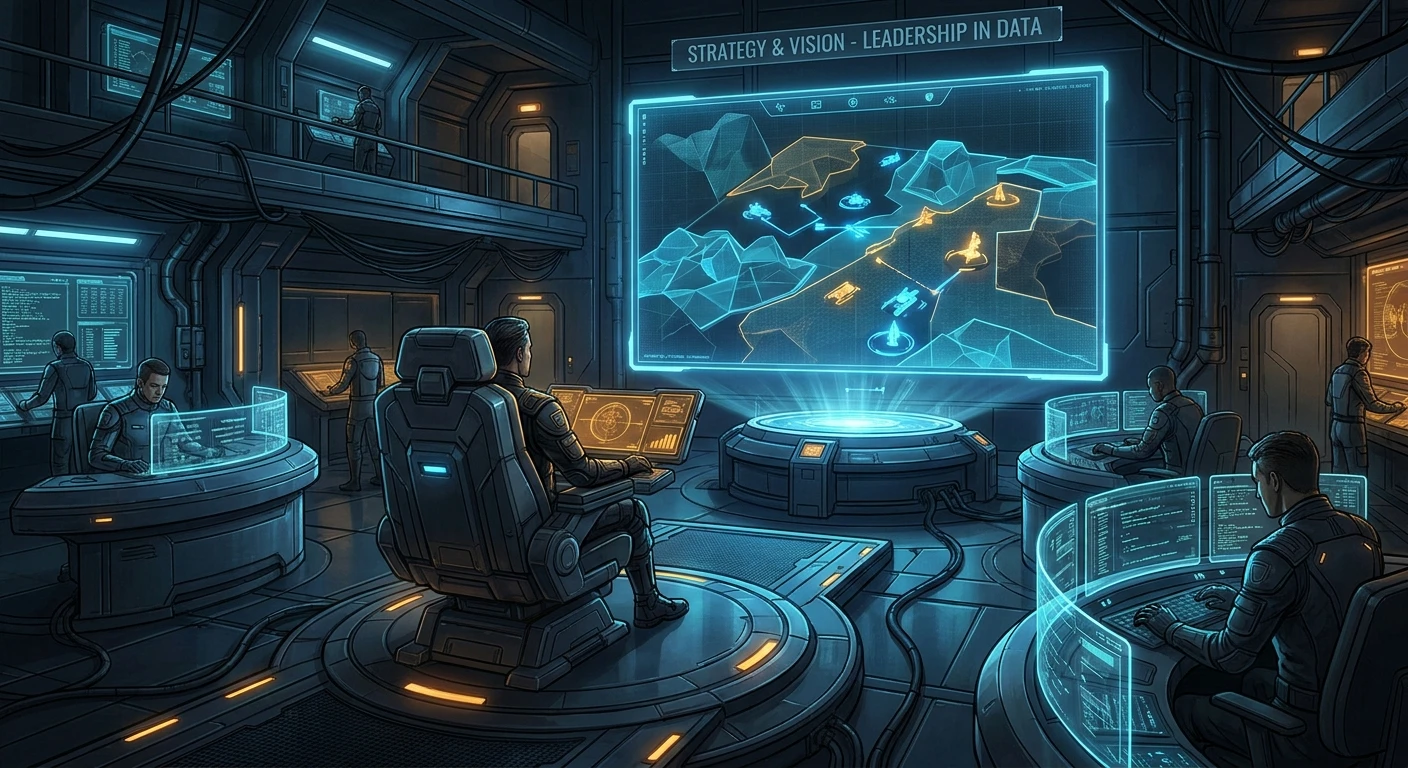
What It Takes to Be a Mecha Team Leader
Did you ever think stepping up as a mecha team leader would be this intense? You are not just piloting a heavy mechanical rig; you are anchoring the survival of an entire squad right on your shoulders. The mental load is immense, but the payoff is absolute tactical dominance. I still remember sitting in a massive cyber-arena down in Kyiv earlier this year. It’s 2026, and the competitive simulation scene here is absolutely booming. I was watching a local squad get totally dismantled because their commander lost situational awareness. It hit me right then: the gear doesn’t win the match; the shot-caller does. Being the anchor means you have to process telemetry, manage heat sinks, and keep your squad’s morale high, all while dodging incoming fire. You need a mix of cold calculation and fiery intuition. If you want to stop getting flanked and start dictating the pace of the engagement, you need a serious mental upgrade. Let us walk through the exact protocols, communication habits, and strategic frameworks you need to adopt to truly lead from the front.
Core Command: Benefits, Harms, and Practical Mechanics
Understanding the core mechanics of command is non-negotiable. A bad caller drags the whole unit down, creating traffic jams in narrow corridors and wasting heavy ordnance on decoys. Conversely, a highly skilled leader turns a disorganized group into a synchronized hive mind. The tactical benefits are staggering when you coordinate your movements properly. Let us break down exactly what a top-tier commander brings to the table.
Read also: Ultimate Guide to Rogue Trader Companions; Mastering Blue Prince: The Ultimate Guide.
| Command Capability | Tactical Advantage | Real-World Squad Benefit |
|---|---|---|
| Telemetry Sharing | Instant hazard identification | Prevents ambushes and saves armor integrity |
| Heat Sink Distribution | Optimized sustained fire | Maintains damage output without overheating |
| Spatial Zoning | Choke point control | Forces opponents into disadvantageous terrain |
The value proposition of having a dedicated commander is simple: efficiency. Take the ‘Aegis Maneuver’ for example. When you coordinate overlapping energy shields, your frontline absorbs double the impact, letting your snipers reposition safely. Another perfect example is the ‘Pincer Feint.’ You send your lightest scout to bait an engagement while you, acting as the anchor, direct the heavy hitters to flank. These strategies fail miserably without someone calling the shots. To execute this level of control, you need a strict operational framework.
- Master the Communications Grid: Keep your comms perfectly clear. Eliminate all background chatter. Call targets using a universal grid system so your squad knows exactly where to look without guessing.
- Balance the Loadout Profiles: Never drop into a match with four heavy brawlers. You need electronic warfare specialists, scouts, and heavy support. Your job is to approve and balance these loadouts before the deployment doors even open.
- Monitor Terrain Telemetry: Constantly scan the topographical map. Elevation is everything. If you are caught in a valley, you are already losing. Command your team to take the high ground and establish firing lanes immediately.
The Origins of Tactical Mecha Coordination
To really appreciate the role, you need to look back at how we got here. The origins of heavy squad coordination started decades ago in clunky, early-century video games and niche tabletop simulations. Back then, a commander was just the player with the loudest voice over a static-filled headset. There were no integrated sensory feedbacks, no localized haptics. It was purely theoretical. The strategies were basic: group up and shoot. But even in those primitive stages, the necessity for a unified chain of command was obvious. Without a central voice, teams would scatter, isolate themselves, and get picked off one by one. The fundamental need for a guiding intelligence was born in those chaotic early lobbies.
The Evolution of Squad Tactics
As the hardware got better, so did the necessity for complex tactics. The evolution of squad command mirrored the evolution of the virtual reality rigs themselves. Once we moved past keyboard and mouse, integrating omni-directional treadmills and basic haptic vests, the cognitive load on a single pilot skyrocketed. Suddenly, you weren’t just pressing buttons; you were physically exhausted, managing your own balance and targeting. The team desperately needed someone to offload the strategic thinking. The commander role evolved from a mere shot-caller to a full-on battlefield director. We saw the introduction of dedicated command variants—chassis designed specifically with heavier sensor suites, advanced radar, and electronic warfare capabilities rather than raw firepower.
The Modern State of Robotics Coordination
Now, look at the modern state of coordination. We are running hyper-realistic, low-latency sensory environments. A modern commander operates on a completely different level. They utilize augmented reality overlays that project real-time squad vitals directly into their retinas. The commander acts as a central processing hub for the entire team’s sensor data. If a scout on the far left flank detects a thermal spike, that data routes directly through the commander’s rig, who then instantly relays firing coordinates to the artillery unit on the right flank. It is a beautiful, terrifying ballet of data and destruction, heavily reliant on split-second human intuition that AI still cannot replicate.
Neural Feedback and Haptic Synchronization
Let us talk about the tech that makes this possible. Operating as the command hub means you are plugging into systems that push the limits of human processing. Neural feedback and haptic synchronization are the cornerstones of modern command rigs. When your scout takes a hit, your command chair translates that structural damage into a localized haptic pulse on your own interface. You literally feel the integrity of your squad failing. This allows for rapid, instinctual reactions rather than waiting for a verbal damage report. The cognitive bridging requires intense focus, as you are essentially expanding your proprioception to encompass four massive mechanical bodies at once.
Telemetry Bandwidth and Processing
The sheer volume of data streaming through a command rig requires massive telemetry bandwidth. We are talking about terabytes of topographical scans, thermal signatures, and electronic warfare interference matrices processing every single second. As the leader, your display is a chaotic mess of vectors and threat assessments. You rely on advanced filtering algorithms to separate the noise from the immediate threats.
- Sensor Latency: Top-tier rigs operate with a sensor-to-retina latency of under 4 milliseconds, ensuring real-time reaction speeds.
- Gyro-Stabilization Algorithms: The command chassis utilizes heavy predictive algorithms to maintain a stable radar lock even while the unit is sprinting across broken terrain.
- Thermal Dissipation Networks: Data crunching generates massive heat. Command mechs feature unique liquid-cooling networks specifically dedicated to the onboard tactical computers, completely separate from the weapon systems.
- Encrypted Burst Transmissions: To prevent electronic jamming, squad commands are sent in micro-second, highly encrypted bursts rather than continuous open-channel radio waves.
Day 1: Interface Calibration and UI Mastery
You cannot lead if you are fighting your own controls. Dedicate your entire first day to interface calibration. Strip down your Heads-Up Display. Remove any flashy, unnecessary graphical overlays. You want raw, clean data. Bind your most crucial commands—squad rally, focus fire, and retreat—to your most accessible physical triggers. Spend hours in the dry-dock simply navigating the menus until selecting a squadmate and issuing a waypoint becomes pure muscle memory.
Day 2: Spatial Awareness and Topography
Your second day is all about map knowledge. A solid commander knows the terrain better than they know their own rig. Boot up an empty simulation and walk the maps. Identify every single choke point, sniper nest, and heavy cover location. Memorize where the structural weak points are in the urban zones. If you know the topography, you can predict exactly where the enemy will try to funnel your squad, and you can set up a counter-ambush before they even fire a shot.
Day 3: Heat Management and Resource Rotation
Combat is a battle of attrition. Day three focuses on resource rotation. You need to practice cycling your frontline. When your lead brawler hits 80% heat capacity, you must already have your secondary fighter moving up to swap positions. Practice the timing of this dance. If you swap too early, you lose momentum; if you swap too late, your vanguard shuts down and gets destroyed. It is all about the rhythm of the engagement.
Day 4: Streamlining Communication Protocols
Day four is where you fix your mouth. Stop using long sentences. You do not say, ‘Hey guys, I think there is a sniper in the tall building on the left.’ You say, ‘Sniper. North Tower. Third floor.’ Establish absolute brevity. Work with your squad to create two-word code phrases for complex maneuvers. The less time you spend talking, the more time you spend shooting and moving.
Day 5: Predictive Movement and Baiting
Now we get into advanced psychology. Day five is about predictive movement. Do not just react to where the enemy is; command your squad based on where the enemy wants to go. Practice leaving an intentional gap in your defense. Make it look like a mistake. When the opposing scout tries to exploit that gap, you slam the door shut with your heavy units. Baiting requires absolute trust from your team.
Day 6: Squad Morale and Stress Mitigation
Things will go wrong. When a teammate gets taken off the board early, panic sets in. Day six is about psychological anchoring. You have to keep your voice completely steady, even when the telemetry looks catastrophic. Practice taking a deep breath before hitting the comms switch. If you sound panicked, the whole squad falls apart. A calm commander can salvage a terrible engagement.
Day 7: Full Spectrum Simulation Run
Finally, day seven is the gauntlet. Put everything together in a high-stakes, full-spectrum simulation. Tell your squad to intentionally ignore one of your orders just to see how quickly you can adapt and reroute the strategy on the fly. Record the entire session, including your comms audio, and review it immediately afterward. Identify the exact moments where your spatial awareness slipped, and correct it.
Myths vs. Reality of Squad Command
People carry a lot of strange assumptions about what this role actually requires. Let us clear the air and break down some persistent misconceptions.
Myth: The commander just sits in the back and shoots missiles.
Reality: If you are sitting in the back, you are wasting armor. A great commander operates in the mid-line, providing a localized sensor umbrella and taking hits for squishier teammates when necessary.
Myth: The heaviest armor always wins the engagement.
Reality: Mobility and clear communications easily outpace raw armor. A well-coordinated light squad will surgically dismantle an uncoordinated heavy squad every single time by attacking blind spots.
Myth: You need the most kills to be respected.
Reality: Your kill count is irrelevant. Your primary metric of success is squad survival and objective completion. You are the architect of the win, not the executioner.
FAQ: Do I need a specialized rig to lead?
While not strictly mandatory, running a chassis with enhanced sensor suites and electronic warfare modules makes the job significantly easier. You need the bandwidth to process squad data.
FAQ: How do I handle a teammate who ignores orders?
Address it outside the simulation. In the heat of the moment, adjust your strategy to accommodate their erratic movement, but after the match, make it clear that rogue actions compromise the entire unit.
FAQ: What is the ideal squad size for a beginner commander?
Start with a four-unit squad. It provides enough complexity to learn spatial zoning and crossfire coordination without completely overwhelming your cognitive bandwidth.
FAQ: How do I improve my map awareness?
Spend time in spectator mode. Watching high-level matches from a top-down perspective trains your brain to recognize formations and flanking routes organically.
FAQ: Is voice communication really that critical?
Absolutely. While pings and map markers are great, voice comms convey urgency and complex timing that a simple visual ping cannot match.
FAQ: Should the leader carry repair drones?
Yes. Carrying utility items like repair drones or mobile shield generators naturally centralizes the squad around your position, making coordination easier.
FAQ: How do you bounce back from a terrible call?
Acknowledge it quickly, reset the formation, and move on. Dwelling on a mistake mid-match guarantees a second mistake will follow immediately.
Conclusion
Stepping up as a mecha team leader is a massive undertaking that tests your mental processing, your emotional control, and your strategic foresight. It goes far beyond simply knowing how to pilot your own machine. By mastering your communication protocols, understanding the technical limitations of your telemetry, and executing a rigid training plan, you elevate not just yourself, but everyone who drops into the arena alongside you. Start calibrating your interface today, grab your squad, and dominate the simulation!




Leave a Reply