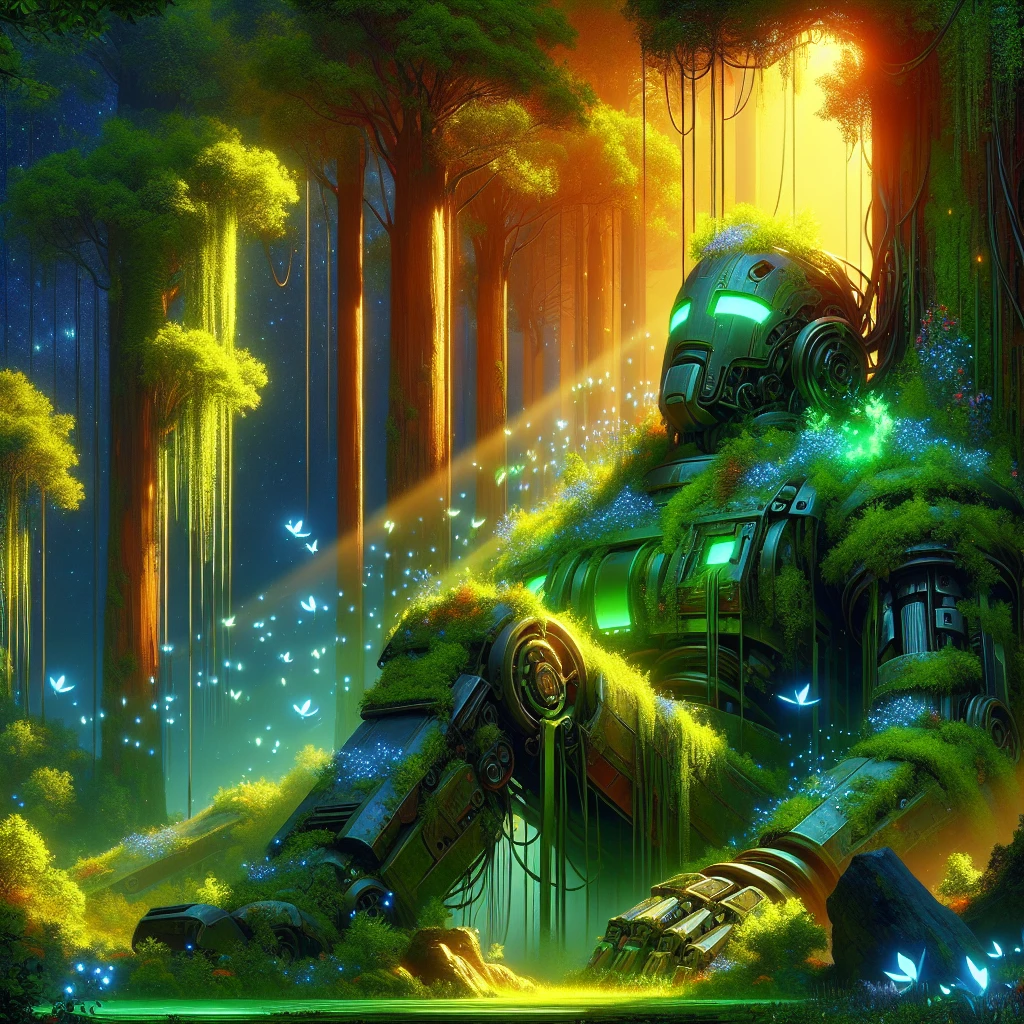
Why is Titanfall 3 Cancelled? The Heartbreak Explained
Man, did you ever honestly think we would still be asking if the titanfall 3 cancelled rumors are true, especially now that we are deep into 2026? It honestly breaks my heart a little bit. Every single time a major gaming showcase rolls around, a tiny, foolish part of me hopes for that iconic standby message to flash across the screen, signaling the return of our favorite mechs. But here we are, facing the cold, hard truth. Let me tell you a quick story about why this hits so close to home. Back in Kyiv, before everything went completely digital and remote, my friends and I used to cram into this tiny underground internet gaming lounge. We spent absolutely countless hours mastering the grapple hook in Titanfall 2, screaming across the room when someone nailed an impossible mid-air kraber shot. It was pure magic, a type of adrenaline rush that no other game could replicate. The news that the sequel got officially shelved hit our local group chat like a ton of bricks. We just could not comprehend why a franchise with such a massive, fiercely dedicated following would just stop existing. The reality of why this highly anticipated project was halted is a wild mix of bad timing, massive unexpected successes elsewhere, and shifting studio priorities. It isn’t just a simple case of a big evil publisher killing a game, even though that is exactly what everyone loves to echo on Reddit forums. The truth is far more complicated and involves a lot of complex behind-the-scenes choices.
When we talk about the cancellation, we absolutely have to talk about Apex Legends. Respawn Entertainment had a relatively small team working on a battle royale mode as a fun internal experiment. That little experiment completely blew up within the studio. They realized very quickly that they had captured lightning in a bottle. To properly support a massive live-service game, you need every single hand on deck. The sheer gravity of maintaining that momentum pulled almost all resources away from traditional single-player or boxed multiplayer releases. You can actually see the stark contrast when you compare what we originally had versus what we eventually ended up getting. Check out this quick breakdown of how resources and priorities shifted drastically:
| Production Factor | Original Franchise Vision | Apex Legends Shift |
|---|---|---|
| Development Focus | Story-driven campaigns, arena maps | Live-service updates, endless cosmetics |
| Mechanics Prioritization | Advanced wall-running, giant pilotable mechs | Hero abilities, grounded tactical teamplay |
| Revenue Model | One-time premium box purchase | Free-to-play with heavy microtransactions |
The value proposition of getting a third mainline game was absolutely massive. Think about it for a second. We lost two huge, irreplaceable things. First, the direct continuation of Jack Cooper and BT-7274’s incredibly emotional narrative, which honestly set a brand new gold standard for first-person shooter campaigns. Second, the absolute perfection of the pilot mobility system, which still hasn’t been matched by anyone else on the market today. So, why did it really go down this way? Listen, here are the core reasons:
- Apex Legends became an overnight financial juggernaut, demanding hundreds of dedicated developers just to maintain a steady stream of seasonal content.
- The battle royale genre completely dominated the overall market share, making traditional arena shooters look like a massive financial risk to risk-averse publishers.
- Key senior developers and visionary directors eventually moved on to other entirely different projects, scattering the original creative vision across multiple different studios.
The Origins of Respawn
To really grasp the weight of this situation, we need to go back to the very beginning. Respawn Entertainment was born from absolute chaos. Vince Zampella and Jason West, the masterminds behind the biggest modern warfare shooter ever made, had a highly publicized, incredibly messy falling out with Activision. They were escorted out of the building by security. When they formed Respawn, they had a massive chip on their shoulder and something major to prove. They wanted to create a game that didn’t just iterate on the genre, but completely redefined how a player moves through a digital space. The first game was a massive leap forward, introducing asymmetrical combat where squishy foot soldiers could genuinely take down massive, hulking machines through sheer agility and smart positioning.
The Evolution of the Source Engine
A lot of people do not realize that the backbone of these incredible games is actually a heavily modified version of Valve’s ancient Source Engine. Yes, the same engine that powers Half-Life 2. The developers chose this specific architecture because it provided the absolute crispiest, most responsive mouse input and physics calculations available. They basically tore the engine down to its base screws and rebuilt the entire rendering and networking codes to support massive open maps with agile, wall-running pilots. The evolution of this tech was staggering. By the time they shipped the second game, they had implemented a completely custom audio occlusion system, heavily modified lighting pipelines, and a physics sub-step system that allowed for the crazy momentum conservation players use to fly across the map at ridiculous speeds.
The Modern State of the Franchise
Right now, the legacy of the franchise lives entirely within the confines of the Apex Games. While we get little narrative nods, returning characters, and familiar weapons, it just is not the same. The universe has evolved from a gritty, boots-on-the-ground frontier war into a colorful, televised bloodsport. The massive, awe-inspiring set pieces have been replaced by shrinking rings and loot boxes. It is highly successful, wildly profitable, and honestly a fantastic game in its own right, but it leaves a massive void for those of us who just want to call down a Titan and hear that comforting mechanical voice tell us that we are outnumbered but not outmatched.
Server Architectures and Tick Rates
Let us get a little bit nerdy for a second. Operating a game with this level of verticality and speed requires some incredibly robust server infrastructure. The original games utilized highly specialized server architectures designed to predict player movement with pinpoint accuracy. When you are moving at fifty miles per hour through the air, even a tiny amount of network latency can completely ruin the experience. The servers had to run at incredibly high tick rates just to keep up with the hitboxes of pilots who were constantly changing their momentum vectors. Running these servers was notoriously expensive, and keeping them totally stable while simultaneously developing new content was an absolute nightmare for the network engineering team.
Advanced Movement Mechanics Under the Hood
The movement isn’t just an animation; it is pure, unadulterated physics math running at lightning speed. The developers implemented a system known as ‘slide hopping’ or ‘b-hopping’, which essentially exploits the friction calculations within the game engine. When a player hits the ground while crouching, the engine temporarily reduces ground friction. Skilled players use this tiny window to jump again instantly, conserving entirely all of their forward momentum. Check out these crazy technical facts about how it all works behind the scenes:
- Air strafing utilizes the exact same vector projection math found in Quake, allowing players to curve their trajectory mid-air without losing velocity.
- The wall-run mechanic temporarily alters the player’s gravity scale to zero, locking their horizontal axis to the normal of the wall’s geometry.
- Hitboxes dynamically stretch and compress depending on the player’s velocity, artificially aiding hit registration during extreme high-speed encounters.
- The grappling hook is technically a physical projectile with its own dedicated physics tether, constantly calculating tension and swing arcs based on the player’s viewing angle.
Day 1: Acceptance and Uninstallation
Listen, the first step is always the hardest. You have to finally accept that the sequel you have been dreaming about is not coming anytime soon. Staring at the rumor mill on Twitter is just going to drive you absolutely insane. Take a deep breath, accept the current reality, and maybe uninstall the games that are causing you endless frustration. Cleanse your digital palate.
Day 2: Exploring the Speedrunning Community
If you miss the feeling of absolute speed, you need to watch what the speedrunning community has done with the gauntlet and the main campaign. These players have absolutely broken the game in the best way possible. Spending a few hours watching speedrunners manipulate grenade damage to launch themselves across entire maps is wildly entertaining and will give you a brand new appreciation for the engine.
Day 3: Trying Indie Movement Shooters
The massive void left behind has actually spawned an entire subgenre of indie movement shooters. Games like Ultrakill, Severed Steel, and Turbo Overkill are heavily inspired by that pure, kinetic energy. Pick up one of these indie titles. They might lack the massive AAA budget, but they completely nail the feeling of hyper-aggressive, momentum-based combat.
Day 4: Revisiting Apex Legends with Fresh Eyes
I know, I know. It is the game that supposedly killed our dream. But try booting it up without holding a grudge. Treat it as a completely separate entity. The gunplay is still absolutely phenomenal, and the tactical depth of the hero abilities offers a genuinely rich competitive experience. Just try to enjoy it for what it is, rather than hating it for what it isn’t.
Day 5: Deep Dive into Modding Frameworks
The PC modding community is absolutely wild. Spend a day looking into the various visual mods, custom maps, and fan-made tweaks that exist online. Modders have figured out how to inject custom models, alter lighting, and even create entirely new game modes. It is a fantastic way to see the sheer passion that still exists for the IP.
Day 6: Connecting with the Northstar Client Community
This is the holy grail for PC players. The Northstar client is a custom, community-run server browser that completely bypasses the official matchmaking servers. It features custom game modes like Gun Game, Infection, and absolutely wild modifiers that make the game feel brand new. Jump into their Discord, find a match, and experience the game the way the community envisions it.
Day 7: Expanding Your Horizon Beyond Mechs
Finally, take a step back from first-person shooters altogether. Go play an expansive RPG, try a cozy farming simulator, or jump into a completely different genre. Sometimes, the absolute best way to get over a massive gaming disappointment is to remind yourself how incredibly vast and diverse the gaming medium actually is.
We hear so many crazy stories flying around, so let us set the record straight on a few things. Myth: The big bad publisher forcefully demanded the studio stop working on the sequel to make a battle royale. Reality: The development team actually made the incredibly difficult choice themselves. They realized their battle royale prototype was incredibly fun and decided to pivot their entire studio focus internally. Myth: The third game was fully completed and just locked away in a vault somewhere. Reality: The project was only about ten months into early prototyping. They had some basic blocking, some rough sandbox ideas, but absolutely nothing resembling a finished product. Myth: We will never see these amazing mechanics ever again. Reality: The DNA of the franchise is permanently injected into the studio. Elements of the movement and gunplay constantly bleed into their other successful projects, including their wildly popular Star Wars titles.
Will Titanfall 3 ever actually happen?
Honestly, it is highly unlikely right now. The studio is massively focused on maintaining their current live-service juggernaut and developing other massive licensed properties.
Why was the project officially scrapped?
To fully support the explosive, totally unexpected growth of their free-to-play battle royale title.
Did the publisher force the cancellation?
No, the studio leadership made the final call based on what they were playing and enjoying internally.
Is the second game still completely playable?
Yes, absolutely! While official servers can be spotty, the community-run PC servers are thriving and incredibly active.
Are there any giant mechs in Apex?
Not as controllable vehicles. They exist purely in the lore and occasionally in the background of certain maps.
Who currently owns the entire IP?
Electronic Arts completely owns the intellectual property and the studio itself.
Can community mods save the old games?
100 percent yes. Custom clients have completely revitalized the multiplayer scene on PC.
So there you have it, man. The harsh reality of why our favorite mech-shooter sequel never saw the light of day is a tangled web of industry trends, massive surprise hits, and tough creative calls. It is super frustrating, but understanding the mechanics behind the choice brings a tiny bit of closure. If you are still holding out hope, maybe channel that energy into the community servers where the spirit of the frontier is still very much alive. Jump into the comments below and tell me your absolute favorite memory from the franchise!
Leave a Reply