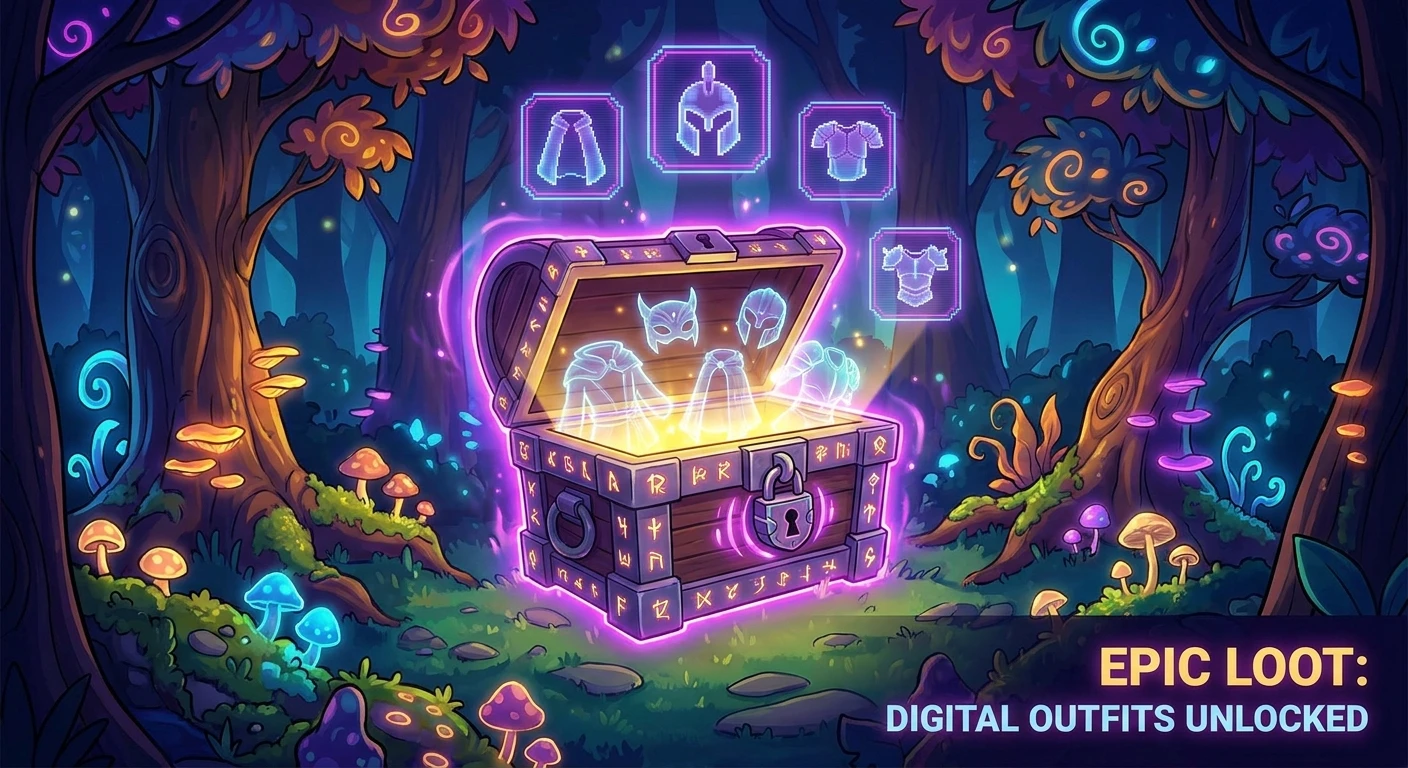
Why og fortnite skins Still Dominate the Lobby
You already know that dropping into a match with real og fortnite skins instantly commands respect from your entire squad. There is something fundamentally intimidating about seeing a player who has been building and battling since the absolute dawn of the game. I remember sitting in a dimly lit cybercafe in Kyiv during the rolling blackouts a few years back. The generators were humming, the connection was barely holding together, and right as we loaded onto the spawn island, a player wearing the Aerial Assault Trooper ran past me. My friend leaned over and literally gasped. That pixelated outfit was a badge of pure survival and dedication. It felt like spotting a mythical creature in the wild.
Even now, as we navigate through the wild gaming landscape of 2026, the obsession with early cosmetics has not faded. If anything, the hype has multiplied. Players respect the grind. When you see someone rocking a classic outfit, you instantly assume they possess god-tier mechanics, unparalleled game sense, and a locker worth more than most gaming setups. It is not just about the aesthetic; it is about the story attached to the account. You cannot just buy your way into that specific type of early-adopter prestige through the daily item shop. You had to be there. You had to experience the chaotic early days of building wooden boxes and struggling to figure out the map. That shared history is exactly why these classic items hold so much weight.
Understanding the true value of these digital artifacts requires breaking down both their visual impact and their psychological weight in a multiplayer environment. These outfits serve as the ultimate flex. For instance, consider the intimidation factor. If you see a Black Knight rushing your position, your brain automatically assumes you are fighting a veteran who has mastered every mechanic over the last decade. Another major value proposition is the account prestige. Having these items elevates your status in community hubs, Discord servers, and casual conversations with other gamers.
| Cosmetic Name | Release Era | Original Acquisition Method |
|---|---|---|
| Renegade Raider | Season 1 (2017) | Reach Level 20, then pay 1200 V-Bucks |
| Aerial Assault Trooper | Season 1 (2017) | Reach Level 15, then pay 1200 V-Bucks |
| Black Knight | Season 2 (2017-2018) | Reach Max Tier 70 in the very first Battle Pass |
| Pink Ghoul Trooper | Fortnitemares 2017 | Purchased during the first Halloween event |
The sheer desire for these items stems from three main pillars of digital gaming culture:
- Absolute Scarcity: The developer made a strict promise never to re-release battle pass items, ensuring a hard cap on the number of these outfits in existence.
- Historical Nostalgia: Wearing these outfits teleports players back to a simpler time when the map was fresh, no one knew how to build skyscrapers, and every victory royale felt like a massive achievement.
- Social Signaling: Just like wearing a vintage designer jacket in real life, equipping a rare cosmetic silently broadcasts your long-term dedication to the community without you having to say a single word.
The True Origins of Early Cosmetics
Back in late 2017, the concept of a “Battle Pass” was largely experimental. The earliest iteration of the store was called the “Season Shop.” You could not just swipe your card to get whatever you wanted. You had to earn the right to purchase the items by leveling up your account through extensive gameplay. Because the game had not yet reached its peak global phenomenon status, the player base was relatively small. Most people were completely unaware that the game would become a multi-billion dollar cultural titan. Consequently, very few players actually invested money into these initial outfits, resulting in a microscopic supply that would later become highly coveted.
The Evolution of Rarity
As the seasons progressed, the developer introduced the traditional Battle Pass system, which offered a massive amount of cosmetics for a flat fee. Millions of players jumped on board during Seasons 3, 4, and 5. Suddenly, having a skin from Season 3 was cool, but not exceptionally rare because the player base had exploded. This explosion in population created a stark dividing line. If you had items from Season 1 or Season 2, you were part of an elite, tiny fraction of the community. The community itself started categorizing these early items as the gold standard of rarity, creating an entirely player-driven economy of prestige.
The Modern State of Classic Outfits
Fast forward to the present day, and the landscape is entirely different. Accounts featuring these legendary cosmetics are treated like digital heirlooms. While the terms of service strictly prohibit the buying, selling, or trading of accounts, an underground gray market has flourished for years simply due to the demand. Content creators build entire video concepts around “pretending to be a default” before shocking their teammates by equipping a legendary outfit. The modern state of these items proves that digital assets can hold immense cultural capital, acting as permanent markers of gaming history.
The Psychology of Digital Scarcity
Why do human beings care so much about pixels on a screen? Economists and psychologists call this the Veblen good effect. A Veblen good is an item for which demand increases as its exclusivity and perceived value increase. In the digital space, this is magnified by the fear of missing out (FOMO). Because players know they can never legally acquire these specific early items again, the desire for them skyrockets. The brain loves exclusivity. When you equip a rare item, your brain receives a dopamine hit based on the social validation you get from other players emoting around you in the pre-game lobby.
Technical Infrastructure of Player Lockers
From a purely technical standpoint, the way the game engine handles these assets is fascinating. Even though the graphics engine has been vastly upgraded, the server still needs to cache and render these ancient textures for the handful of players who own them. The backend systems use specific entitlement flags to verify ownership.
- Asset Permanence: The developer must carry forward the exact 3D meshes and textures of these early items into every new iteration of the engine to prevent breaking the legacy code.
- Client-Side Rendering: When you load into a lobby, your client downloads the specific cosmetic hashes of the other 99 players. If someone has a rare item, your client renders it instantly, creating that immediate visual impact.
- Algorithmic Matchmaking: While cosmetics do not technically affect skill-based matchmaking, data analysts suggest that players who own older accounts typically have thousands of hours of playtime, skewing their MMR (Matchmaking Rating) significantly higher than average lobbies.
Day 1: Identify Your Old Locker Assets
The very first step is to sit down and audit your own gaming history. Boot up the game and sort your locker by “Season.” You might be completely surprised by what you find hidden at the bottom of your inventory. Look for gliders, pickaxes, or banners that you earned years ago. Sometimes a simple banner icon from 2017 carries just as much weight as a full character model.
Day 2: Secure Your Epic Games Account
If you possess these valuable digital assets, your account is a prime target for malicious actors. You need to lock it down immediately. Enable two-factor authentication using a reliable authenticator app rather than just email. Change your password to a completely unique, lengthy passphrase. Treat your gaming account with the exact same level of security as you would your primary banking app.
Day 3: Learn the Visual Tells of Fake OGs
The community is flooded with players trying to fake their veteran status. They will equip items that look somewhat old or use specific color variants released later. Train your eye to spot the real deal. Memorize the exact color scheme of the original Black Knight shield versus the newer, remixed versions sold in the item shop. Knowing the difference gives you instant credibility when discussing the game with friends.
Day 4: Master the Associated Emotes
Having the outfit is only half the battle; you need the correct mannerisms. The original “Floss” emote or the “Take the L” dance are the perfect companions to a veteran cosmetic. If you have them, put them in your primary emote wheel. Using a modern, current-season emote while wearing a 2017 outfit creates a visual mismatch. Keep your aesthetic consistent across the board.
Day 5: Pair Pickaxes for Maximum Clout
Your harvesting tool is visible for a massive portion of the match. The “Raider’s Revenge” pickaxe is arguably one of the rarest items in the entire game. If you do not have it, try pairing your veteran outfit with an extremely simple, understated pickaxe. The “sweaty” player aesthetic often revolves around minimalist designs, which perfectly complements the bulky, less-refined character models of the early seasons.
Day 6: Optimize Back Blings for Classic Outfits
Back blings were not even introduced until Season 3. Before that, character models just had whatever was permanently attached to their backs. If you want to truly represent the old-school vibe, take the back bling off completely. Running around with a bare back on a classic outfit is the ultimate signal that you prefer the raw, original look of the game as it was intended back in the day.
Day 7: Stream and Showcase Your Rarity
Once your locker is perfectly curated and secured, share it. Jump into creative lobbies or start a casual stream with your friends. Let people enjoy the nostalgia of seeing these items in action. Gaming is inherently a social experience, and giving newer players a chance to see gaming history running around the map adds a massive layer of fun to the community.
Myth: The developer will eventually re-release early Battle Pass items to make money.
Reality: The developer has stated repeatedly and legally bound themselves to the promise that Battle Pass exclusive items will never be sold in the item shop. Their entire business model relies on FOMO, and breaking that trust would destroy future pass sales.
Myth: Buying an account online is a safe way to get these items.
Reality: It is incredibly dangerous and strictly against the terms of service. The original owner can recover the account at any time by showing early receipts, leaving the buyer completely out of pocket with a permanently banned account.
Myth: Only Season 1 items hold any real veteran prestige.
Reality: While Season 1 is the holy grail, items from Season 2 and Season 3 (like the Reaper or the Elite Agent) are deeply respected by the community. They still represent a massive time investment during the golden era of the game.
Myth: Wearing these outfits means you are a professional-level player.
Reality: Rarity does not equal skill. Many veteran players simply played casually for years and never learned advanced building techniques. They just happen to have a very old account.
What makes a cosmetic truly original?
A cosmetic is considered truly original if it was released during the first three seasons of the game and has never been altered, remixed, or re-released in the daily item shop. It stands as a permanent, untouched digital artifact.
Will the Renegade Raider ever return?
No. It was tied exclusively to the Season 1 Season Shop progression system. While the developer has released alternate variations (like an icy or fiery version), the original base model will never return.
How much is a Black Knight account worth?
While selling accounts is banned, black market valuations fluctuate wildly based on the other items tied to the account. However, discussing exact monetary figures is difficult because most sold accounts eventually get banned anyway.
Does Epic ban account buyers?
Yes, absolutely. They track IP changes, hardware ID shifts, and payment method discrepancies. If an account suddenly jumps across the globe and changes all its details, the automated security systems flag it for a permanent ban.
Can you still get the Mako glider?
No. The Mako glider was an exclusive reward for reaching level 25 in Season 1. It briefly appeared in the item shop by mistake years ago, but was quickly removed and has never been seen since.
What is the rarest pickaxe?
The FNCS Champion pickaxe is highly exclusive, but in terms of veteran status, the Raider’s Revenge remains the pinnacle. It required level 35 in Season 1 and cost 1500 V-Bucks, making it incredibly scarce.
How do I secure my old account?
Immediately activate Two-Factor Authentication via an app, disconnect any old linked console accounts you no longer use, and update your primary email address to one with its own separate 2FA security.
In the end, the culture surrounding these digital cosmetics is a massive testament to the longevity of the game. Even right now in 2026, the community still bows down to the original pioneers who built the foundation of this metaverse. Whether you are lucky enough to have these items sitting in your locker or you simply appreciate seeing them in the wild, they represent an irreplaceable chapter of gaming history. Keep your accounts secure, respect the grind, and drop into your next match with pride. If you want to dive deeper into maximizing your gameplay with whatever locker you have, subscribe to our newsletter for weekly tips, tricks, and meta updates!
Leave a Reply