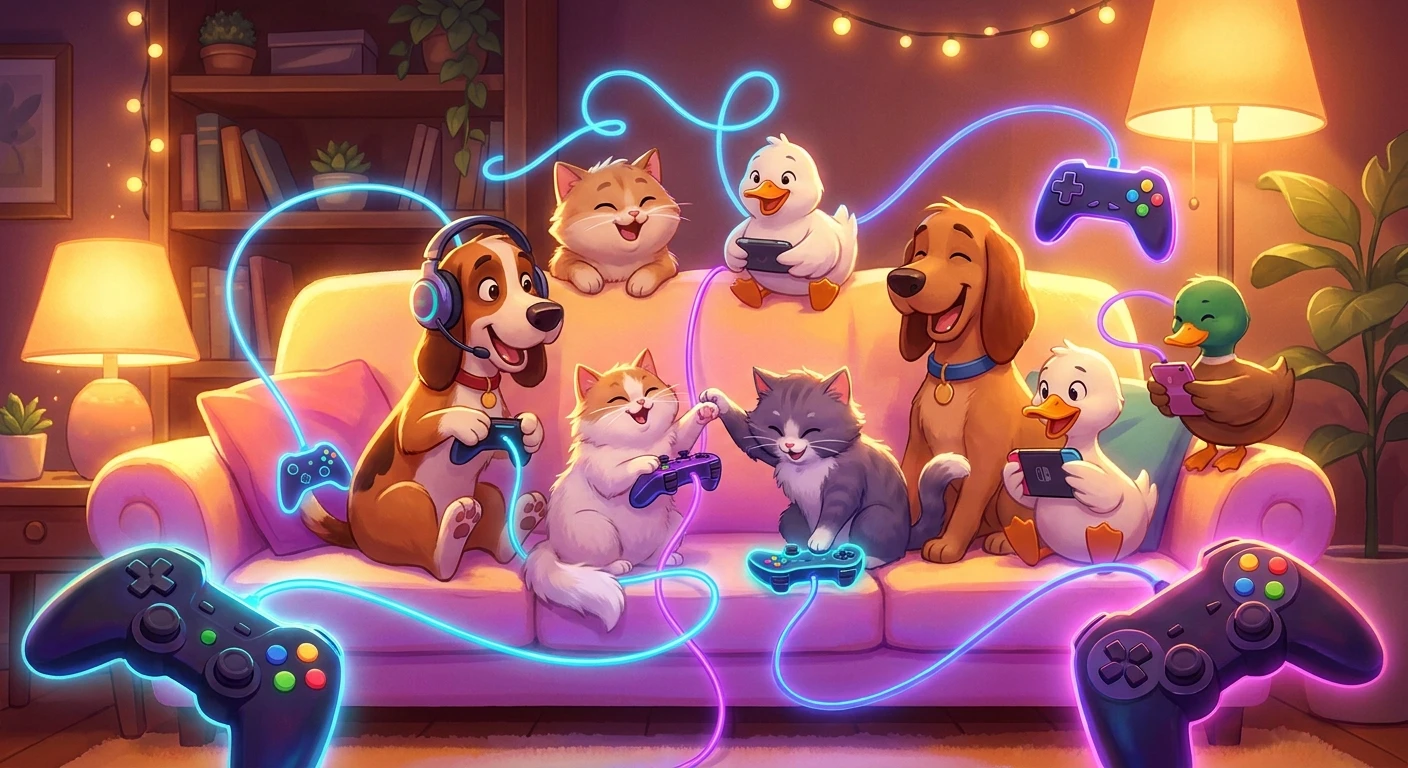
The Ultimate Answer: is party animals crossplay Ready for You?
Hey guys, let me tell you right away—if you find yourself frantically typing into search engines, asking is party animals crossplay functional for your specific gaming setup, the short and sweet answer is a massive, resounding yes. Playing this incredibly silly, physics-based brawler has basically become a holy weekend ritual for my gaming group here in Kyiv. We usually gather around on Friday nights—half of us hunched over high-end PC monitors, the other half sprawling on the couch mashing Xbox controllers. Even during the unpredictable power shifts back in the day, if we had a solid connection, we were instantly tossing each other off the icy submarine map or fighting over a massive gummy bear. Now that the calendar has officially flipped to 2026, finding a title that seamlessly connects players across completely different hardware ecosystems is exactly what we crave and demand from software developers. My central point here is straightforward and highly direct. Unified network functionality does not just add a tiny bit of convenience; it fundamentally changes the social fabric of our gaming lives by completely erasing those annoying invisible walls between platform ecosystems. I am going to break down exactly how this backend mechanics works, why it matters deeply for your weekend lobbies, and how you can absolutely maximize your chaotic play sessions with friends no matter what piece of plastic hardware they are currently holding in their hands.
The Core Benefits of Seamless Network Integration
We really need to look closely at the core benefits of this unified matchmaking system. Bridging the massive gap between the PC master race and the dedicated console gaming community creates a substantially larger, much healthier player pool. When a developer fully embraces open multiplayer boundaries, everybody wins because matchmaking times drop drastically. Let me map out exactly how this cross-network functionality heavily benefits your daily gaming diet and actively prevents your loyal group from splintering apart.
The main value proposition lies in pure, unadulterated accessibility. First, you get incredibly seamless friend invites. If your best buddy exclusively plays on Steam and you are stubbornly clutching your Xbox Series X, you simply share a quick lobby code or use the highly integrated in-game friend system to totally bypass the hardware differences. Second, the community longevity absolutely skyrockets. Multiplayer brawlers usually die out completely when the player base violently fragments across four different consoles, but unified servers keep the heartbeat of the game strong and vibrant for years on end.
Check out this quick breakdown of how inputs and hardware beautifully play together:
| Platform Ecosystem | Network Sync Status | Supported Input Options |
|---|---|---|
| PC (Steam) | Fully Supported | Keyboard, Mouse, External Controller |
| Xbox Series X/S | Fully Supported | Native Controller Only |
| Xbox One | Fully Supported | Native Controller Only |
Let me give you the top reasons why this highly specific network integration changes the game entirely for your friend group:
- Unified matchmaking pools guarantee that whether you queue up at 3 AM on a random Tuesday or during absolute prime time on a busy Saturday, you will instantly find a full lobby of wobbly dogs, cats, and ducks ready to throw down.
- Integrated voice communication actively remains functional across all supported platforms, meaning you can yell at your friends, actively plot betrayals, and laugh hysterically at ridiculous physics glitches regardless of where they originally bought the software.
- Consistent update parity strictly means developers push patches to every platform simultaneously, so absolutely nobody is left waiting for a crucial bug fix while their friends are already enjoying the brand new content drops.
Playing multiplayer games used to heavily require everyone to buy the exact same gray box. Now, the dedicated developers have built a surprisingly robust backend. The moment you boot up the title, you are immediately thrown into a vast ocean of players, perfectly synchronized and ready for absolute chaos. It makes planning weekend game nights an absolute breeze instead of a logistical nightmare.
Origins of Platform Integration
Looking back at the very initial concept phase, the studio practically knew they had absolutely no choice but to aggressively prioritize multiplayer connectivity. The historical origins of cross-network play in modern gaming were heavily restricted by stubborn, profit-driven console manufacturers. For many frustrating years, the major industry giants kept their precious player bases heavily segregated to brutally force hardware sales. If your best friend bought an Xbox, you had to buy one too. However, massive industry-shifting titles eventually forced those corporate walls down. By the time this specific brawler was heavily in its active development cycle, the collective expectation for multiplayer games had shifted massively. The development team clearly recognized that launching a multiplayer-centric party game without universal connectivity was basically a total commercial death sentence.
Evolution of the Netcode Structure
As the custom physics engine became increasingly complex, ensuring that a chaotic punch thrown on a PC registered at the exact same millisecond on a console required serious netcode evolution. The studio patiently went through multiple rigorous beta testing phases. During the initial public stress tests, observant players repeatedly noticed minor desync issues where characters would wildly grab thin air instead of an opponent, or heavy items would visually teleport across the arena. The evolution of their backend infrastructure involved completely shifting to highly optimized dedicated servers that could effortlessly process thousands of individual physics calculations per second while simultaneously bridging the complex communication protocols between Xbox Live and Steamworks. They had to practically rewrite massive chunks of their network prediction code just to handle a floppy dog throwing a heavy brick at a dinosaur.
Modern State of Server Connectivity
Today, the modern state of this specific integration is practically flawless. It is completely invisible to the casual end user. You boot up the main application, eagerly pull up your friend list, and instantly see a tiny visual icon indicating exactly which platform they are currently playing on. There are absolutely no convoluted port-forwarding network tricks or annoying third-party applications required to make it magically function. The standard has officially been elevated forever. Right now in 2026, the backend infrastructure effortlessly handles millions of highly complex cross-platform interactions daily, successfully proving that physics-based combat can genuinely thrive entirely outside of walled hardware gardens.
Deterministic Physics and Server Matchmaking
Getting adorable, heavily stylized fuzzy creatures to punch each other accurately across completely different hardware architectures heavily involves incredibly complex technical architecture. The absolute primary challenge is deterministic physics synchronization. Because the gameplay relies heavily on real-time active ragdoll physics rather than pre-baked, predictable animation loops, the master server must actively calculate the specific trajectory, momentum, and impact force of every single object and character frame-by-frame. When a Steam player aggressively throws a heavy metal shovel at an Xbox player, the dedicated server acts as the absolute objective authority. It directly receives the input data from both clients, processes the wild physics outcome, and securely sends the exact visual result back to both clients in vastly under 50 milliseconds. If the server was not completely authoritative, you would continuously see wildly different things on your screen compared to your friend’s television screen.
Advanced Latency Mitigation Protocols
To aggressively prevent frustrating elastic banding—where a character violently snaps back to a previous position on the map—the software engineers utilize highly advanced client-side prediction algorithms. This specifically means your local processing machine actually guesses the outcome of a button press slightly before the master server officially confirms it. If you want the hard, scientific technical facts on how this continuously operates smoothly behind the scenes, here is a quick breakdown of the netcode reality:
- Tick Rate Operations: The dedicated host servers run at a significantly high tick rate to actively guarantee physics calculations absolutely never skip vital frames during heavy multi-character collisions.
- Client-Side Extrapolation: The underlying engine actively predicts exactly where an opposing player is moving based on their last known vector, heavily smoothing out visual stuttering for everyone in the lobby.
- Protocol Agnosticism: The backend networking data structure is completely stripped of all platform-specific metadata before being broadcasted globally to all connected clients, brilliantly ensuring absolute zero platform bias in data processing speeds.
- Ping Equalization: Smart matchmaking algorithms actively attempt to group regional players with highly similar ping ranges to heavily ensure no single player natively gains an unfair, instantaneous reaction-time advantage due to geographical server proximity.
Step 1: Establish Your Universal In-Game Account
If you are truly ready to jump into the madness, you need a remarkably solid strategy. The very first thing you absolutely must do is launch the application and firmly make sure your internal network ID is properly generated. This specific numerical ID is completely separate from your standard Steam or Xbox gamertag and essentially acts as your universal gaming passport across all platforms.
Step 2: Locate the Unified Friends Menu
Navigate directly to the bottom right corner of the main title screen. Click the easily identifiable social icon. This beautifully unified interface consistently shows absolutely everyone currently online, seamlessly blending your native platform friends with your specifically added cross-network friends.
Step 3: Add Friends via Unique ID
Have your console-playing friends immediately text you their unique numeric game ID. Type this exact number into the internal search bar. This entirely bypasses the notoriously clunky native console friend systems and successfully creates a direct, permanent bridge.
Step 4: Create a Secured Custom Lobby
Do not just lazily jump into a random quick match if you have a large, chaotic group. Go directly to the Custom Game tab, securely set a custom password, and feel absolutely free to heavily adjust the internal physics settings to deliberately make the knockouts even more hilariously floaty or remarkably heavy.
Step 5: Distribute the Specific Lobby Code
If carefully adding friends manually one by one feels way too tedious for your patience level, simply look at the top right of your newly created custom room. Read that remarkably short alphanumeric code aloud on Discord or over a massive group text. Anyone can rapidly type it in and instantly join the mayhem.
Step 6: Verify Your Audio Communications
Always firmly double-check your audio hardware settings. Since you are actively bridging completely different platforms, the in-game voice chat system is your absolute best tool. Make absolutely sure your microphone is actively set to open mic or firmly bind a highly accessible push-to-talk key so you can easily scream when you fall off the map.
Step 7: Select the Best Introductory Maps
Finally, for your very first cross-platform clash, specifically choose a map with incredibly simple mechanics like Ichiban or Typhoon. This carefully ensures absolutely everyone gets entirely comfortable with the slight server latency and physics momentum before tackling overly complex objective-based maps where teamwork is heavily required.
Myths & Reality: Clearing Up Network Misconceptions
Let me aggressively clear up some massive misconceptions that stubbornly keep circulating on Reddit and various community forums regarding this highly specific multiplayer setup.
Myth: PC players have a massive, vastly unfair advantage over console players due to precision keyboard and mouse inputs.
Reality: This is completely false for this specific brawling title. The physics-based movement is actually heavily optimized for analog sticks. Controller players often have vastly superior control over their character’s shifting momentum than those stubbornly using standard, binary WASD keys.
Myth: Cross-network lobbies natively suffer from significantly worse lag than strict platform-exclusive lobbies.
Reality: The dedicated global servers seamlessly process all incoming traffic completely equally. Any lag dynamically experienced by your active group is strictly due to individual ISP routing tables or terrible local Wi-Fi issues, not the cross-network bridge code itself.
Myth: You have to continually pay an annoying extra fee or forcibly link a premium third-party subscription just to play with other platforms.
Reality: You strictly only need your standard online multiplayer access (like Xbox Live Gold or Game Pass Core for console players) and the base software. The cross-platform functionality is heavily built-in and entirely free of sneaky extra charges.
Can PlayStation 5 players join the current lobbies?
Currently, the multiplayer infrastructure is heavily focused strictly on the Microsoft and PC ecosystems, so native PlayStation connectivity is not officially active right now for this specific title.
Do I need a highly specific external account to connect?
No, you securely just use the strictly built-in generated game ID that is uniquely created automatically upon your very first successful login.
Can I permanently turn the cross-network feature off?
Yes, you can easily and permanently disable it deeply in the main settings menu if you strongly prefer strict, platform-only matchmaking for competitive reasons.
Does the internal voice chat work seamlessly?
Yes, the internal Voice over IP (VoIP) effortlessly allows you to speak directly and remarkably clearly to absolutely anyone currently sitting in your active lobby.
Is local split-screen fully supported while playing online?
Absolutely, you can easily have two people sitting on one single couch playing cooperatively against friends on completely different devices across the entire country.
Are there any annoying regional server locks?
There are absolutely no strict locks, but you can manually select your specific preferred server region deeply in the options to heavily optimize your local ping.
Will my unlocked cosmetics effortlessly transfer between my devices?
This specifically only happens if those distinct platforms natively share the exact same underlying account ecosystem, such as the Xbox ecosystem and the PC Windows Store platform.
Wrapping this massive guide up, jumping into chaotic, wildly unpredictable brawls has literally never been easier. The incredibly unified networking systems practically guarantee that your scheduled weekend game nights rigidly remain completely stress-free on the technical side. Now that you fully understand the robust backend mechanics, quickly go text your friends, firmly boot up the software, and boldly let the hilarious furry combat officially begin!



Leave a Reply