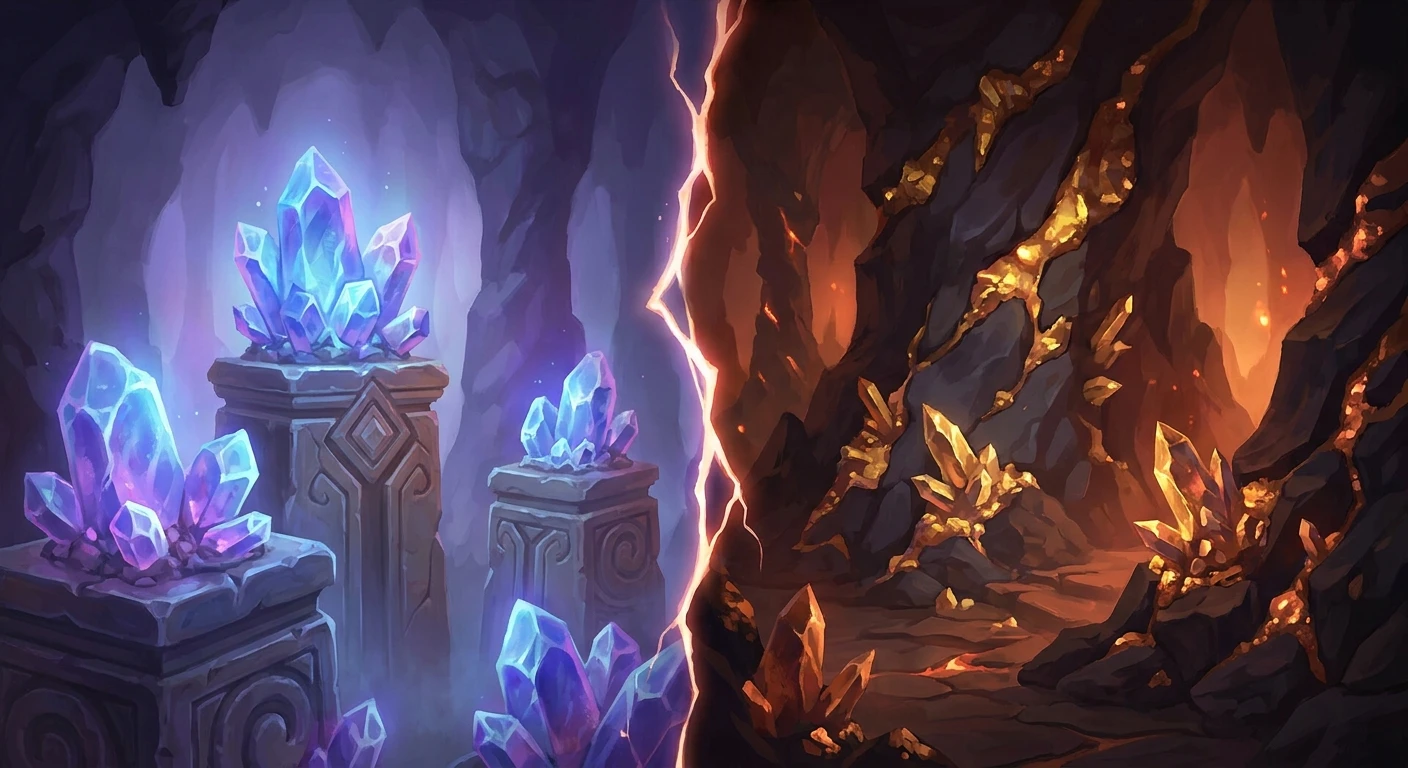
Geologist or Miner Stardew: Making the Optimal Level 5 Choice
When you finally reach level 5 in the mining skill, the prompt asking you to pick between geologist or miner stardew options presents one of the most critical early-game crossroads you will face. You just finished a long, exhausting day breaking rocks in the local mines, the shipping screen fades out, and suddenly you are forced to make a permanent-feeling decision before you can save your game. Do you want an extra piece of ore from every single vein you crack open, or do you prefer a fifty percent chance for precious gems to drop in pairs? This choice fundamentally dictates how you will approach crafting, resource management, and economic growth during your first year in Pelican Town. Choosing correctly based on your specific playstyle can propel your farm into a highly automated utopia, while picking the wrong synergy might leave you grinding for basic materials for weeks on end.
The core thesis of this decision comes down to raw industrial expansion versus pure economic wealth. The miner profession heavily favors players who need massive amounts of copper, iron, and gold to craft essential infrastructure like tappers, kegs, and quality sprinklers. If you want to automate your crop watering as quickly as possible, raw ore is the bottleneck you must overcome. Conversely, the geologist route is tailored for players who want to build up passive income, complete the town museum quickly, and secure high-value gifts for the local villagers. You are trading guaranteed crafting materials for a highly lucrative chance at double diamonds, rubies, and geodes. Let us break down exactly how these mechanics function so you can tailor your skill tree to your exact farming ambitions.
Read also: Guide: How to Get Maple Syrup Stardew Valley; Master the Iridium Sprinkler Range.
Core Analysis: Immediate Benefits and Long-Term Synergies
To truly understand the weight of your level 5 selection, you have to look at the immediate statistical advantages and how they cascade into the level 10 endgame professions. The value proposition of the miner is consistency. Every time you break a copper node, instead of getting one to three pieces of ore, you get two to four. This flat plus-one bonus might sound small, but when you are clearing out twenty nodes on floor forty of the mines, that translates to an extra full bar of iron every single trip. For example, building twenty quality sprinklers requires twenty iron bars and twenty gold bars. The miner cuts the time required to farm these materials by roughly twenty-five percent. On the other hand, the geologist shines in unpredictability and high spikes of wealth. When a diamond node drops two diamonds instead of one, you instantly double a massive 750g payout. Furthermore, this bonus applies to omni geodes, which are essential for unlocking late-game items and museum artifacts.
Here is a detailed comparative breakdown of the two paths:
| Profession Choice | Level 5 Immediate Perk | Level 10 Unlock Options |
|---|---|---|
| Miner | +1 Ore per vein mined | Blacksmith (Bars worth 50% more) or Prospector (Double coal chance) |
| Geologist | 50% chance for gems to appear in pairs | Excavator (Double geode chance) or Gemologist (Gems worth 30% more) |
| Strategic Focus | Crafting, Infrastructure, Automation | Museum Completion, High-tier Gifting, Raw Gold |
When evaluating which route to take, you need to weigh three core factors regarding your current game state:
- Your immediate crafting bottleneck: Are you constantly running out of copper for tappers or iron for sprinklers? If your farm is heavily reliant on processing artisan goods, you need the steady ore flow that the miner provides.
- Your museum progress: If you are struggling to find those final elusive artifacts and minerals for Gunther, the geologist path leading into the excavator profession is mathematically the fastest way to amass geodes to crack open.
- Your social strategy: Gems are universally loved or liked by almost every single villager. Having a stockpile of paired rubies, emeralds, and amethysts makes raising friendship hearts incredibly efficient without cutting into your crop profits.
Origins of the Mining Skill
When Stardew Valley first launched, the skill trees were designed to offer distinct role-playing flavors to a purely mechanical system. The creator, ConcernedApe, built the mining progression to reflect two very different types of subterranean explorers: the gritty industrial worker and the treasure hunter. Initially, players overwhelmingly gravitated toward the industrial route because early-game stamina limitations made ore farming a brutal, multi-day endeavor. Getting that extra piece of ore felt absolutely mandatory just to build a decent sprinkler setup before the first summer arrived.
Evolution of Profession Balance
As the game evolved through massive content patches, the balance between these two choices shifted dramatically. The introduction of the Crystalarium, a machine that duplicates inserted gems indefinitely, suddenly gave the treasure hunting path a massive late-game economic boost. Later updates buffed the value of geodes and introduced new currencies tied to gems, making the fifty percent duplication perk far more competitive. Furthermore, the addition of Ginger Island and the Volcano Dungeon in version 1.5 introduced entirely new nodes and mechanics that heavily rewarded both paths in different, highly specialized ways.
Modern State of Mining in Stardew Valley
Today, the meta has settled into a comfortable rhythm where min-max players actually utilize both professions at different stages of their playthrough. Because the Statue of Uncertainty allows players to change their professions for a fee of 10,000g, the modern strategy is highly fluid. Most veterans choose the extra ore early in the first year to aggressively build their automated watering systems and keg sheds. Once their infrastructure is fully established and they unlock the Skull Cavern, they pay the fee to switch to the gem-focused path to farm omni geodes and maximize their late-game wealth. This dynamic evolution ensures that neither option is ever truly obsolete.
Technical Deep Dive: How the Mechanics Actually Work
To make the most optimized choice, you need to understand the underlying mathematics governing the game’s code. Stardew Valley handles random number generation (RNG) and fixed drops differently depending on the specific rock you break. Let us look under the hood of the mining engine.
The Mathematics of Ore Yields
When you strike a copper, iron, gold, or iridium node, the game calculates a base drop rate. A standard node has a baseline yield of one to three raw pieces. When you have the miner skill active, the code simply adds a flat +1 to the final integer before the items spawn on the ground. This means your new minimum yield is two, and your maximum is four. Because this is a flat addition rather than a multiplier, the relative impact is massive. Going from one piece to two pieces is a one hundred percent increase in efficiency for that specific strike. Over the course of clearing out hundreds of rocks in the Skull Cavern, this fixed mathematical bonus saves you an immense amount of in-game time and energy.
Random Number Generation in Gem Nodes
The geologist perk operates on an entirely different mechanical layer. When a gem node is broken, or when a standard rock spawns a geode, the game runs a secondary RNG check. This check rolls a virtual 100-sided die. If the result is fifty or lower, the game spawns an exact duplicate of the item that was just generated. It is crucial to note that this fifty percent check is entirely independent of your daily luck stat determined by the television fortune teller. Here are the specific scientific facts regarding this mechanic:
- The duplication check applies to standard gems like ruby, emerald, jade, and amethyst.
- It applies to all four tiers of geodes: standard, frozen, magma, and omni geodes.
- It applies to earth crystals, fire quartz, frozen tears, and standard quartz picked up from the ground in the mines.
- It does NOT apply to Prismatic Shards dropped from mystic stones or monsters, as those are calculated on a different loot table.
- The duplication event triggers immediately upon the item spawning, resulting in two separate items bouncing on the floor rather than a single stack of two.
Actionable Step-by-Step Plan: Navigating Your Choice
Whether you choose the path of raw metal or precious stones, you need a tactical plan to leverage your new skill immediately. Follow this seven-step menu to maximize your subterranean efficiency the day after you level up.
Step 1: Assess Your Crafting Needs
Open your crafting menu and tally exactly how many bars of metal you need for your immediate goals. If you need fifty iron bars for lightning rods and sprinklers, you are going to need two hundred and fifty raw iron ores. Knowing your exact target prevents you from wasting days farming the wrong floors.
Step 2: Prioritize Your Farm Layout
Map out where your new machines will go. If you chose the ore route, designate a specific shed or outdoor area for your furnaces so you can smelt the massive influx of materials quickly. If you chose the gem route, start designating space for your future Crystalariums and storage chests for geodes.
Step 3: Check Your Current Pickaxe Level
Your new profession is useless if you are wasting too much energy breaking rocks. Immediately take your newly acquired metals to Clint the blacksmith and upgrade your pickaxe to copper or steel. Breaking nodes in fewer hits allows you to trigger your profession bonuses more frequently before passing out at 2:00 AM.
Step 4: Map Out Your Sprinkler Upgrades
If you are pushing for automation, target floors 41 through 79 in the local mines specifically for iron. With the extra ore perk, you can easily pull fifty to sixty pieces of iron in a single good luck day. Convert these immediately into quality sprinklers to free up your morning routine.
Step 5: Evaluate Your Crystalarium Strategy
For the gem hunters, start hoarding every piece of battery power and iridium you can find. Your ultimate goal is to build a shed full of Crystalariums pumping out diamonds or jade. Jade is particularly valuable because you can trade it to the Desert Trader on Sundays for staircases, bypassing the hardest parts of the late game.
Step 6: Plan for the Skull Cavern
Once you unlock the desert bus, your strategy must pivot. The Skull Cavern is relentless. If you are an ore farmer, use your surplus copper and iron to craft hundreds of mega bombs. Bombs destroy nodes instantly and your level 5 perk still applies to nodes broken by explosives.
Step 7: Utilize the Statue of Uncertainty
Never feel locked in. Once you have built your ultimate farm layout and no longer need thousands of pieces of copper and iron, take 10,000g to the sewers. Interact with the dog-like Statue of Uncertainty and swap your skill tree over to the gem hunter path to maximize your late-game wealth and geode processing.
Myths & Reality: Clearing the Dust
Because the Stardew community is so vast, a lot of misinformation circulates regarding skill tree synergies. Let us debunk the most common misconceptions right now.
Myth: You are permanently locked into your level 5 choice forever, and picking wrong ruins your save file.
Reality: As mentioned, the Statue of Uncertainty in the sewers allows you to completely respec your skills overnight for a relatively small fee of 10,000g. You can change it as often as you can afford it.
Myth: The extra ore perk becomes completely useless once you unlock the Statue of Perfection in year three.
Reality: While the Statue of Perfection gives you daily iridium, you still need massive amounts of copper and iron for kegs, preserve jars, and bombs. The Blacksmith path at level 10 also makes all your crafted bars sell for significantly more gold.
Myth: The duplication perk only works on gems mined directly from nodes with a pickaxe.
Reality: The fifty percent duplication chance also applies to gems and forageable minerals you pick up straight off the ground, such as fire quartz and earth crystals, making it incredibly versatile.
FAQ & Conclusion
Does Geologist affect Geodes?
Yes, you have a fifty percent chance to receive two geodes instead of one anytime a rock drops one. This includes standard, frozen, magma, and omni geodes, which drastically speeds up museum completion.
Is Blacksmith better than Excavator?
They serve completely different purposes. Blacksmith is incredible for pure liquid cash if you are selling iridium bars, while Excavator is essential if you still need artifacts or want to stockpile omni geodes for desert trades.
Do I need Miner for Quality Sprinklers?
You do not strictly need it, but it reduces the farming time for the required iron and gold by a massive margin, allowing you to cover your farm in sprinklers much earlier in your first year.
How does the Prospector profession work?
Unlocked at level 10 after choosing the extra ore path, Prospector doubles your chance of finding coal when breaking any rock. Coal is a massive bottleneck for smelting and crafting preserve jars.
Can I choose both professions?
No, you can only have one active at a time. However, you can freely switch between them using the Statue of Uncertainty in the sewers if you change your mind.
What happens at Level 10 Mining?
You are prompted to choose a secondary profession based on your level 5 choice. The ore path leads to Blacksmith or Prospector, while the gem path leads to Excavator or Gemologist.
Does multiplayer change the best choice?
Absolutely. In cooperative play, it is highly recommended that one player takes the ore path to handle farm infrastructure, while the other takes the gem path to secure high-value trades and gifts.
Ultimately, the geologist or miner stardew debate comes down to whether you want to build a massive industrial empire quickly or slowly amass a fortune of shiny rocks and rare artifacts. Both paths are incredibly powerful if you understand the underlying mathematics and plan your farm layout accordingly. Evaluate your current bottlenecks, grab your pickaxe, and jump back into the dark depths of Pelican Town’s caverns to claim your fortune today!




Leave a Reply