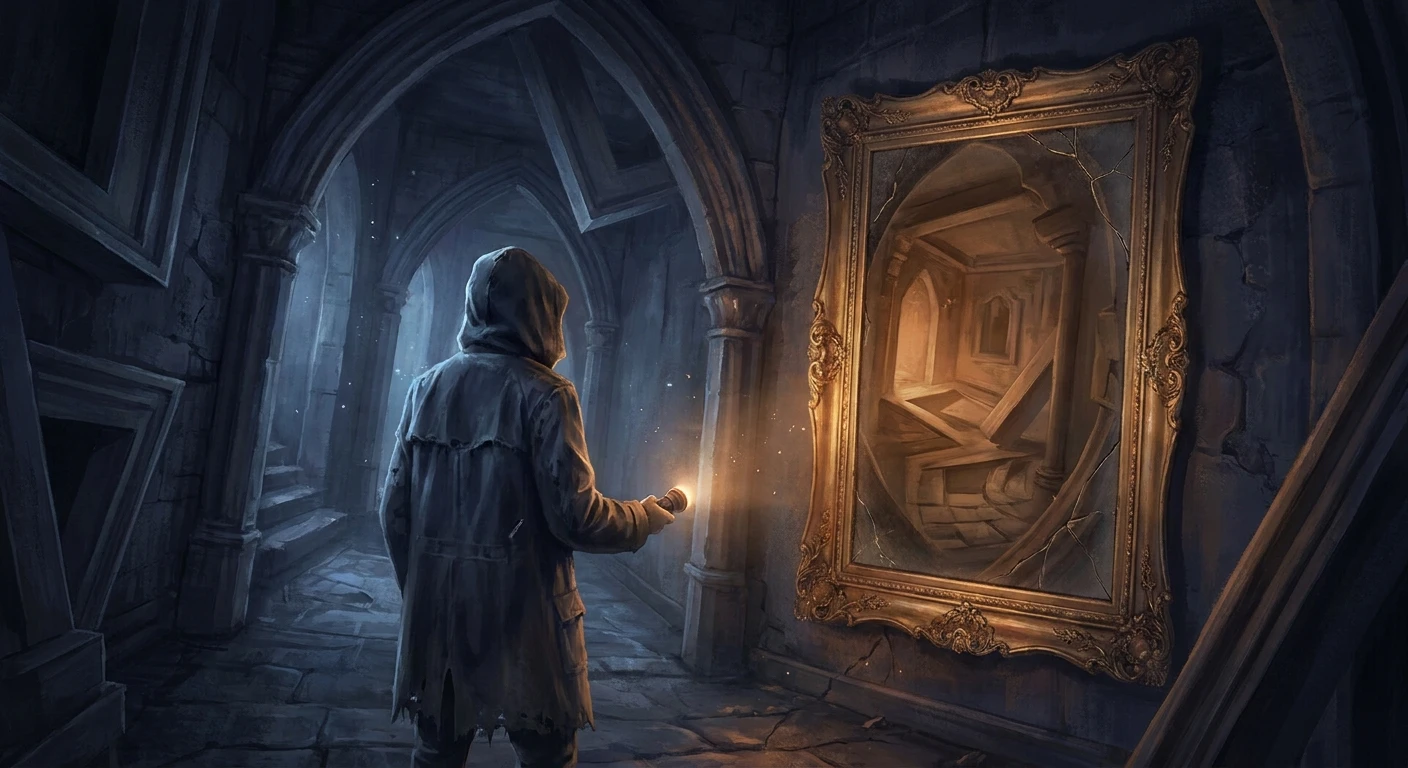
The Best Psychological Horror Games to Play Right Now
When you fire up the best psychological horror games, you are looking for something much deeper than a quick monster chasing you down a hallway. You want an experience that gets inside your head, messes with your sense of reality, and leaves you questioning your own decisions. This genre strips away your heavy weaponry and action-hero status, leaving you entirely vulnerable to the unknown. Unlike standard survival action titles that rely heavily on ammunition management and shooting mechanics, these digital nightmares focus on atmosphere, narrative dread, and the terrifying concept of what you cannot see.
Playing these titles is like stepping directly into a masterfully crafted nightmare where the environment itself feels actively hostile. You are constantly anticipating the next scare, which creates a palpable tension that lingers long after you turn off the screen. Developers use every trick available—from subtle audio cues to shifting architecture—to ensure you never feel safe. It is a profound experience that pushes your emotional boundaries, letting you confront deep-seated fears from the absolute safety of your gaming chair. If you are ready to challenge your own nerves, this genre offers some of the most compelling storytelling available in any medium.
Read also: Best Two Player PS5 Games for Epic Couch Co-op; Silent Hill 2 Xbox: The Ultimate Console Experience.
Understanding exactly why these experiences work requires looking at the core mechanics that drive the tension. The true benefit of engaging with this genre is the catharsis it provides. By safely processing extreme tension and fear, players often report a strange sense of relief afterward. Let us break down how different franchises tackle the human mind.
| Franchise | Core Tension Mechanic | Primary Emotion Triggered |
|---|---|---|
| Silent Hill | Thick fog and environmental decay | Deep-seated guilt and intense isolation |
| Amnesia | Sanity meter and zero combat ability | Complete helplessness and active paranoia |
| SOMA | Philosophical choices and isolation | Existential dread and identity confusion |
The value proposition of playing these masterpieces is incredibly strong. Take Silent Hill 2, for example. It uses a man’s suppressed guilt to physically manifest the monsters he fights, turning his personal trauma into the literal antagonist of the story. You are not just fighting random creatures; you are fighting his demons. Alternatively, Amnesia: The Dark Descent forces you to literally hide in the corner and stare at a wall because looking at the monster drains your character’s sanity. This active discouragement of observation builds immense panic. If you want to properly prepare for a session, you must follow a few specific steps to get the most out of the tension.
- Turn off every single light in your room and eliminate any outside glare on your monitor to create a pitch-black physical environment.
- Wear a high-quality, noise-canceling headset to capture the directional audio, whispering voices, and low-frequency hums that developers hide in the background.
- Accept the anxiety as part of the fun rather than trying to speedrun or conquer the sections too quickly; force yourself to walk slowly down those dark corridors.
The Origins of the Genre
The roots of psychological dread in gaming go surprisingly far back, long before high-definition graphics made photorealistic blood possible. Early text adventures played heavily on the imagination, forcing players to read chilling descriptions of their surroundings and fill in the visual gaps with their own minds. In the late 1980s, games like Sweet Home on the Famicom began blending role-playing mechanics with haunted house themes, proving that players wanted to be scared by narratives, not just difficult platforming jumps. These early experiments laid the crucial groundwork for narrative-driven dread, proving that atmosphere could easily trump raw action.
The Evolution in the Golden Age
The late 1990s and early 2000s are widely considered the golden age for this specific type of fear. The original PlayStation hardware possessed technical limitations, such as short draw distances, which developers ingeniously masked with thick fog or oppressive darkness. This limitation birthed the legendary Silent Hill franchise. Suddenly, the focus shifted from shooting zombies in a mansion to wandering through a twisted, rusty alternate dimension that reflected the protagonist’s broken psyche. Around the same time, the Fatal Frame series forced players to look at ghosts through a camera lens, weaponizing the first-person perspective and turning the act of observation into a terrifying requirement.
The Modern State of Mind-Bending Horror
Nowadays, the genre is experiencing a massive renaissance largely driven by the independent development scene. When the major studios pivoted heavily toward action-packed blockbusters, indie creators stepped up to fill the void. The release of the playable teaser P.T. fundamentally changed the landscape, proving that photorealistic, looping, claustrophobic environments could terrify millions. Titles like Layers of Fear, Visage, and MADiSON have since taken up the mantle, utilizing modern game engines to warp geometry in real-time and create environments that literally shift behind your back, keeping the legacy of cerebral terror alive and well.
The Psychology of Fear and Anticipation
To truly understand why these titles are so effective, you must look at how the human brain processes anticipation. The amygdala, the part of the brain responsible for the fight-or-flight response, cannot always distinguish between a real physical threat and a highly detailed digital one. When a game deprives you of a weapon, it immediately strips away your “fight” option, forcing you entirely into a “flight” mindset. The dread comes not from the monster jumping out, but from the ten minutes of absolute silence spent waiting for it. The brain fills that silence with worst-case scenarios, meaning you are essentially scaring yourself long before the game actually does anything.
Technical Mechanics of Dread
Game developers are basically digital psychologists. They use specific, calculated technical mechanics to keep your nervous system on edge. By manipulating the field of view, utilizing unreliable narrators, and intentionally breaking the established rules of the game’s universe, they create a persistent sense of cognitive dissonance. You never feel grounded because the very floor beneath your digital feet cannot be trusted. Here are a few scientific and technical facts about how developers engineer this fear:
- Infrasound, which consists of audio frequencies below 20 Hz, is frequently used in ambient tracks to induce natural feelings of sorrow, chills, and unexplainable panic.
- Sensory deprivation, such as throwing the player into total darkness with only a fading flashlight, forces the brain to hyper-focus on auditory processing, making every footstep sound deafening.
- Cognitive dissonance is weaponized when a player walks through a door, turns around, and finds the door has vanished; the brain struggles to reconcile this impossible spatial logic.
- The uncanny valley effect is heavily exploited by designing enemies that look mostly human but possess subtle, terrifyingly wrong proportions or twitching animations.
Day 1: Starting with Atmosphere
If you are new to the genre, do not jump straight into the most terrifying title available. Start your first day with something that focuses heavily on atmosphere and isolation rather than outright scares. Titles like Firewatch or Oxenfree walk the line between suspense and mystery. They teach you to pay attention to narrative cues, dialogue, and an unsettling environment without punishing you with immediate death screens. You will learn to appreciate the slow build of tension.
Day 2: Engaging with the Unreliable Narrator
On the second day, introduce yourself to games where the protagonist’s mind is fractured. Play a walking simulator like Layers of Fear. Here, you play as a tortured artist wandering through a Victorian mansion that changes every time you spin the camera. There is no combat, just pure environmental manipulation. It trains you to constantly doubt what you are seeing and accept that the game actively lies to your eyes.
Day 3: Surviving Without Weapons
Now it is time to take away your defenses completely. Spend day three with a classic run-and-hide title like Outlast or Amnesia: The Dark Descent. The core loop involves sneaking, managing limited light sources, and running for your life when spotted. This step builds your tolerance for panic. You will fail, you will get caught, and you will learn that the game over screen is merely a temporary setback, not the end of the world.
Day 4: Confronting Existential Narratives
Day four shifts the focus from visceral panic to deep, lingering existential dread. Boot up SOMA. The monsters in this underwater facility are frightening, but the true horror lies in the philosophical questions the narrative asks about human consciousness, identity, and what it means to be alive. You will spend hours staring at the screen after the credits roll, pondering the incredibly bleak implications of the ending.
Day 5: Navigating Surreal Environments
For your fifth day, it is time to experience the classics. Play the Silent Hill 2 remake or find a way to play the original. Engage deeply with the symbolism. Notice how the enemies represent different facets of the main character’s psyche. Pay attention to the rusted, bloody aesthetic of the Otherworld. This is the peak of integrating a character’s emotional baggage into the level design itself.
Day 6: Enduring the Modern Indie Horror Boom
On day six, challenge yourself with a modern, relentless indie title. Try Visage or Alien: Isolation (which blends sci-fi survival with immense psychological stress). These titles are unforgiving, requiring strict resource management, puzzle-solving under pressure, and a high tolerance for sudden, terrifying shifts in momentum. By this point, your nerves should be somewhat conditioned to handle the severe stress.
Day 7: Processing and Analyzing the Experience
Your final day requires no gaming at all. Sit back and think about the journey. Discuss the themes with friends, read community theories online, or watch video essays analyzing the symbolism of the games you just completed. Half the fun of this genre is the community discussion afterward, dissecting the hidden meanings, alternate endings, and subtle clues the developers left behind.
Myth: These experiences are just a cheap collection of loud jump scares designed for streamers to scream at.
Reality: The absolute best entries in the genre actively avoid cheap jump scares, relying instead on slow-building atmospheric dread and deeply unsettling narratives that get under your skin over several hours.
Myth: You need extreme gamer reflexes and perfect aim to survive these terrifying virtual worlds.
Reality: Most of these titles actually remove combat entirely, requiring you to simply walk, hide, or solve puzzles at your own pace while managing your own rising panic.
Myth: Exposing yourself to digital horror is terrible for your overall mental well-being and increases anxiety.
Reality: Many psychologists note that safely engaging with simulated fear can actually help individuals practice emotional regulation, offering a controlled environment to process extreme stress.
Myth: The stories are usually generic and just serve as an excuse to put monsters in dark hallways.
Reality: This genre regularly delivers some of the most complex, philosophical, and mature storytelling in the entire entertainment industry, tackling heavy themes like grief, trauma, and identity.
What makes a game psychological horror?
It focuses on the character’s mental state, emotional vulnerabilities, and atmospheric dread rather than relying solely on gore, violence, or action combat to frighten the player.
Are these titles typically multiplayer?
While a few co-op experiences exist, the vast majority are strictly single-player to maximize feelings of utter isolation, vulnerability, and personal immersion.
Do you need a high-end PC to run them?
Not necessarily. Many of the greatest indie titles and retro classics run perfectly fine on older hardware, as they rely on art direction and sound design rather than sheer graphical power.
Why is the playable teaser P.T. so famous?
It revolutionized the modern era by using a photorealistic, looping hallway to create immense claustrophobia. Even though it was canceled, it inspired an entire decade of first-person indie horror.
Can younger audiences play these titles?
Generally, no. These experiences deal with heavy, mature themes such as severe trauma, existential dread, and intense psychological stress that are entirely unsuitable for children.
Are these narratives based on true events?
While most are entirely fictional, developers frequently draw heavy inspiration from real historical events, classic literature, and actual psychological conditions to ground their stories in reality.
How do developers pace the scares?
They use an emotional rollercoaster technique. They build intense pressure, deliver a terrifying climax, and then intentionally provide a quiet “safe room” period to let the player’s heart rate settle before starting again.
Diving headfirst into the best psychological horror games offers an unparalleled rush that few other entertainment mediums can match. From the rusty, fog-filled streets of retro classics to the photorealistic, shifting hallways of modern indie masterpieces, these experiences challenge your mind just as much as your reflexes. They force you to confront your deepest fears in a perfectly controlled, brilliantly designed digital space. If you are ready to test your nerves and experience unforgettable storytelling, grab your best headset, turn off the lights, and start your terrifying journey today!

Leave a Reply