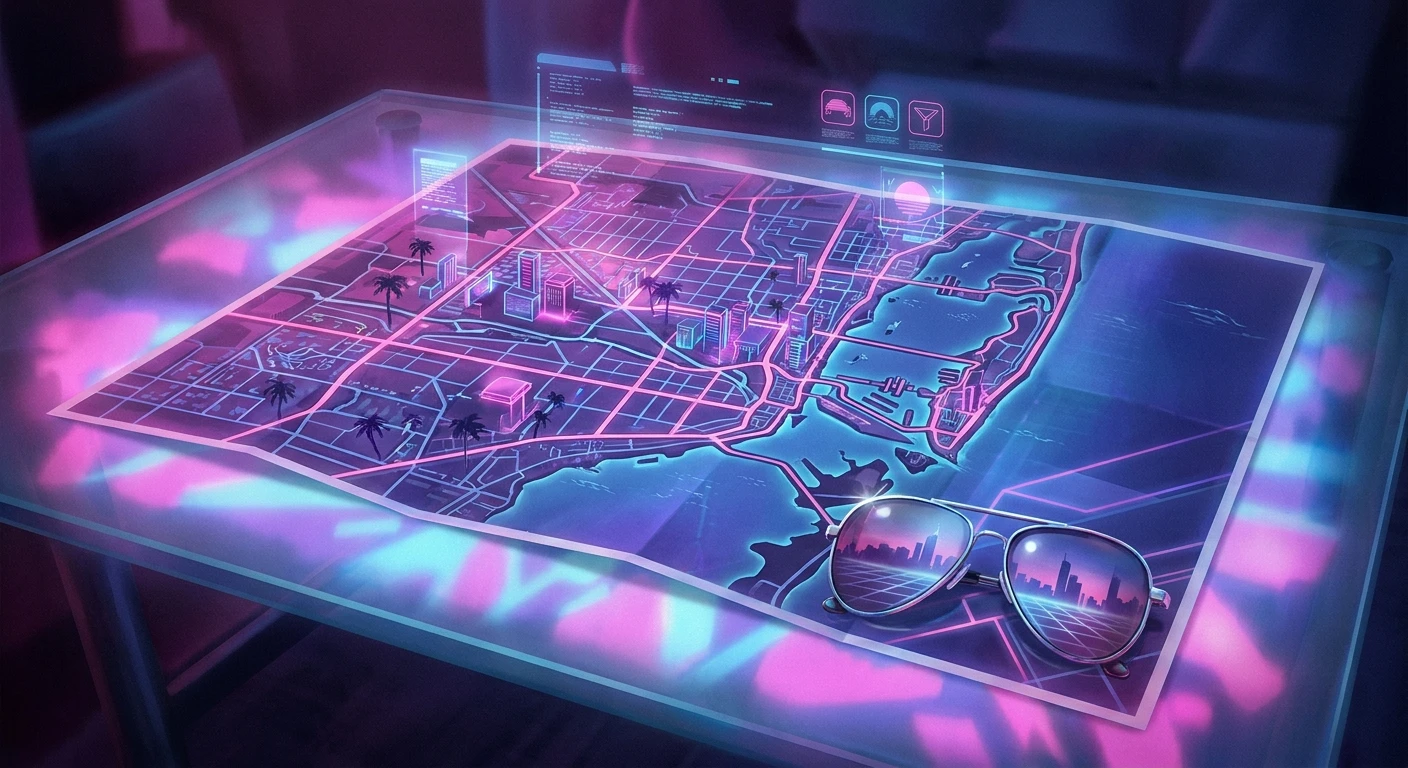
Mastering the Legendary gta vice city map
Hey guys, if you grew up gaming, you know the gta vice city map better than your own neighborhood streets. Seriously, think about it. You could probably navigate from the Ocean View Hotel to the Malibu Club with your eyes completely closed. Mastering this sunny, neon-drenched layout entirely shifts how you experience the game, turning every chaotic drive into a nostalgic, perfectly executed joyride. Back in my internet cafe days in Kyiv, things were wild. We didn’t have smart devices to look up cheat codes or locations. Instead, we had a literal paper map taped to the chipped wall right next to our chunky CRT monitors. I remember paying for an hour of PC time just to cruise around, using that crinkled cheat sheet to find where the helicopters spawned. It was a shared experience. Half the room would be yelling in Ukrainian about missing a turn on Starfish Island, while the rest of us memorized the back alleys to shake off a five-star wanted level. That virtual terrain felt massive, vibrant, and alive, pulling us away from the gray autumn days outside and dropping us straight into a neon paradise.
Navigating the Neon Streets Like a Pro
Getting around this virtual city isn’t just about driving fast; it’s about pure route optimization. Knowing every shortcut changes everything. When you actually understand the urban flow, you save massive amounts of time on tricky missions and you rack up hidden packages without breaking a sweat. It brings a serious value proposition to your gameplay. For instance, skipping the main drag to use the grassy slopes near Leaf Links can literally save a failing mission. Another great example is knowing the exact alleyway jumps that let you bypass the bridge blockades entirely. You start feeling less like a player and more like a local resident.
Read also: Ultimate goldmask questline Guide; Phasmophobia Cross Platform Explained.
| Area | Vibe | Key Locations |
|---|---|---|
| Ocean Beach | Neon lights, tourists, and luxury hotels. | Ocean View Hotel, Marina. |
| Starfish Island | High-end estates, quiet roads. | The Mansion, pools. |
| Downtown | Corporate buildings, heavy traffic. | Hyman Condo, Dirt track. |
To truly own the streets, you need a solid mental blueprint. Once you start paying attention to the actual geometry, you stop crashing and start gliding. Here are the core tactics you need to adopt:
- Memorize the chokepoints: The bridges connecting the eastern and western islands are notorious for traffic jams and police roadblocks. Know the alternative jumps.
- Utilize the back alleys: Ocean Beach has a whole network of service alleys behind the neon hotels. These are perfect for losing a tail instantly.
- Pinpoint vertical access: Memorize which buildings have accessible stairs or helipads. Having the high ground completely changes your escape routes.
Even now, looking back, the design is brilliantly tight. You never feel lost, yet there is always a new corner to cut.
Origins of the Layout
The developers didn’t just throw buildings together randomly. They spent time studying the actual grid of Miami, filtering it through a lens of 1980s pop culture, movies, and television shows. They condensed massive, sprawling urban environments into two distinct islands that represent the divide between the tourist facade and the industrial backbone. This intentional geography meant that as you progressed, the aesthetic physically shifted from bright pinks to gritty grays.
Evolution Through Game Updates
Over the years, the layout hasn’t physically changed shape in its original iteration, but the way we interact with it certainly has. When fan patches and graphical modifications started appearing, the textures got sharper and the neon got brighter. The community basically took the original blueprints and polished them. We went from blurry, low-resolution minimaps to high-definition interactive overlays that showcase every single pixel of the terrain.
The Modern State of the Virtual City
Here we are in 2026, and the layout is still heavily discussed on forums and social media. New generations are playing remastered versions, bringing fresh eyes to the classic streets. Modding communities are actively mapping out previously inaccessible building interiors, effectively expanding the square footage of the environment. The enduring magic is that despite massive technological advancements, this relatively small digital landmass remains one of the most recognizable pieces of virtual real estate ever created.
Engine Rendering and Draw Distance
Let’s talk about the underlying technical wizardry. Back when the engine was first built, hardware could only handle rendering a few blocks at a time. The developers used a technique called “draw distance fog” to obscure pop-in geometry. By placing tall buildings and curved roads strategically, they manipulated your line of sight. You couldn’t see across the entire map, which tricked your brain into thinking the scale was much larger than it actually was. They also used “Level of Detail” (LOD) swapping, where a detailed building model is swapped for a basic polygon shape when you drive away from it.
Spatial Memory and Gaming
Navigating this space relies heavily on cognitive mapping. Gamers develop strong spatial memory through repetition and environmental landmarks. Because the developers placed distinct, highly memorable landmarks like the lighthouse, the giant golf ball, and the stadium at the edges of the map, players subconsciously use them to orient themselves without needing a compass.
- Cognitive Anchoring: Players use prominent neon signs as mental anchors to calculate distances.
- Scale Illusion: The ratio of vehicle speed to map size was tuned to make a three-minute drive feel like a cross-town journey.
- Audio Cues: Environmental sounds change by district, aiding spatial recognition even when visuals are obscured.
- Memory Retention: Studies show gamers can recall fictional maps decades later due to dopamine-linked goal completion (like finding hidden packages).
Day 1: Ocean Beach Familiarization
Start your journey right where the game kicks off. Grab a scooter and ride up and down the main strip. Don’t worry about missions yet. Just learn where the hospital is, locate the police station, and figure out the alleyways behind your starting hotel. Pay attention to the beachfront paths where you can drive without hitting traffic.
Day 2: Washington Beach and the Avenues
Move slightly north. This area is a grid of smaller streets and apartment complexes. Focus on finding the hidden gaps between the buildings. There are several stunt jumps hidden on staircases here. Learn the quickest route from the construction site back to the main hospital.
Day 3: Vice Point Patrol
Head to the northern end of the first island. This is where the mall and the larger commercial buildings are. Spend time driving around the exterior of the mall to memorize the parking lot layouts. This area is wide open, making it great for high-speed getaways, but terrible if you need cover quickly.
Day 4: Prawn Island Secrets
Take the northern bridge to the tiny island in the middle. It’s small, ruined, and packed with tight corners. Walk through the abandoned mansions. Memorize the broken walls you can drive a dirt bike through. It’s an incredible spot for evading pursuit if you know the gaps.
Day 5: Leaf Links Golf Course
This isn’t just for sports; it’s a massive shortcut. Learn how to launch a cart over the bridges and navigate the rolling hills. The uneven terrain can flip your car, so spend today mastering the slopes and finding the weapon spawns hidden in the sand traps.
Day 6: Little Havana Navigations
Cross over to the second major island. The streets here are much tighter and grittier. Learn the routes around the cafes and the taxi company. There are a lot of dead ends here, so if you don’t map out the main arteries, you will get boxed in by traffic very quickly.
Day 7: Downtown Vice City Mastery
Finish up in the business district. This is all about verticality. Find the helipads. Learn the dirt track on the northern tip. Memorize the wide avenues that let you hit top speed. Once you link Downtown back to Ocean Beach, your mental map is fully complete.
Myths vs. Reality on the Streets
Myth: You can swim to the second island early if you try hard enough.
Reality: The water mechanics literally do not allow swimming; you will instantly sink and respawn at the hospital unless you use external modifications.
Myth: There is a secret ghost town hidden far out in the ocean.
Reality: The “ghost town” is just a low-polygon set used for the opening cutscene. It is placed out of bounds and you cannot interact with it during normal gameplay.
Myth: The map is completely flat because older game engines couldn’t handle hills.
Reality: While mostly coastal, there are distinct elevation changes, especially around the golf course, the dirt track, and the bridge ramps, adding vertical strategy.
Myth: All hidden packages are lying in plain sight on the beaches.
Reality: The developers hid them brilliantly inside building interiors, on top of narrow awnings, and behind impenetrable bushes.
How big is the layout?
It spans about 3.5 square miles, which was massive for its release era but is highly condensed by modern standards.
Where is the military base located?
It is tucked away right next to the airport on the southern end of the western island.
Can I fly planes everywhere?
You are mostly limited to helicopters and the seaplane, but you can fly over the entire airspace.
Are there secret tunnels?
There are no major underground subway tunnels, but there are large subterranean parking garages you can use to hide.
What is the absolute highest point?
The highest accessible spot is the roof of the massive Hyman Condo building downtown.
Where do I find the fastest cars?
Look around the driveways of the mansions on Starfish Island for high-end sports cars.
Is Starfish Island perfectly central?
Yes, it acts as the literal and figurative bridge between the two main halves of the city.
How do I unlock the western half?
You have to complete the specific storyline missions that lift the storm warnings to open the bridges.
Are there dynamic weather changes on the map?
Yes, sudden tropical rainstorms will alter driving physics and visibility on the streets.
Why is the airport so empty?
Due to engine limits, the vast runways were left relatively clear to maintain smooth framerates during high-speed chases.
Look, piecing together the geometry of this digital masterpiece is incredibly rewarding. Whether you are revisiting it in 2026 or booting it up for the first time, take a moment to appreciate the brilliant urban design. Grab a fast car, throw on your favorite synth-wave radio station, and go claim the streets! Drop a comment below if you still remember where your favorite hidden package is located.





Leave a Reply