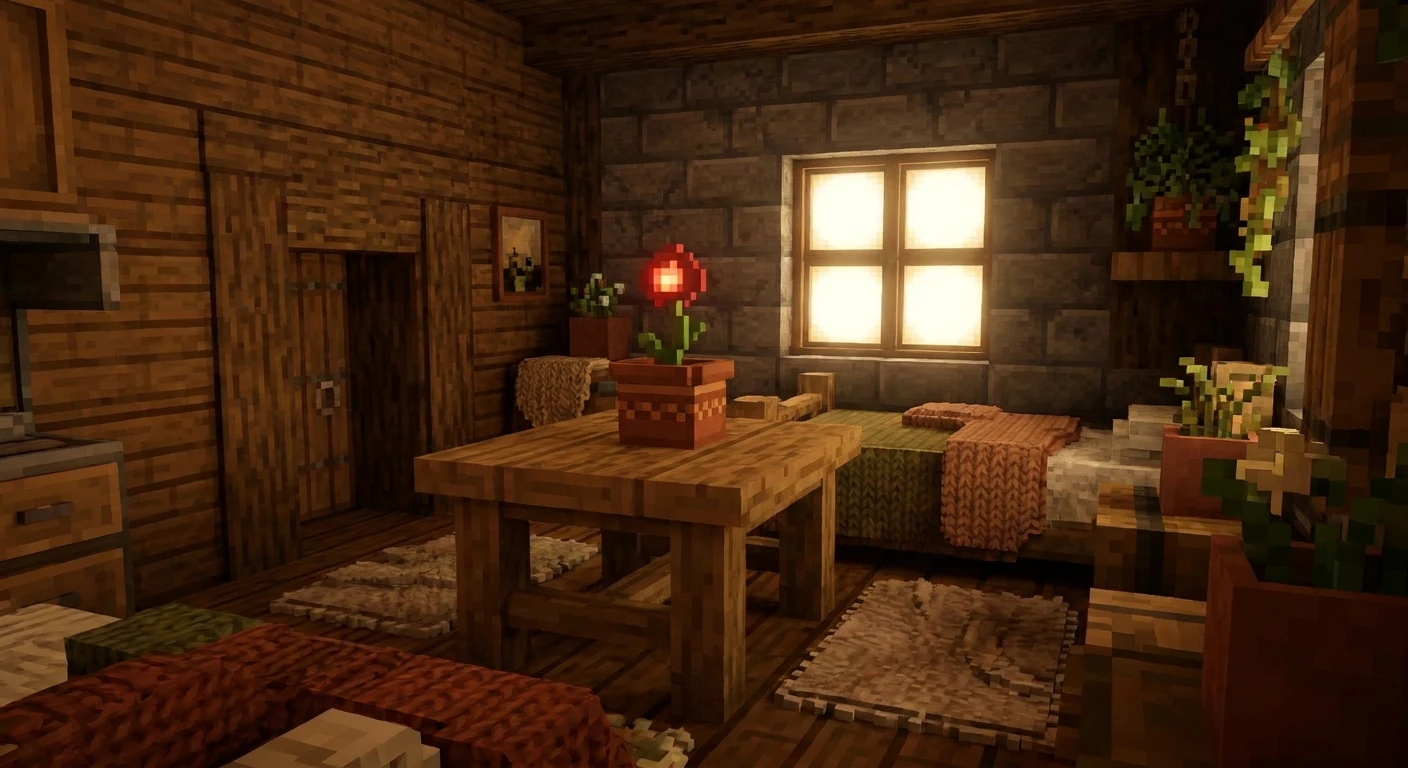
Mastering Base Decor: How to Make a Flower Pot in Minecraft
Building a massive stone castle or a high-tech underground bunker is an incredible achievement, but leaving the interior completely empty makes even the grandest builds feel cold and lifeless. You need details, warmth, and a touch of nature to make a house feel like a home. If you want to add that perfect finishing touch to your virtual base, knowing how to make a flower pot in Minecraft is an essential skill for any dedicated builder. Every seasoned player knows the transition from simply surviving the first night to actually thriving involves upgrading your aesthetics. Bringing foliage indoors without scattering messy dirt blocks everywhere is the ultimate flex of a well-established player. Adding greenery changes the entire atmosphere of your room, breaking up monotonous grey cobblestone walls or endless wooden planks with vibrant splashes of red, yellow, and green. The crafting process is straightforward, but the design possibilities are literally endless. Whether you are constructing a cozy woodland cottage, an imposing desert fortress, or a sleek modern mansion, mastering the art of indoor botany is a required step for anyone serious about interior design. We are going to walk through the complete process, mechanics, and history of this tiny but mighty decorative block.
Understanding the exact mechanics and benefits of crafting this specific item is crucial for efficient base planning. The core value proposition of utilizing these tiny clay containers over raw earth blocks lies in space efficiency and visual cleanliness. For example, placing a Wither Rose in a small container creates a safe, spooky aesthetic without risking the dark dirt spreading or accidental damage. Another great example is utilizing oak saplings to create a miniature bonsai effect on your library tables, something entirely impossible if you just threw a block of coarse dirt on the floor. To put things into perspective, let us compare the different methods of indoor planting.
Read also: Hanging Sign Minecraft: How to Craft and Use Them; How to Make Charcoal Minecraft Guide for Survival.
| Decoration Method | Space Required | Aesthetic Appeal |
|---|---|---|
| Potted Plant (Ceramic) | Less than 1 Block (3/8 height) | Extremely High (Refined, neat, detailed) |
| Planted on Raw Dirt Block | Full 1×1 Block minimum | Low (Messy, bulky, ruins flooring) |
| Custom Built Giant Planters | 3×3 Blocks minimum | High but highly impractical for small rooms |
To start your interior design journey, you need to follow a very specific gameplay loop. The process is a fundamental lesson in resource gathering and processing. Here is exactly what you need to do:
- Locate a river, swamp, shallow lake, or lush cave biome to dive down and harvest raw clay balls using any tier of shovel.
- Process the raw resources by placing the harvested clay balls into a furnace or blast furnace, applying fuel to smelt them into hardened ceramic bricks.
- Arrange exactly three of these fired bricks in a V-shape on a standard crafting table grid to finalize the container item.
Once you complete these steps, you unlock an entirely new layer of architectural expression. You are no longer just placing blocks; you are curating an environment. The subtle difference between a raw survival shack and a master builder’s home is found entirely in these small, intentional details.
The Introduction of Clay and Bricks
The history of decorative botanical containers in this legendary sandbox game is surprisingly rich. It all started back in 2012 during the highly anticipated Pretty Scary Update, officially known as version 1.4.2. Before this era, players who wanted to bring nature indoors were forced to leave ugly blocks of dirt sitting right in the middle of their carefully crafted wooden floors. The developers noticed a massive demand for better decorative options, heavily inspired by community discussions. In fact, the specific concept for this item was famously pitched by a user on the official community forums and Reddit, proving that the developers were actively listening to their player base. When it finally dropped, it completely revolutionized how interior spaces were structured.
Evolution of Decorative Blocks
As the years went by, the capabilities of this simple decorative item expanded massively. Initially, it could only hold a very small selection of standard flora—mostly the classic red poppy and the yellow dandelion. However, as the game’s biome diversity exploded, so did the container’s functionality. Updates introduced the ability to display ferns, dead bushes, all varieties of tree saplings, and various types of mushrooms. With the addition of the jungle biome and later updates, exotic items like bamboo and azalea bushes became valid options, allowing players to create incredibly diverse and customized environments. The item went from a niche decoration to a fundamental pillar of creative building.
The Modern State of Indoor Gardening
Today, the mechanics have been refined to absolute perfection. The biggest structural change occurred during version 1.13, known widely as The Update Aquatic. This patch initiated The Flattening, a massive overhaul of the game’s code. Previously, a pot holding a plant was treated as a single block entity that relied on background data to remember what was inside it. The modern state of the game assigns a unique block ID to every single combination—meaning a potted dandelion is fundamentally a different block in the code than a potted orchid. This technical shift made the game run smoother and allowed for faster rendering of massive indoor gardens, ensuring that modern builders can place hundreds of these decorations without lagging their servers.
Block Entity Mechanics and Hitboxes
From a strictly technical perspective, this item possesses fascinating properties that advanced players can exploit for unique builds. The bounding box, or hitbox, is highly specific. It does not occupy a standard 16x16x16 pixel grid. Instead, the hitbox is exactly 6 pixels wide, 6 pixels deep, and 6 pixels tall (effectively 3/8ths of a standard block height). Because the hitbox is smaller than a full block, players can actually walk through the empty space above it. This unique physical footprint means it does not cause suffocation damage if a player’s head somehow ends up inside its coordinate space. Furthermore, it possesses zero blast resistance. If a Creeper detonates anywhere in the vicinity, the item will instantly be destroyed, dropping itself and whatever was planted inside it as separate collectible entities.
Rendering Properties of Potted Flora
The rendering engine handles these small items quite differently than solid construction materials like stone or iron blocks. They are classified as transparent, non-solid blocks. This has massive implications for lighting and redstone mechanics. Here are the core technical facts you need to know:
- Transparency: Because they are transparent, they do not block light levels. A torch placed behind one will still illuminate the room perfectly.
- Redstone conductivity: They absolutely cannot transmit redstone power. You cannot use them to carry a signal in a circuit.
- Piston interaction: If pushed by a piston, the item will break and drop as an item rather than being moved.
- Placement rules: They can be placed on top of upside-down slabs, glass, and leaves, but cannot float in mid-air natively.
- Flammability: They are completely fireproof and will not act as a fuel source for spreading flames, even if placed next to lava.
Gathering Resources from Riverbeds
When you are ready to begin mass production for your mega-base, efficiency is key. Do not just wander aimlessly hoping to stumble upon the required materials. Target specific biomes. Swamps and lush caves are the absolute best locations, followed closely by shallow riverbeds. When diving, bring a door with you. Placing a door underwater creates an instant air pocket, allowing you to mine entire veins of materials without constantly swimming to the surface for oxygen. Use a shovel enchanted with Fortune; while it does not increase the amount of material dropped from the block itself, using the right tool breaks it instantly, saving you massive amounts of time during bulk collection.
Firing the Kiln for Ceramic Bricks
Fuel efficiency is another critical takeaway for serious builders. Smelting large batches of materials can quickly drain your coal reserves. Instead of wasting valuable coal or charcoal, set up a simple kelp farm. Dried kelp blocks are incredibly efficient fuel sources and are fully renewable. Place a hopper feeding directly into the top of your blast furnace, another hopper feeding fuel into the side, and a third hopper pulling the finished bricks out from the bottom into a double chest. This automated smelting array allows you to process thousands of items while you are off doing other things.
Assembling the Final Container
The actual crafting layout requires precision. Open your crafting table interface. You must place one brick in the middle-left slot, one brick in the bottom-middle slot, and one brick in the middle-right slot, forming a distinct V-shape. Memorize this pattern. If you place them in a straight line, you will just end up with half-slabs instead. Always keep a stack of pre-smelted bricks in your storage room specifically dedicated to decoration, so you never have to interrupt a building session to wait for a furnace to finish.
Selecting the Perfect Botanical Specimens
Finally, your choice of flora dramatically alters the vibe of your build. Do not just blindly place random flowers. Use azure bluets and white tulips for sterile, clean modern builds. Use oak and spruce saplings to create rustic, cozy cabin atmospheres. If you are building a hazardous wizard tower, utilize crimson and warped fungus from the Nether to give the room an alien, magical glow. Ferns are exceptional for adding dense, lush volume to empty corners. Think of these items as your paint palette; use them intentionally to tell a story about the room you are designing.
Myth: Potted saplings will eventually grow into full-sized trees inside your house if you leave them alone long enough.
Reality: Plants placed in these containers remain entirely static. They will never sprout, grow, or change shape, making them perfect for controlled interior design without the risk of a massive tree destroying your roof.
Myth: You have to place a water source block nearby to keep the plants alive.
Reality: Unlike farmland crops such as wheat or carrots, decorative indoor plants require absolutely zero water, hydration, or sunlight to survive. They are permanent, zero-maintenance decorative items.
Myth: You can use these containers to display any item in the game, including swords or blocks of diamond.
Reality: Only specific, approved botanical items like saplings, flowers, fungi, and small bushes can be placed inside. You cannot use them as generic display cases for weapons or armor.
Myth: The container provides protective properties to the plants inside, making them immune to lava.
Reality: While the container itself is fireproof, breaking the block near fire or explosions will drop the plant item, which can easily be incinerated by lava or flames on the ground.
Can you put a cactus in a pot?
Yes, absolutely! Placing a cactus in a ceramic container shrinks it down to a miniature size, making it look like a cute household succulent rather than a massive desert hazard.
Do potted cacti deal damage?
No. When a cactus is placed inside a container, its hitbox completely changes. It loses its ability to inflict damage, meaning you can safely bump into it without losing any hearts or ruining your armor durability.
Can you get clay from villagers?
Yes, mason villagers often sell hardened bricks in exchange for emeralds. This is a fantastic alternative if you want to bypass the mining and smelting process entirely, especially if you have an automatic emerald farm.
Do flower pots burn in lava?
The placed block itself will not catch fire, but if you break it and it drops as an inventory item, that dropped item entity will absolutely burn up if it touches lava or fire.
Can you place a pot on glass?
Yes, modern versions of the game allow you to place these items directly on top of transparent blocks like glass, leaves, and slabs, opening up great opportunities for window sill decorations.
How do you remove a plant from a pot?
Simply interact with the block using your empty hand or the ‘use’ key. The plant will pop out into your inventory, leaving the empty container perfectly intact and ready for a new specimen.
Are pots movable by pistons?
No, they are highly fragile. If a piston head pushes into them, they will break instantly and drop as collectible items rather than being pushed to the adjacent block space.
In conclusion, mastering the details of interior aesthetics is what separates amateur builders from true architects in the game. By understanding the rich history, the precise technical mechanics, and the most efficient practical methods for mass production, you have everything you need to transform a boring stone cube into a vibrant, welcoming home. So log in, fire up your furnaces, grab your favorite botanical specimens, and start crafting your perfect indoor garden today!




Leave a Reply