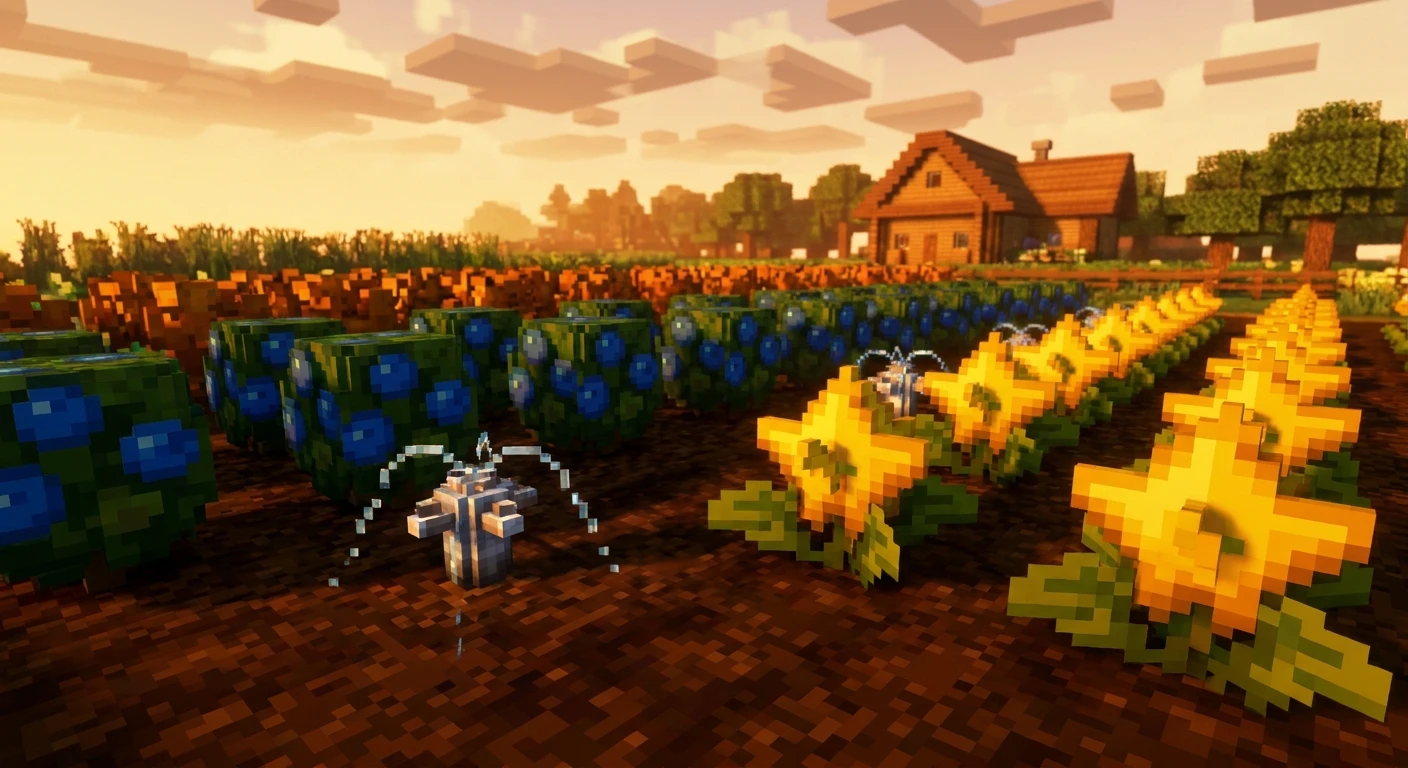
Maximizing Profit: The best summer crops stardew
Looking for the absolute best summer crops stardew to plant this season? You aren’t alone, as picking the right seeds makes the difference between barely scraping by and buying that golden clock. Let me tell you, getting the farming math right is exactly what I do when I need a break from my real-world job as an SEO specialist here in Kyiv. Usually, when the air sirens go off, I grab my Switch, head to the shelter, and completely lose myself in Pelican Town. It brings a weird sense of peace to watch those little pixelated blueberries grow while the real world outside is chaotic. I started obsessing over crop yields back in my early playthroughs, and now, even in 2026, I still find myself tweaking my spreadsheets to squeeze every last drop of gold out of my farm.
This guide breaks down exactly what you need to plant, when to plant it, and how to process it for maximum returns. We will analyze pure profit margins, growth cycles, and the best ways to utilize kegs and preserve jars so you never waste a single sunny day. Honestly, nothing feels better than waking up on Summer 1, clearing out the dead spring weeds, and laying down hundreds of perfectly spaced sprinklers. The strategy I use ensures you have enough cash flow to upgrade your tools by fall. Grab a coffee, and let’s get into the dirt.
Core Strategies for Agricultural Wealth
You need a rock-solid strategy because summer is arguably the most profitable season in the game. The core value of picking the right plants lies in exponential wealth generation. For example, planting Starfruit yields massive single-harvest profits, especially if you turn them into wine. Alternatively, planting Blueberries provides continuous income every few days, meaning you do not have to keep buying seeds. Here is a quick look at the top contenders for your fields:
| Crop Name | Growth Time | Best Processing Method |
|---|---|---|
| Starfruit | 13 days | Keg (Wine) |
| Blueberries | 13 days (Regrows every 4) | Preserves Jar (Jelly) |
| Melon | 12 days | Keg or Giant Crop |
| Red Cabbage | 9 days | Direct Sale / Bundles |
| Hops | 11 days (Regrows daily) | Keg (Pale Ale) |
To get the most out of your fields, you need to follow a strict methodology. Here are the top methods to secure your virtual fortune:
- Prioritize Multi-Harvest Plants Early: Get your blueberries and hops in the ground on day one. Since they keep producing after the initial growth phase, missing even one day of planting costs you an entire harvest cycle at the end of the month. Time is literally money.
- Rush the Desert Bus: If you haven’t unlocked the Calico Desert yet, make it your primary goal. You need access to Sandy’s shop to buy Starfruit seeds. They cost 400g each but sell for exponentially more when tossed into a keg. This is your mid-to-late game cash cow.
- Use Quality Fertilizer on Single-Harvests: Melons and Red Cabbages benefit greatly from better fertilizer if you plan to sell them raw. However, if you are making artisan goods, skip the fertilizer and just use Speed-Gro to squeeze in an extra planting cycle.
- Process Everything: Never sell raw crops if you can avoid it. A basic melon is nice, but melon wine pays for your house upgrades. If you are running out of wood or copper for kegs, immediately start tapping oak trees. Oak resin is the biggest bottleneck for massive wine operations.
Getting this right changes the entire pace of your playthrough. I remember struggling to afford coal, but once I locked down this rotation, money became an afterthought.
The History of Farming Meta
Origins of Early Strategies
Back when the game first launched, players had no idea what the optimal paths were. We planted whatever looked pretty or whatever Pierre had on sale. The earliest meta revolved heavily around just mass-planting whatever seeds you could afford and hoping for rain so you wouldn’t have to spend half your day watering with a basic can. Cranberries dominated fall, but summer was always the wild west. People slowly realized that multi-harvest plants held a distinct mathematical advantage for early-game players who lacked capital.
Evolution of Min-Maxing
As the community grew and dataminers looked at the raw code, spreadsheets started popping up everywhere. We moved from casual planting to intense crop rotation schedules. The introduction of new farm layouts and various developer updates shifted how we approached the mid-game economy. Players figured out that turning cheap crops into artisan goods took time but skyrocketed overall profits. The community debated fiercely over Blueberry Jelly versus Starfruit Wine. Agricultural empires were literally built on the backs of thousands of kegs. Speed-runners and min-maxers formulated exact day-by-day routines to achieve millions of gold within the first year, completely redefining how aggressive you could be with your stamina and time management.
The Modern State of Stardew Agriculture
Fast forward to 2026, and the strategies are basically a settled science, though new players still stumble through the learning curve. We now have incredible tools, mods, and calculators that tell you exactly what your return on investment will be down to the decimal point. The modern approach heavily favors setting up massive infrastructure early on. Instead of just planting aimlessly, players focus on ancient fruit greenhouses, but for the outdoor summer fields, the Starfruit and Blueberry combo remains king. You balance the immediate, recurring cash flow of berries with the delayed, massive payout of the desert fruit. It is a beautiful, highly optimized machine that turns dirt into pure virtual wealth.
Technical Game Mechanics Explained Simply
Understanding Growth Cycles and Ticks
The game engine runs on a very specific mathematical system where plants grow based on daily “ticks” rather than real-time hours. When you plant a seed and water it, the game registers that tile as active, advancing its growth stage overnight while you sleep. If you forget to water it, the tick simply does not happen, and the plant stalls for an entire day. Every crop has a designated sequence of sprites that it cycles through. If you plant something late, say on Summer 20, and it takes 10 days to grow, it will die on Fall 1 before you can harvest it. The engine is unforgiving. If a crop says it takes 4 days to grow, it will be ready to harvest on the 5th day. You have to account for the day of planting as day zero. This single misunderstanding ruins countless harvests for beginners.
Artisan Multipliers and Hidden Values
Making artisan goods isn’t just a fun roleplay activity; it mathematically multiplies base values using hidden modifiers. Here is a breakdown of how the technical side of processing actually works behind the scenes:
- The Keg Multiplier: Fruits placed in a keg produce wine, which multiplies the base value of the crop by 3. This process takes exactly 10,000 in-game minutes, roughly 7 in-game days.
- The Preserves Jar Multiplier: Jars create jelly, calculated as (Base Crop Value x 2) + 50g. This processes much faster, taking only about 2 to 3 days to complete.
- The Tiller and Artisan Professions: Choosing Tiller at farming level 5 gives a flat 10% boost to raw crops. More importantly, taking Artisan at level 10 gives a massive 40% price increase to all artisan goods. This stacks multiplicatively.
- Speed-Gro Mechanics: Agricultural chemicals reduce the total days required for a plant to reach maturity. Deluxe Speed-Gro removes 25% of the growth time, allowing you to fit a third harvest of Starfruit into a 28-day season if timed flawlessly.
Mastering these specific formulas ensures your farm operates at absolute peak efficiency without wasting resources.
Your Actionable 7-Day Summer Plan
Here is a highly specific, step-by-step roadmap to dominate your first week of summer and set up your economic engine for the rest of the year.
Step 1: The Spring 28 Prep
On the last day of spring, do not clear your dead crops. Leave them exactly where they are. This holds the tilled soil and prevents random weeds, rocks, or wood debris from destroying your carefully laid out sprinkler grids overnight. You just need to scythe away the dead plants the next morning, saving massive amounts of hoeing energy.
Step 2: Summer 1 Seed Rush
Wake up immediately and head straight to Pierre’s general store. Empty your wallet on Blueberry seeds. If you have the desert unlocked, split your funds and take the bus to buy as many Starfruit seeds as you can afford. Time is your most valuable resource today.
Step 3: Planting, Watering, and Protecting
Get back to the farm and put everything in the ground. If you lack sprinklers, you will be watering by hand until 1 AM. Eat whatever food you have to keep your energy up. Do not forget to place scarecrows! Crows will eat your expensive seeds, and losing a 400g Starfruit seed to a bird is heartbreaking. One basic scarecrow protects a circular radius of 8 tiles, so map it out.
Step 4: Summer 2 Foraging Run
Your crops are growing safely. Take this day to run down to the beach and through Cindersap Forest to forage for Sweet Peas and Spice Berries. These provide free energy to sustain your intense mining runs later in the week.
Step 5: Summer 3 Mine Run for Iron
You desperately need quality sprinklers. Head into the local mines between levels 40 and 70. Farm as much iron ore and coal as you can carry in your backpack. Ignore the monsters if possible; just break the rocks and descend.
Step 6: Summer 4 Gold Farming
Push deeper into the mines past level 80 to secure gold ore. Smelt the iron and gold into bars overnight using your furnaces. You are building the physical automation that will eventually free up your time for fishing, socializing, and completing quests.
Step 7: Summer 5 Sprinkler and Lightning Rod Placement
Craft every quality sprinkler you can and place them among your growing crops. Summer brings heavy thunderstorms, so craft and place lightning rods around your farm. Not only do they protect your crops from being struck and destroyed, but they also generate battery packs. From this day forward, your mornings are completely free.
Myths vs. Reality in Farming Meta
Let’s clear up some common misinformation that floats around message boards and reddit threads.
Myth: Corn is a great investment because it lasts through two full seasons.
Reality: Corn is actually a financial trap for new players. Its profit per day is incredibly low compared to planting Blueberries in summer and switching to Cranberries in the fall. The initial seed cost is high, and the return is painfully mediocre.
Myth: You should always use basic fertilizer on your berry bushes.
Reality: Fertilizer only affects the first single berry harvested from a bush, not the multiple extras that pop out. It is a complete waste of sap and resources on multi-harvest plants. Use Speed-Gro instead if you want to optimize.
Myth: Hops are not worth the effort because the trellises block your walking path.
Reality: Hops produce Pale Ale when put in a keg, which processes in just 1 to 2 days. It is mathematically one of the highest money-makers in the entire game if you use a smart, staggered trellis layout.
Frequently Asked Questions & Conclusion
What is the absolute most profitable plant?
Starfruit, hands down, especially when turned into wine and aged to iridium quality in the farmhouse cellar.
Should I plant coffee beans in summer?
Only if you desperately want a personal speed boost. Economically, they require too much manual labor to harvest every two days for very low base returns.
Are sunflowers worth it for the oil?
They are mainly good for raising friendship with Haley and making oil. They drop their own seeds, which is nice, but they definitely won’t make you rich.
How many blueberries should I realistically plant?
As many as you can afford on day one. Even 100 bushes will set you up with enough capital for the rest of the in-game year.
Do giant crops stay alive after the season ends?
Yes! If you manage to grow a giant melon, it will stay on your farm forever through all seasons, even winter, until you chop it with an axe.
Is red cabbage actually good for money?
It is decent for a short-cycle crop, but its primary value is finishing the community center bundles in year one if you get lucky at the traveling cart.
Can I plant wheat to save my fertilizer?
Yes, planting cheap wheat at the end of summer keeps the soil tilled, watered, and fertilized rolling directly into fall, saving you massive prep time.
Hopefully, this guide clears up your planting schedule. Getting the highest yields requires a bit of math, but once you set up your automated sprinkler grids and keg sheds, the gold just flows in effortlessly. Drop a comment below with your favorite farm layout, and share this guide with your co-op friends so you can finally afford that obelisk! Happy farming!




Leave a Reply